Get your free personalized podcast brief
We scan new podcasts and send you the top 5 insights daily.
Despite a global helium glut and low prices, China banned exports. This seemingly irrational move is likely a preemptive measure, anticipating that a worsening conflict will lead the US to restrict helium exports to China to cripple its critical semiconductor industry, so China is acting first.

Related Insights
Beijing's expansive export controls on rare earths were not an overplay but a calculated risk to shift from a defensive to an offensive posture. They correctly bet that the U.S. administration would ultimately seek to de-escalate and preserve the diplomatic track, thereby validating China's proactive strategy.
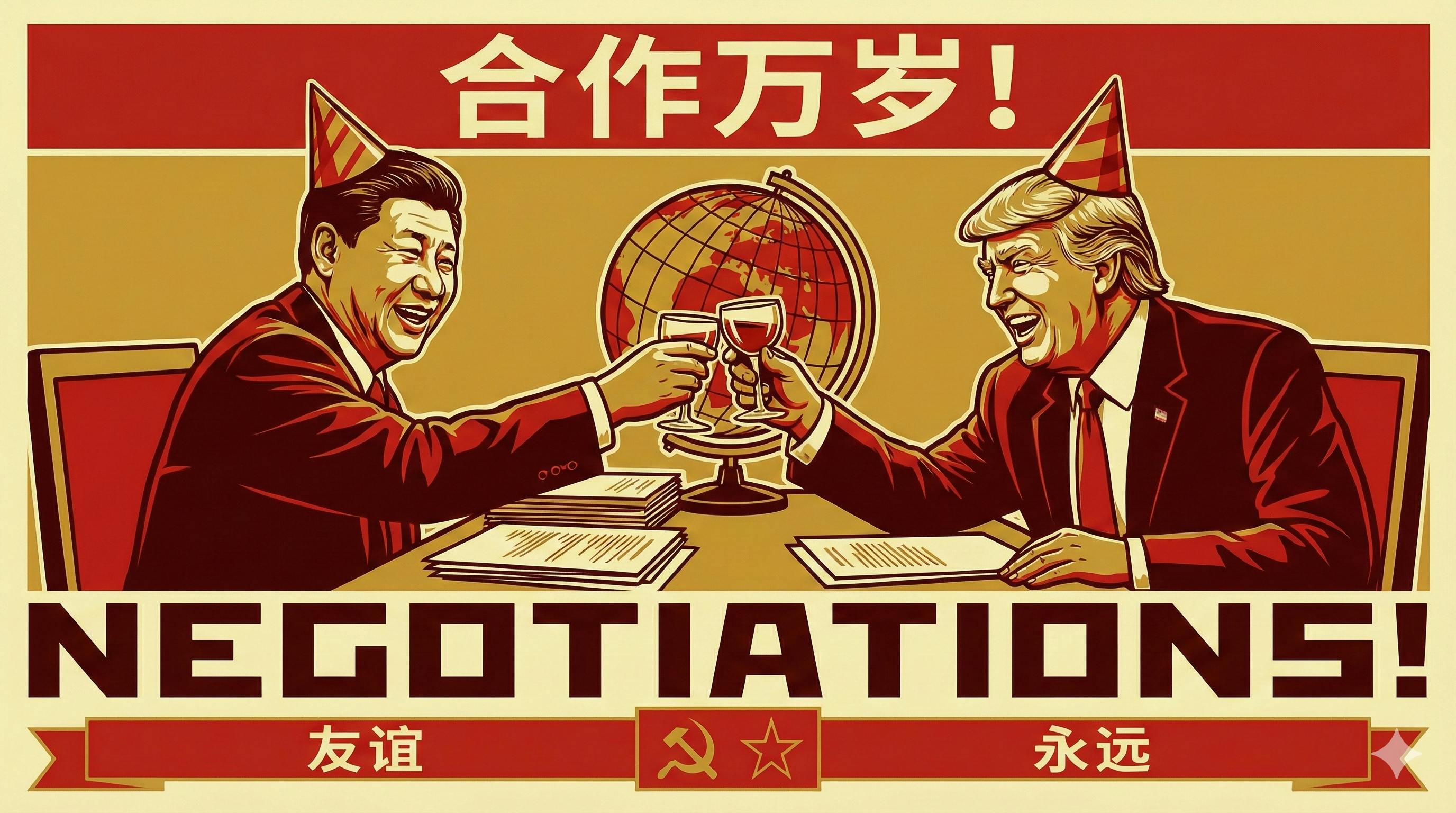
The strategic competition with China is often viewed through a high-tech military lens, but its true power lies in dominating the low-tech supply chain. China can cripple other economies by simply withholding basic components like nuts, bolts, and screws, proving that industrial basics are a key geopolitical weapon.

30% of the world's helium, essential for semiconductor manufacturing, passes through the Strait of Hormuz. A shutdown could halt a significant portion of global semiconductor production, impacting all electronics, a non-obvious consequence of the conflict.

China demonstrated its significant leverage over the U.S. by quickly pressuring the Trump administration through a partial embargo on rare earth metals. This showcased a powerful non-tariff weapon rooted in its control of critical mineral supply chains, which are also vital for defense applications.

While oil is the obvious commodity affected by a Hormuz closure, a more fragile chokepoint for the high-tech economy is helium. It is essential for the ultra-cold temperatures needed in advanced chipmaking. With very little supply elasticity, a disruption here could halt the production of chips powering the AI revolution.

Following US policy moves, China is likely to expand its use of export controls on critical materials. Silver, essential for EVs, solar panels, and AI data centers, has been added to its list, signaling a willingness to leverage its supply chain dominance as a geopolitical tool against rivals.

While headlines focus on advanced chips, China’s real leverage comes from its strategic control over less glamorous but essential upstream inputs like rare earths and magnets. It has even banned the export of magnet-making technology, creating critical, hard-to-solve bottlenecks for Western manufacturing.

While markets focus on oil prices and de-escalation timelines, they are underestimating second-order effects of geopolitical conflict. Significant risks exist from supply shortages in less-discussed industrial commodities like helium and sulfur, which can have a tangible, negative impact on the broader business cycle.

China is no longer just mirroring US trade restrictions in a tit-for-tat manner. It is now offensively mapping its own supply chains to identify and control global choke points, proactively weaponizing its dominance in critical materials and technologies to exert geopolitical pressure.

Contrary to popular belief, the U.S., not Iran, initiated the Hormuz Strait closure. The goal was to demonstrate its ability to control global energy flows and cripple Asia's semiconductor production (which relies on Qatari helium), thereby asserting dominance in both energy and AI as a strategic message to China.