Get your free personalized podcast brief
We scan new podcasts and send you the top 5 insights daily.
Beyond strategy and marketing, a team—whether in sports or business—must define its core identity. Magic Johnson argues that fans, customers, and potential hires (like free agents) latch onto this identity. A clear answer to 'Who are you?' and 'Do you want to win?' is critical for attracting the best people.

Related Insights
Like Napoleon, founders can attract top talent by giving them a grand mission, branding teams to create a proud identity (e.g., "the men without fear"), and demonstrating they are in the trenches alongside their people. This builds loyalty far beyond compensation.

The most motivated employees ("freedom fighters") offer unparalleled commitment, but only if the company's mission is authentic. Unlike mercenaries (paid) or conscripts (obligated), they demand integrity and will quickly expose any disconnect between the stated mission and reality, making them a high-reward but high-maintenance talent segment.

Bending Spoons views its company as its most important product, engineered to be the ideal place for the world's best inexperienced talent. The goal is to create an institution that acts as the ultimate training ground, enabling high-potential individuals to skyrocket their careers.
![Luca Ferrari - Building Bending Spoons - [Invest Like the Best, EP.446] thumbnail](https://megaphone.imgix.net/podcasts/b29cbd80-b93a-11f0-a1b7-2b977c9469a2/image/39f7864ea628f71a81b94662bd4a86df.jpg?ixlib=rails-4.3.1&max-w=3000&max-h=3000&fit=crop&auto=format,compress)
Establishing a strong brand involves more than customer research. It's critical that the internal team and key partners are aligned on the brand's vision and messaging. This internal clarity serves as the stable foundation for all external marketing efforts.

Unlike product marketing, sports marketing cannot control the core product’s performance (wins/losses). The primary job is to build deep, personal connections between fans and athletes. This creates emotional "insulation" where fan loyalty is tied to the people and the brand, not just unpredictable on-court results.

To produce work that authentically reflects your brand, you must hire people who inherently embody its ethos. A brand aiming to be a "bold disruptor," for example, cannot achieve its goals by hiring conservative people. Your hiring process is a direct extension and critical reinforcement of your brand identity.
![What is Marketing? With Kory Marchisotto [Uncensored Renegades] thumbnail](https://img.transistorcdn.com/VIH3Rn5ET8-eHQxgBGNydnhXL95pc10_Kq7qTpjezuc/rs:fill:0:0:1/w:1400/h:1400/q:60/mb:500000/aHR0cHM6Ly9pbWct/dXBsb2FkLXByb2R1/Y3Rpb24udHJhbnNp/c3Rvci5mbS9zaG93/LzQ3MzEvMTU3MDAz/MjQ3NC1hcnR3b3Jr/LmpwZw.jpg)
Instead of creating a broadly appealing culture, build one that is intensely attractive to a tiny, specific niche (e.g., "we wear suits and use Windows"). This polarization repels most people but creates an incredibly strong, cohesive team from the few who are deeply drawn to it.

Way's future CEO joined the scrappy startup not for the haircare, but because founder Jen Atkin had a brand vision that transcended the category, drawing inspiration from Range Rover and New Balance. This shows that a powerful, category-agnostic brand identity is a primary tool for attracting key early-stage talent.

At the beginning, a startup is just an idea. A strong brand provides a clear narrative that resonates with potential hires, helping them make a decision based on identity and shared values. This attracts a cohesive team from day one.

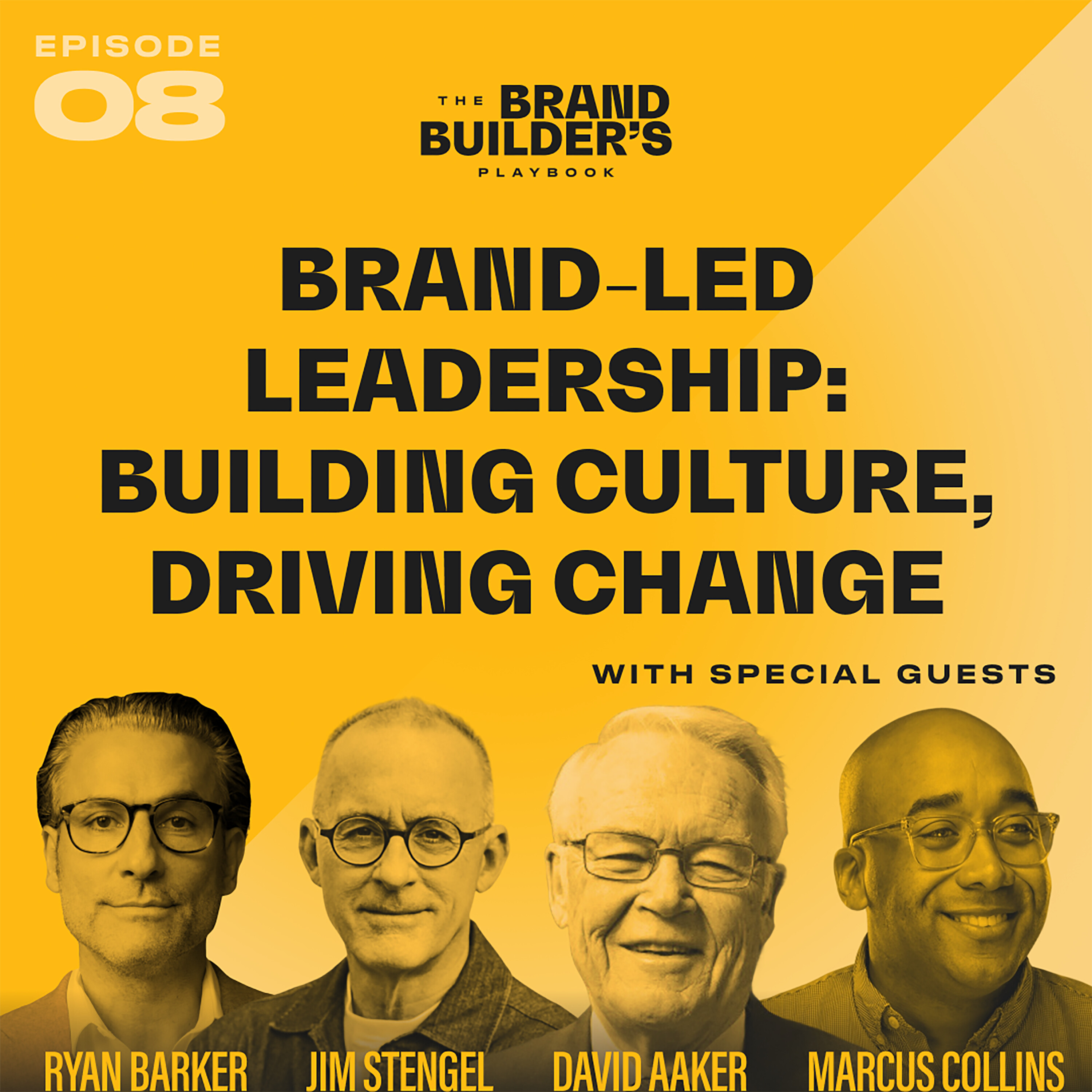
David Aaker identifies a simple, powerful tactic: ask your team what makes the company special—its "secret sauce"—and turn that into a formal brand asset. He argues even abstract concepts, like a unique way of treating people, can be branded (e.g., "the HP way") to create a potent, ownable differentiator.