Get your free personalized podcast brief
We scan new podcasts and send you the top 5 insights daily.
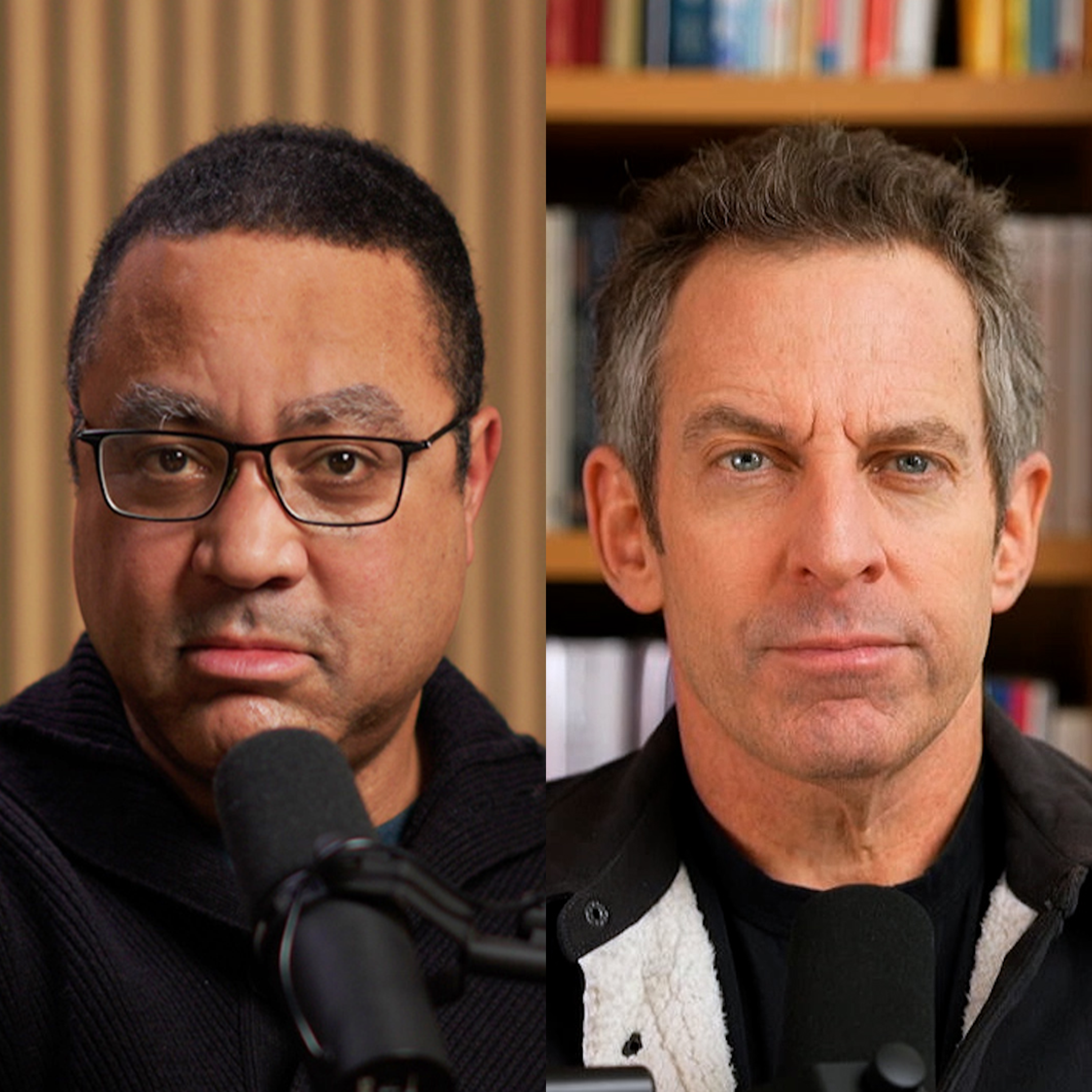
John McWhorter argues that seemingly separate cultural flashpoints—from the George Floyd protests to campus support for Hamas—are driven by the same core ideology. This worldview prioritizes battling perceived power imbalances, especially related to 'whiteness,' above all other considerations, including reason or facts.
Related Insights
Rising support for violence on campus stems from a belief that political opponents represent 'genuine evil' or 'fascism,' not just a differing opinion. This moral framing removes normal constraints on behavior, making violence seem like a necessary and justifiable response.

Charlie Kirk's political power grew by strategically positioning himself as a direct opponent to the "woke movement" and "cancel culture" on college campuses. This narrative was highly effective in persuading conservative donors that his confrontational approach was a necessary fight, turning cultural discourse into a powerful fundraising mechanism.
A fringe element of the political right is beginning to mirror the 'woke left' by adopting similar tactics. This includes a focus on identity-based victimhood narratives and a preference for destroying and deplatforming opponents rather than engaging them in genuine debate.
Resistance to mass immigration is often mislabeled as racism when it's a defense of cultural uniqueness. The core fear is that blending all cultures creates a bland 'beige' monolith, ultimately allowing the most aggressive and cohesive incoming culture to dominate.

When a demographic feels perpetually attacked for an unchangeable trait, they are psychologically primed to unify around that identity. This dynamic explains the rise of controversial figures who capitalize on that reactive sentiment, becoming a predictable societal counter-reaction.

John McWhorter argues that while the "peak woke" moment in general society has passed, the ideology has become so deeply rooted in academia and the arts that it's likely "ruined for the duration." The core tenets are passed down through graduate programs and hiring practices, making them difficult to dislodge.
When society organizes itself along tribal or identity lines, it is a mathematical certainty that all groups, including the majority, will eventually adopt that framework. The only solution to one form of identity politics is to eliminate all forms of it.

The notion that identitarianism is exclusive to the left ("woke") is outdated. A powerful, mirrored version has solidified on the right ("Groypers"), indicating that identity-based politics has become a central, and polarizing, framework across the entire political spectrum.
Using the 'horseshoe theory,' the analysis posits that the far-left and far-right often meet on extreme issues, such as antisemitism. This convergence serves as a critical litmus test for dangerous ideas. When ideologies from opposite ends of the spectrum align, it signals a significant societal risk.
The root of rising civil unrest and anti-immigrant sentiment is often economic insecurity, not just a clash of cultures. People convert financial anxiety into anger, which is then easily directed at visible, culturally different groups, creating flashpoints that can escalate into violence.
