Get your free personalized podcast brief
We scan new podcasts and send you the top 5 insights daily.
The advent of million-token context windows briefly made Retrieval-Augmented Generation (RAG) seem obsolete. However, the immense cost of "token maxing" for every query proved unsustainable, re-establishing RAG as a critical strategy for cost-effective, high-performance AI agents.

Related Insights
Instead of using massive, expensive LLMs for every task, companies can solve the "tokenpocalypse" (runaway token costs) by pairing smaller models with high-quality retrieval systems. This allows cheap models to act like large ones, saving significant costs.

Instead of expensive, static pre-training on proprietary data, enterprises prefer RAG. This approach is cheaper, allows for easy updates as data changes, and benefits from continuous improvements in foundation models, making it a more practical and dynamic solution.

According to IBM's AI Platform VP, Retrieval-Augmented Generation (RAG) was the killer app for enterprises in the first year after ChatGPT's release. RAG allows companies to connect LLMs to their proprietary structured and unstructured data, unlocking immense value from existing knowledge bases and proving to be the most powerful initial methodology.
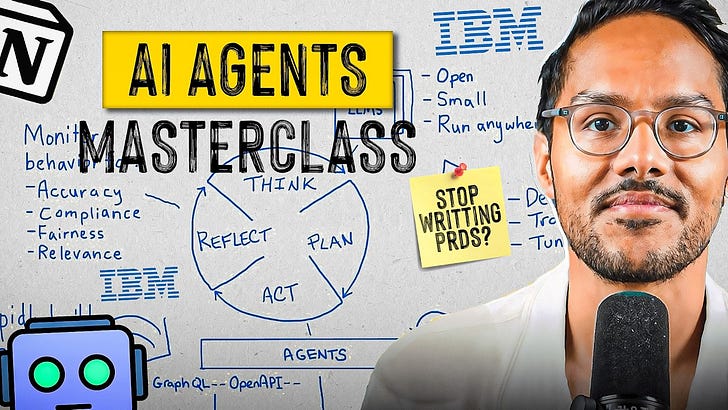
Before considering expensive model fine-tuning, implement Retrieval-Augmented Generation (RAG). RAG dynamically retrieves information from a knowledge base to augment the prompt, solving most domain-specific problems efficiently. The recommended hierarchy is: Prompt Optimization -> Context Engineering -> RAG -> Fine-tuning.

Even models with million-token context windows suffer from "context rot" when overloaded with information. Performance degrades as the model struggles to find the signal in the noise. Effective context engineering requires precision, packing the window with only the exact data needed.

The growth of LLM context windows has stalled not primarily due to technical barriers, but because multi-million token requests can cost users several dollars per query, leading to low demand. The industry is shifting focus to "smart context" techniques like compaction and retrieval to provide relevant information without the prohibitive cost of massive context.
Vector similarity does not equal relevance. A lightweight re-ranker model, placed between retrieval and generation, rescores search results for usefulness. This significantly improves performance on ambiguous queries and is one of the highest-impact additions to a RAG pipeline.
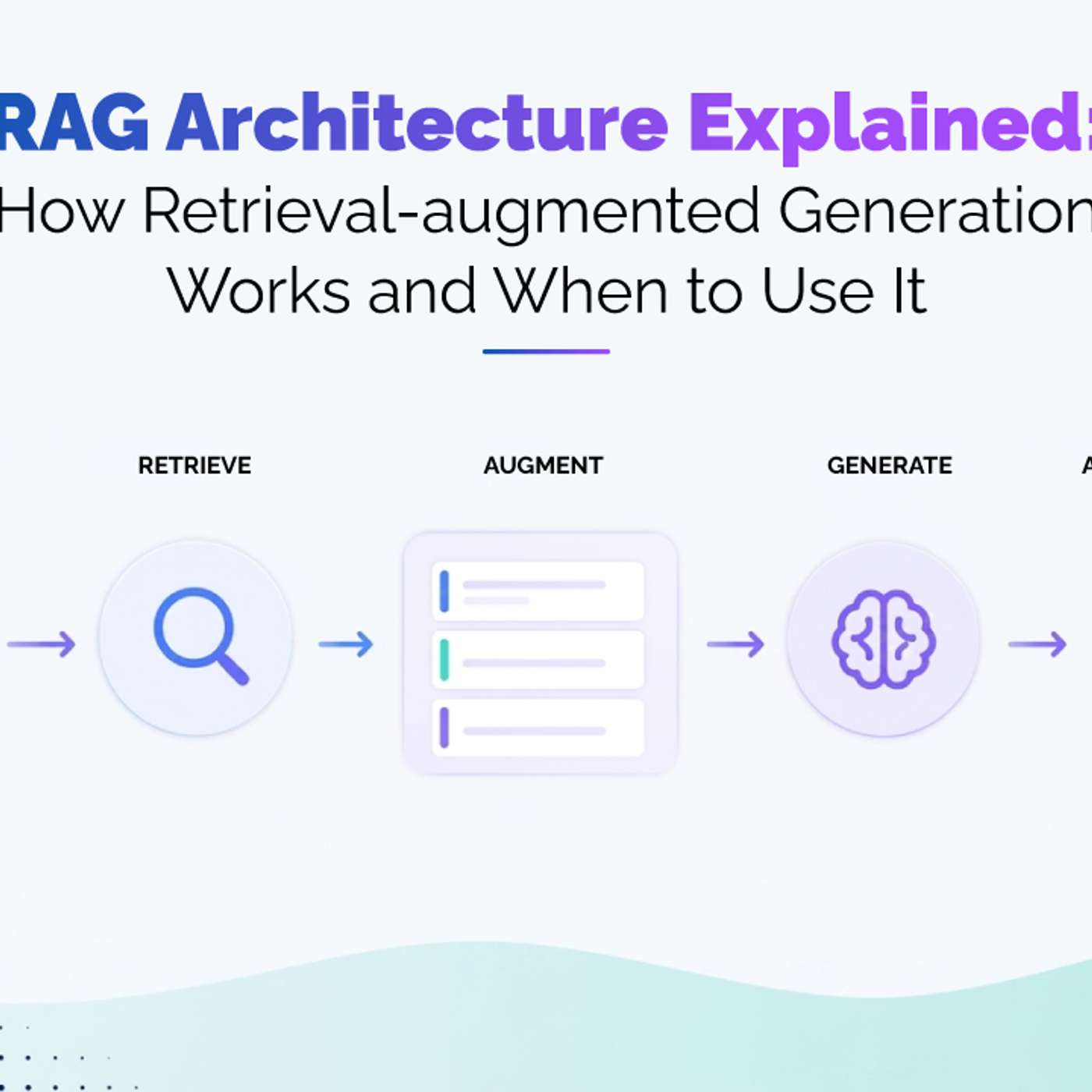
Early agent memory simply crammed all session data into the context window. The state-of-the-art approach is more sophisticated, using memory types like taxonomic memory to select only the most relevant information for each task. This "perfect context window" approach reduces cost and improves LLM focus.
Continuously training a model on private data internalizes concepts, reducing the need for massive context windows and system prompts. This dramatically cuts token consumption for inference compared to RAG-based approaches that re-read documents repeatedly.

The nature of Retrieval-Augmented Generation (RAG) is evolving. Instead of a single search to populate an initial context window, AI agents are now performing numerous concurrent queries in a single turn. This allows them to explore diverse information paths simultaneously, driving new database requirements.