Get your free personalized podcast brief
We scan new podcasts and send you the top 5 insights daily.
Instead of expensive, static pre-training on proprietary data, enterprises prefer RAG. This approach is cheaper, allows for easy updates as data changes, and benefits from continuous improvements in foundation models, making it a more practical and dynamic solution.

Related Insights
While consumer AI tolerates some inaccuracy, enterprise systems like customer service chatbots require near-perfect reliability. Teams get frustrated because out-of-the-box RAG templates don't meet this high bar. Achieving business-acceptable accuracy requires deep, iterative engineering, not just a vanilla implementation.
For specialized, high-stakes tasks like insurance underwriting, enterprises will favor smaller, on-prem models fine-tuned on proprietary data. These models can be faster, more accurate, and more secure than general-purpose frontier models, creating a lasting market for custom AI solutions.

The key for enterprises isn't integrating general AI like ChatGPT but creating "proprietary intelligence." This involves fine-tuning smaller, custom models on their unique internal data and workflows, creating a competitive moat that off-the-shelf solutions cannot replicate.
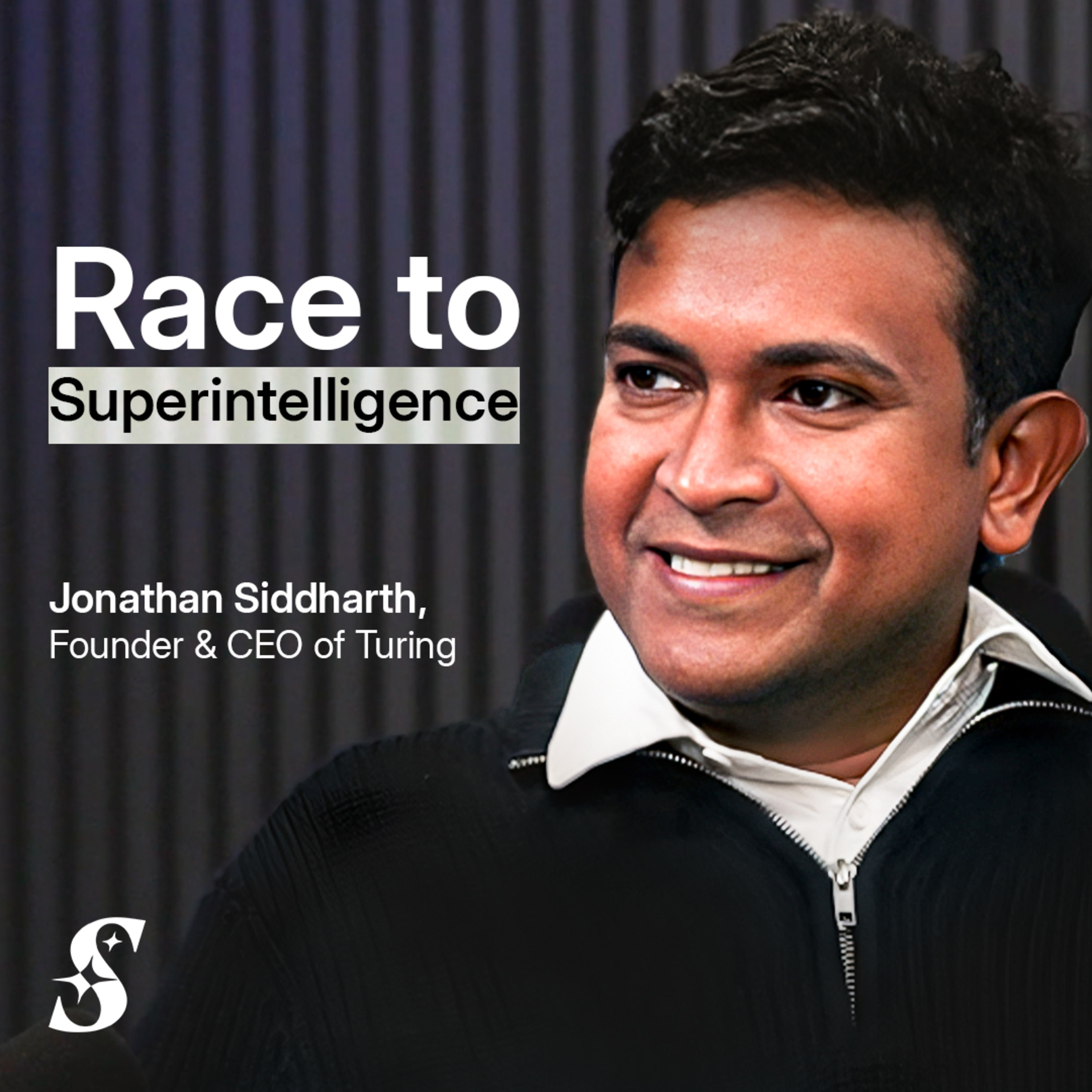
According to IBM's AI Platform VP, Retrieval-Augmented Generation (RAG) was the killer app for enterprises in the first year after ChatGPT's release. RAG allows companies to connect LLMs to their proprietary structured and unstructured data, unlocking immense value from existing knowledge bases and proving to be the most powerful initial methodology.
Basic supervised fine-tuning (SFT) only adjusts a model's style. The real unlock for enterprises is reinforcement fine-tuning (RFT), which leverages proprietary datasets to create state-of-the-art models for specific, high-value tasks, moving beyond mere 'tone improvements.'

Teams often agonize over which vector database to use for their Retrieval-Augmented Generation (RAG) system. However, the most significant performance gains come from superior data preparation, such as optimizing chunking strategies, adding contextual metadata, and rewriting documents into a Q&A format.
Instead of relying on expensive, omni-purpose frontier models, companies can achieve better performance and lower costs. By creating a Reinforcement Learning (RL) environment specific to their application (e.g., a code editor), they can train smaller, specialized open-source models to excel at a fraction of the cost.

AEO is not about getting into an LLM's training data, which is slow and difficult. Instead, it focuses on Retrieval-Augmented Generation (RAG)—the process where the LLM performs a live search for current information. This makes AEO a real-time, controllable marketing channel.
Fine-tuning remains relevant but is not the primary path for most enterprise use cases. It's a specialized tool for situations with unique data unseen by foundation models or when strict cost and throughput requirements for a high-volume task justify the investment. Most should start with RAG.
Classic RAG involves a single data retrieval step. Its evolution, "agentic retrieval," allows an AI to perform a series of conditional fetches from different sources (APIs, databases). This enables the handling of complex queries where each step informs the next, mimicking a research process.
