Get your free personalized podcast brief
We scan new podcasts and send you the top 5 insights daily.
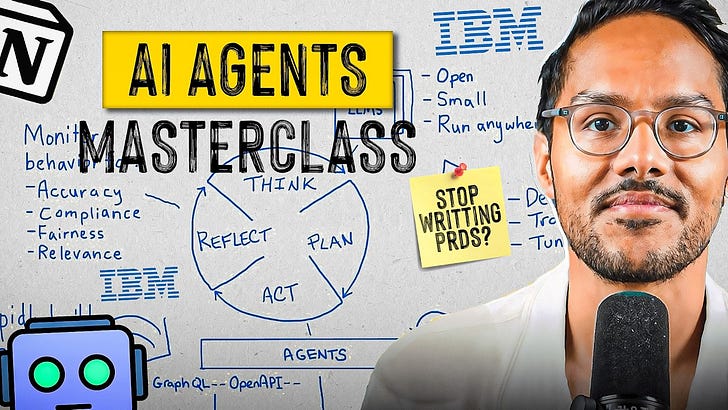
According to IBM's AI Platform VP, Retrieval-Augmented Generation (RAG) was the killer app for enterprises in the first year after ChatGPT's release. RAG allows companies to connect LLMs to their proprietary structured and unstructured data, unlocking immense value from existing knowledge bases and proving to be the most powerful initial methodology.
Related Insights
Recognizing there is no single "best" LLM, AlphaSense built a system to test and deploy various models for different tasks. This allows them to optimize for performance and even stylistic preferences, using different models for their buy-side finance clients versus their corporate users.

While consumer AI tolerates some inaccuracy, enterprise systems like customer service chatbots require near-perfect reliability. Teams get frustrated because out-of-the-box RAG templates don't meet this high bar. Achieving business-acceptable accuracy requires deep, iterative engineering, not just a vanilla implementation.
Simply offering the latest model is no longer a competitive advantage. True value is created in the system built around the model—the system prompts, tools, and overall scaffolding. This 'harness' is what optimizes a model's performance for specific tasks and delivers a superior user experience.

Don't just sprinkle AI features onto your existing product ('AI at the edge'). Transformative companies rethink workflows and shrink their old codebase, making the LLM a core part of the solution. This is about re-architecting the solution from the ground up, not just enhancing it.

Many leaders mistakenly halt AI adoption while waiting for perfect data governance. This is a strategic error. Organizations should immediately identify and implement the hundreds of high-value generative AI use cases that require no access to proprietary data, creating immediate wins while larger data initiatives continue.

The true enterprise value of AI lies not in consuming third-party models, but in building internal capabilities to diffuse intelligence throughout the organization. This means creating proprietary "AI factories" rather than just using external tools and admiring others' success.

Teams often agonize over which vector database to use for their Retrieval-Augmented Generation (RAG) system. However, the most significant performance gains come from superior data preparation, such as optimizing chunking strategies, adding contextual metadata, and rewriting documents into a Q&A format.
AEO is not about getting into an LLM's training data, which is slow and difficult. Instead, it focuses on Retrieval-Augmented Generation (RAG)—the process where the LLM performs a live search for current information. This makes AEO a real-time, controllable marketing channel.
The most significant recent AI advance is models' ability to use chain-of-thought reasoning, not just retrieve data. However, most business users are unaware of this 'deep research' capability and continue using AI as a simple search tool, missing its transformative potential for complex problem-solving.

Salesforce's Chief AI Scientist explains that a true enterprise agent comprises four key parts: Memory (RAG), a Brain (reasoning engine), Actuators (API calls), and an Interface. A simple LLM is insufficient for enterprise tasks; the surrounding infrastructure provides the real functionality.
