Get your free personalized podcast brief
We scan new podcasts and send you the top 5 insights daily.
Unlike 20th-century bombing campaigns, modern precision-strike capabilities allow for targeting a country's entire leadership from a distance. This strategy, lacking a plan for subsequent governance, represents a largely untested and rare event in military history.

Related Insights
The removal of Maduro was a technological showcase, employing cyber tools to knock out power and air defenses, communications jamming, and suicide drones. This demonstrates a significant evolution in U.S. military capabilities beyond conventional special operations.

The raid on Maduro is presented as an opportunity for special forces units to demonstrate their value to an administration wary of large, troop-intensive occupations. This "surgical strike" model offers a politically palatable alternative to the costly nation-building efforts of the 2000s in Iraq and Afghanistan.
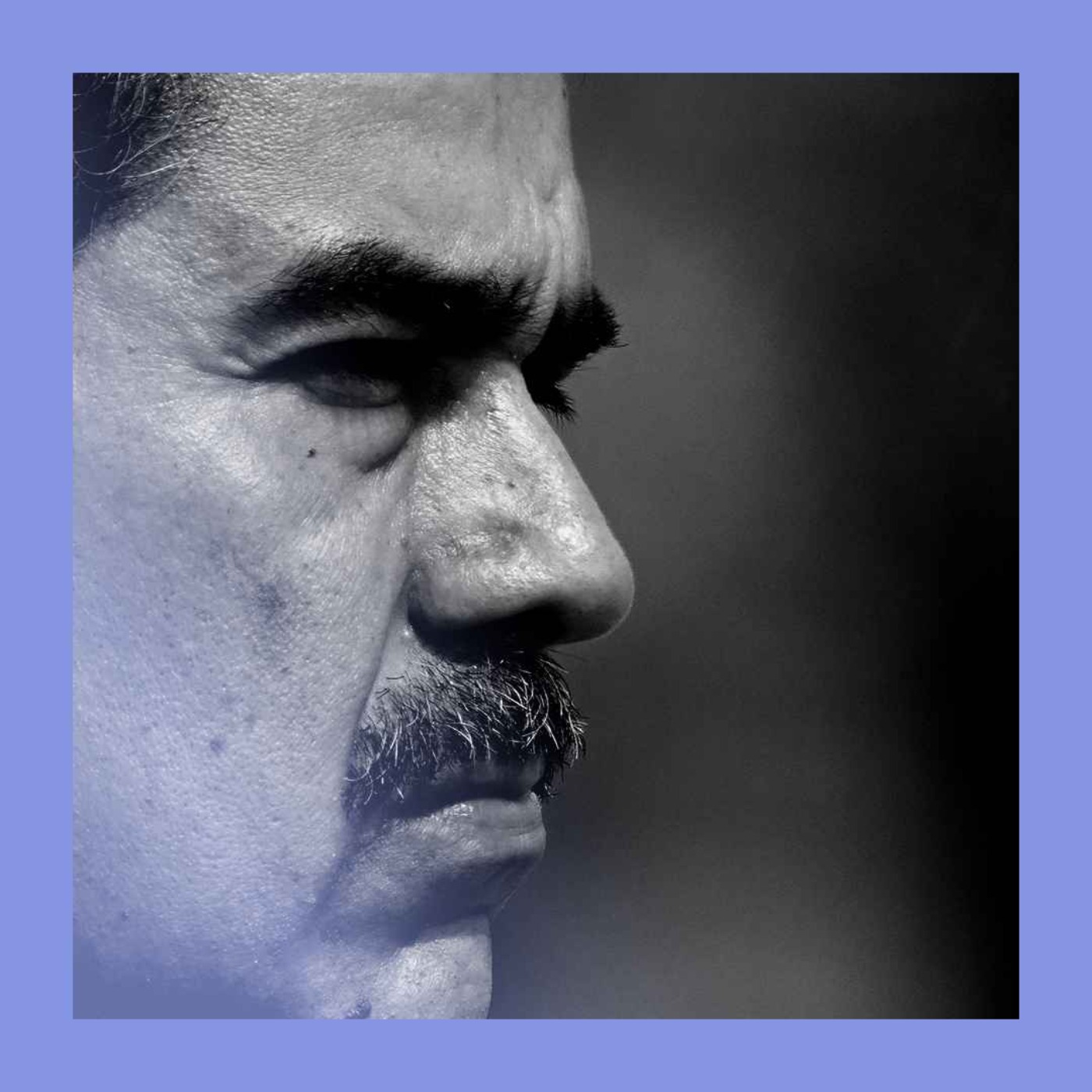
The U.S. operation to capture Maduro serves as a real-world case study for China's potential 'decapitation' strike against Taiwan. China has already rehearsed such scenarios in mock-ups of Taipei's presidential palace. This event demonstrates the feasibility of a quick, surgical strike, which is more aligned with the CCP's goals than a costly amphibious invasion.
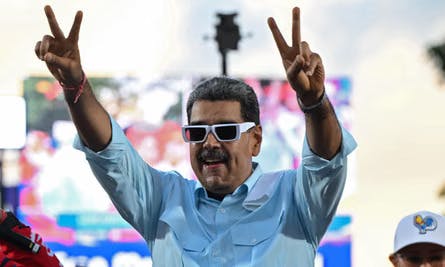
Unlike regimes centered on a single dictator like Saddam Hussein, Iran's power structure is a complex, institutionalized relationship between its clerical and military establishments. This distributed power makes the regime resilient to 'decapitation' strikes aimed at killing senior leaders, as there is no single point of failure.

The "absolutely clinical" US raid to capture Venezuela's president is lauded as a military success. However, historical precedents from Afghanistan in 2001 and Iraq in 2003 show that initial military prowess in toppling a regime is no guarantee of long-term strategic success, which depends on far more complex political factors.
A clean, external removal of Iran's leadership, similar to what occurred in Venezuela, is unlikely. Iran's population is nearly four times larger, it is geographically distant, and the American political psyche associates the Middle East with costly military entanglements, creating a much higher barrier to intervention.

While a ground invasion is unlikely, a potential US military strategy involves a direct assassination attempt on Iran's Supreme Leader, Ayatollah Khamenei. This high-risk decapitation strike aims to destabilize the regime's core, but the effect on the cohesion of its security forces is completely unpredictable.
Iran has anticipated leadership decapitation strikes for decades, building a resilient and distributed command and control infrastructure. This allows its forces, particularly the IRGC, to continue operating and launching attacks even without direct contact with headquarters.
The hope that airstrikes can catalyze a popular uprising for regime change is historically unfounded. Unlike in Afghanistan or Libya where local ground forces existed, there is no organized army on the ground in Iran to capitalize on air power, making a decapitation strategy highly unlikely to succeed.
The US action to remove Maduro was not a traditional regime change. The goal was to eliminate the leader personally while leaving his party and government apparatus largely intact, suggesting a strategic choice to avoid the instability of a full power vacuum.