Get your free personalized podcast brief
We scan new podcasts and send you the top 5 insights daily.
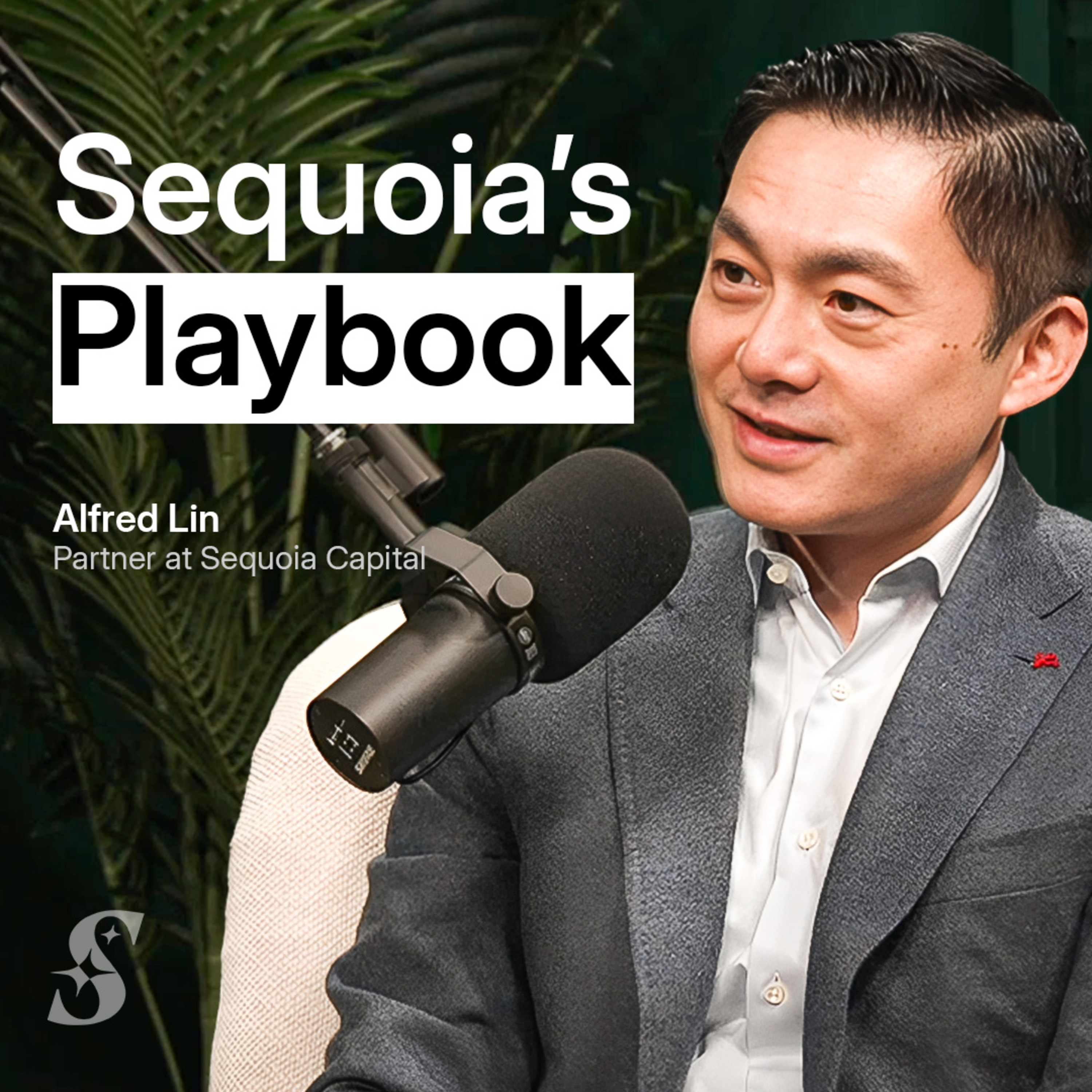
Sequoia's Alfred Lin cautions against assuming a stellar resume from a top tech company translates to founding success. An individual can be exceptional at executing within an established system (an "outlier operator") but lack the distinct skills required to build something from nothing (an "outlier founder").

Related Insights
The visionary and evangelistic skills that make a great founder are fundamentally different from the operational skills needed to run a large organization. Assuming a founder is the best person to manage a scaled company is a mistake.

The ideal founder archetype starts with deep technical expertise and product sense. They then develop exceptional business and commercial acumen over time, a rarer and more powerful combination than a non-technical founder learning the product.
![David George - Building a16z Growth, Investing Across the AI Stack, and Why Markets Misprice Growth - [Invest Like the Best, EP.450] thumbnail](https://megaphone.imgix.net/podcasts/8da7dbd8-ceeb-11f0-941c-ef83bcdd4c9f/image/d44107bc94719f78fbe91befb141073e.jpg?ixlib=rails-4.3.1&max-w=3000&max-h=3000&fit=crop&auto=format,compress)
Sequoia quantifies its search for 'outlier founders' in statistical terms. An exceptional founder is three standard deviations above the mean in a key trait, but a true outlier is four. This statistical lens explains their high bar, reviewing around 1,000 companies for every single investment.
Ben Horowitz emphasizes that while many people had the idea for an electric car or an online bookstore, only entrepreneurs like Elon Musk or Jeff Bezos could build Tesla and Amazon. The critical, non-fungible element is the rare individual with the execution ability, not the initial concept itself.

Sequoia's founder taught that the best investments are in individuals who are both exceptional and "not so easy to get along with." These founders challenge convention and refuse to accept the world as it is, a trait that makes them unconventional but also uniquely capable of building category-defining companies.
While domain experts are great at creating incremental improvements, true exponential disruption often comes from founders outside an industry. Their fresh perspective allows them to challenge core assumptions and apply learnings from other fields.
Jack Altman states that truly "obviously great" talent has better options than joining an unproven startup as an early employee. Therefore, the key to building a stellar founding team is to find people who are exceptionally talented but whose greatness is not yet legible to the broader market.
Becoming a 'founder' has been normalized, but this masks a shortage of true 'entrepreneurs.' An entrepreneur possesses a different level of fortitude and a unique ability to navigate the steep learning curves required of a CEO—particularly in recruiting and management—which many founders fail to develop when the tide goes out.

Horowitz instructs his team to focus on how exceptionally good a founder is at their core competency. He warns against two common errors: passing on a world-class individual due to fixable weaknesses, and investing in a founder with no glaring flaws but no world-class strengths.

The "CEO of the product" role at a large company involves managing the inertia of an already successful product. This is fundamentally different from founding, which requires creating value from nothing with no existing momentum. The skill sets are deceptively dissimilar.