Get your free personalized podcast brief
We scan new podcasts and send you the top 5 insights daily.
Image models like Google's NanoBanana Pro can now connect to live search to ground their output in real-world facts. This breakthrough allows them to generate dense, text-heavy infographics with coherent, accurate information, a task previously impossible for image models which notoriously struggled with rendering readable text.

Related Insights
To overcome AI's tendency for generic descriptions of archival images, Tim McLear's scripts first extract embedded metadata (location, date). This data is then included in the prompt, acting as a "source of truth" that guides the AI to produce specific, verifiable outputs instead of just guessing based on visual content.
To move beyond keyword search in their media archive, Tim McLear's system generates two vector embeddings for each asset: one from the image thumbnail and another from its AI-generated text description. Fusing these enables a powerful semantic search that understands visual similarity and conceptual relationships, not just exact text matches.
Tools like Notebook LM don't just create visuals from a prompt. They analyze a provided corpus of content (videos, text) and synthesize that specific information into custom infographics or slide decks, ensuring deep contextual relevance to your source material.
Contrary to the narrative that AI will kill search, Google sees AI as an expansionary force. Features like AI overviews and Google Lens are driving a 70% YoY increase in visual searches, fulfilling new types of user curiosity and increasing the total volume of questions asked.
Unlike chatbots that rely solely on their training data, Google's AI acts as a live researcher. For a single user query, the model executes a 'query fanout'—running multiple, targeted background searches to gather, synthesize, and cite fresh information from across the web in real-time.
AEO is not about getting into an LLM's training data, which is slow and difficult. Instead, it focuses on Retrieval-Augmented Generation (RAG)—the process where the LLM performs a live search for current information. This makes AEO a real-time, controllable marketing channel.
Google's Nano Banana Pro is so powerful in generating high-quality visuals, infographics, and cinematic images that companies can achieve better design output with fewer designers. This pressures creative professionals to become expert AI tool operators rather than just creators.

When analyzing video, new generative models can create entirely new images that illustrate a described scene, rather than just pulling a direct screenshot. This allows AI to generate its own 'B-roll' or conceptual art that captures the essence of the source material.
Google's "AI mode," powered by Gemini 3, is replacing static blue links with dynamically generated, interactive user interfaces. This shift means search results will become lightweight, composable apps tailored to the query, fundamentally altering SEO and the concept of website traffic.
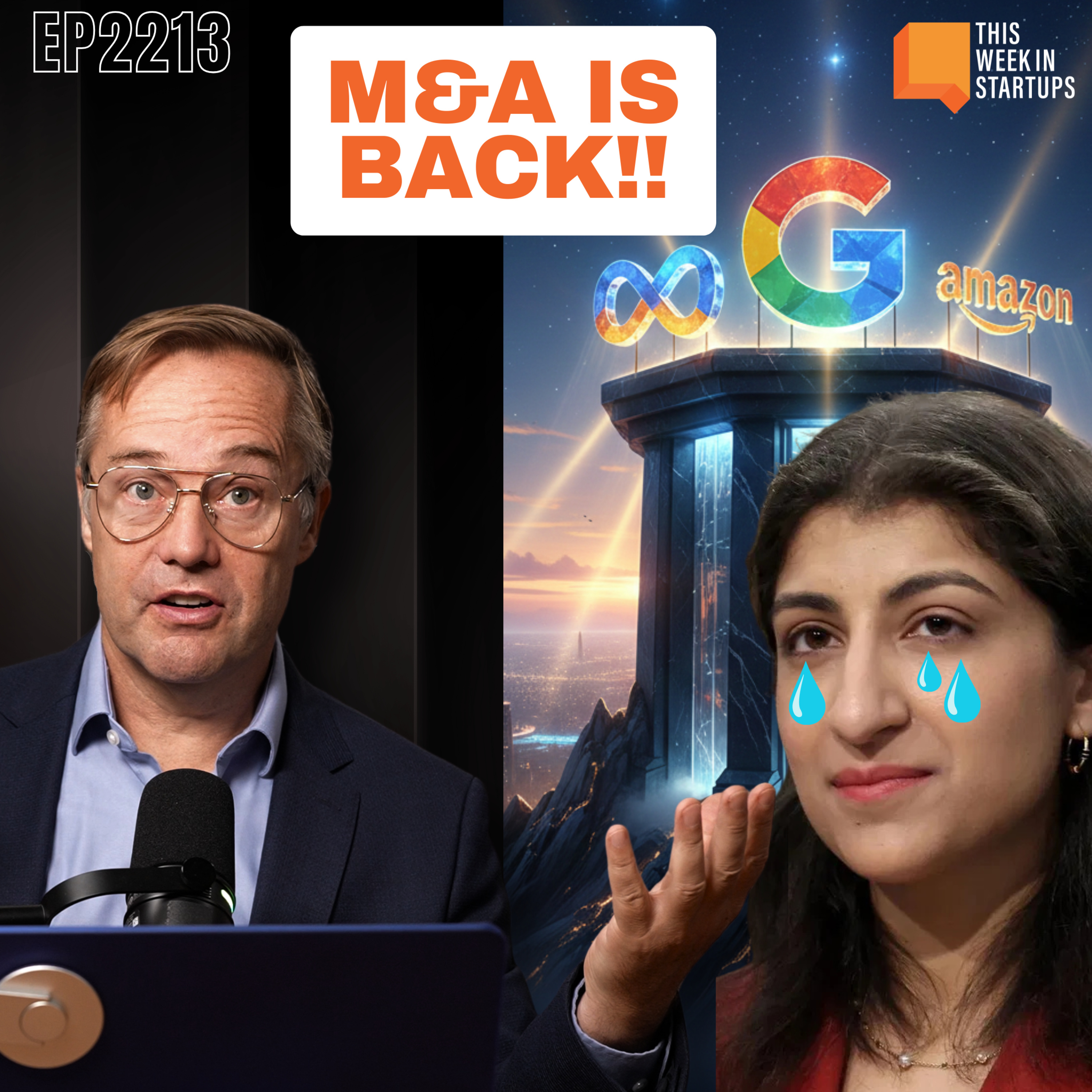
The stark quality difference between infographics generated by Google's Gemini and OpenAI's GPT demonstrates a tangible leap in AI's creative capabilities. This ability to produce publication-ready design in seconds presents a clear, immediate threat to roles like graphic designers and illustrators, moving job displacement from theory to reality.