Get your free personalized podcast brief
We scan new podcasts and send you the top 5 insights daily.
Google's "AI mode," powered by Gemini 3, is replacing static blue links with dynamically generated, interactive user interfaces. This shift means search results will become lightweight, composable apps tailored to the query, fundamentally altering SEO and the concept of website traffic.

Related Insights
Following SEO, App Store Optimization, and social virality, the next major distribution channel is AI answer engines. Product teams must now strategize how to get their brand, features, and knowledge base indexed and surfaced in AI responses, making AEO a critical growth lever for the modern era.
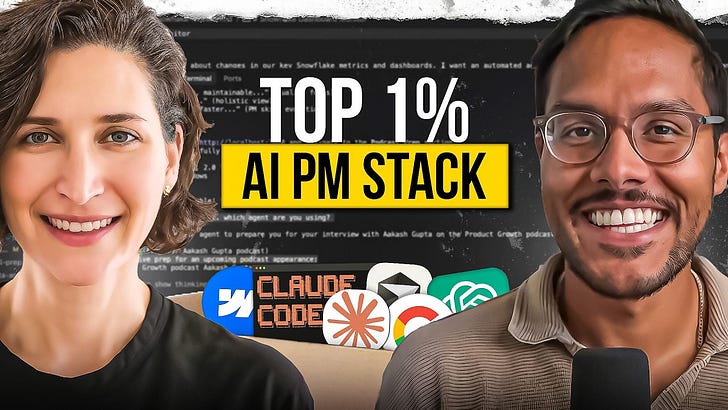
As users delegate purchasing and research to AI agents, brands will lose control over the buyer's journey. Websites must be optimized for agent-to-agent communication, not just human interaction, as AI assistants will find, compare, and even purchase products autonomously.
Contrary to the narrative that AI will kill search, Google sees AI as an expansionary force. Features like AI overviews and Google Lens are driving a 70% YoY increase in visual searches, fulfilling new types of user curiosity and increasing the total volume of questions asked.

Google's AI search panels intercept user queries, causing massive click-through rate drops (up to 89%) for even the highest-ranking organic results. This breaks the long-standing model where top rankings directly translated to traffic and revenue, making traditional SEO metrics obsolete.

The middle of the marketing funnel is compressing as AI provides answers directly on the search results page. This drastically reduces website clicks, forcing marketers to rethink traffic-based goals and find new ways to engage customers off-site.

The future of search isn't just about Google; it's about being found in AI tools like ChatGPT. This shift to Generative Engine Optimization (GEO) requires creating helpful, Q&A-formatted content that AI models can easily parse and present as answers, ensuring your visibility in the new search landscape.

Unlike chatbots that rely solely on their training data, Google's AI acts as a live researcher. For a single user query, the model executes a 'query fanout'—running multiple, targeted background searches to gather, synthesize, and cite fresh information from across the web in real-time.
With 80-90% of AI-powered searches resulting in no clicks, traditional SEO is dying. The new key metric is "share of voice"—how often your brand is cited in AI-generated answers. This requires a fundamental strategy shift to Answer Engine Optimization (AEO), focusing on becoming an authoritative source for LLMs rather than just driving website traffic.
Marketers must evolve from SEO to GEO, optimizing content for how brands appear in LLM results. This requires a new content strategy that treats the LLM as a distinct persona or channel, creating content specifically for it to crawl and ensuring accurate brand representation.
As users increasingly get answers from AI assistants, marketing strategy must evolve from Search Engine Optimization (SEO) to Generative Engine Optimization (GEO). This means creating diverse, authoritative content across multiple platforms (podcasts, PR, articles) with the goal of being cited as a trusted source by AI models themselves.
