Get your free personalized podcast brief
We scan new podcasts and send you the top 5 insights daily.
AEO is not about getting into an LLM's training data, which is slow and difficult. Instead, it focuses on Retrieval-Augmented Generation (RAG)—the process where the LLM performs a live search for current information. This makes AEO a real-time, controllable marketing channel.
Related Insights
Effective Answer Engine Optimization (AEO) isn't about traditional keywords. It requires creating hundreds of niche content variations to match conversational queries. Furthermore, it involves a targeted "citation" strategy, focusing on getting mentioned on platforms with direct data licensing deals with specific LLMs (e.g., Reddit for ChatGPT), as these are prioritized sources.

Following SEO, App Store Optimization, and social virality, the next major distribution channel is AI answer engines. Product teams must now strategize how to get their brand, features, and knowledge base indexed and surfaced in AI responses, making AEO a critical growth lever for the modern era.
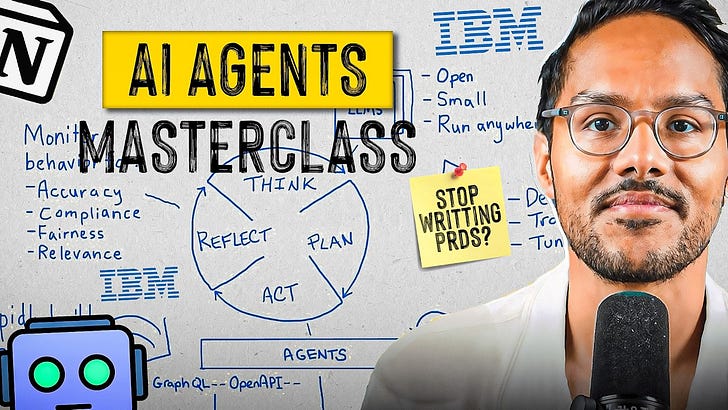
According to IBM's AI Platform VP, Retrieval-Augmented Generation (RAG) was the killer app for enterprises in the first year after ChatGPT's release. RAG allows companies to connect LLMs to their proprietary structured and unstructured data, unlocking immense value from existing knowledge bases and proving to be the most powerful initial methodology.
Traditional SEO requires significant time to build domain authority, making it a mid-stage game. AEO bypasses this; a startup can get mentioned in citations like Reddit or YouTube and immediately start appearing in LLM answers, allowing them to compete with incumbents from day one.
Teams often agonize over which vector database to use for their Retrieval-Augmented Generation (RAG) system. However, the most significant performance gains come from superior data preparation, such as optimizing chunking strategies, adding contextual metadata, and rewriting documents into a Q&A format.
Traffic driven by answer engines is significantly more qualified. Webflow observed a 600% higher conversion rate from LLM referrals compared to traditional search. This is likely because users have higher intent after a detailed conversational query process, making AEO a highly valuable channel.
Unlike chatbots that rely solely on their training data, Google's AI acts as a live researcher. For a single user query, the model executes a 'query fanout'—running multiple, targeted background searches to gather, synthesize, and cite fresh information from across the web in real-time.
With 80-90% of AI-powered searches resulting in no clicks, traditional SEO is dying. The new key metric is "share of voice"—how often your brand is cited in AI-generated answers. This requires a fundamental strategy shift to Answer Engine Optimization (AEO), focusing on becoming an authoritative source for LLMs rather than just driving website traffic.
Marketers must evolve from SEO to GEO, optimizing content for how brands appear in LLM results. This requires a new content strategy that treats the LLM as a distinct persona or channel, creating content specifically for it to crawl and ensuring accurate brand representation.
As users increasingly get answers from AI assistants, marketing strategy must evolve from Search Engine Optimization (SEO) to Generative Engine Optimization (GEO). This means creating diverse, authoritative content across multiple platforms (podcasts, PR, articles) with the goal of being cited as a trusted source by AI models themselves.
