Get your free personalized podcast brief
We scan new podcasts and send you the top 5 insights daily.
Unlike leaders focused on immediate deals, China plays a long game. They are willing to endure short-term economic struggles to weaken rivals like Trump on the international stage, a strategy that purely economic-minded negotiators find confusing and difficult to counter.

Related Insights
China's key learning from the past year is not that the U.S. lacks economic leverage, but that it lacks the political will to use it. Beijing perceives an unwillingness in Washington to endure domestic consequences, like higher consumer prices during an election year, to win a trade war.
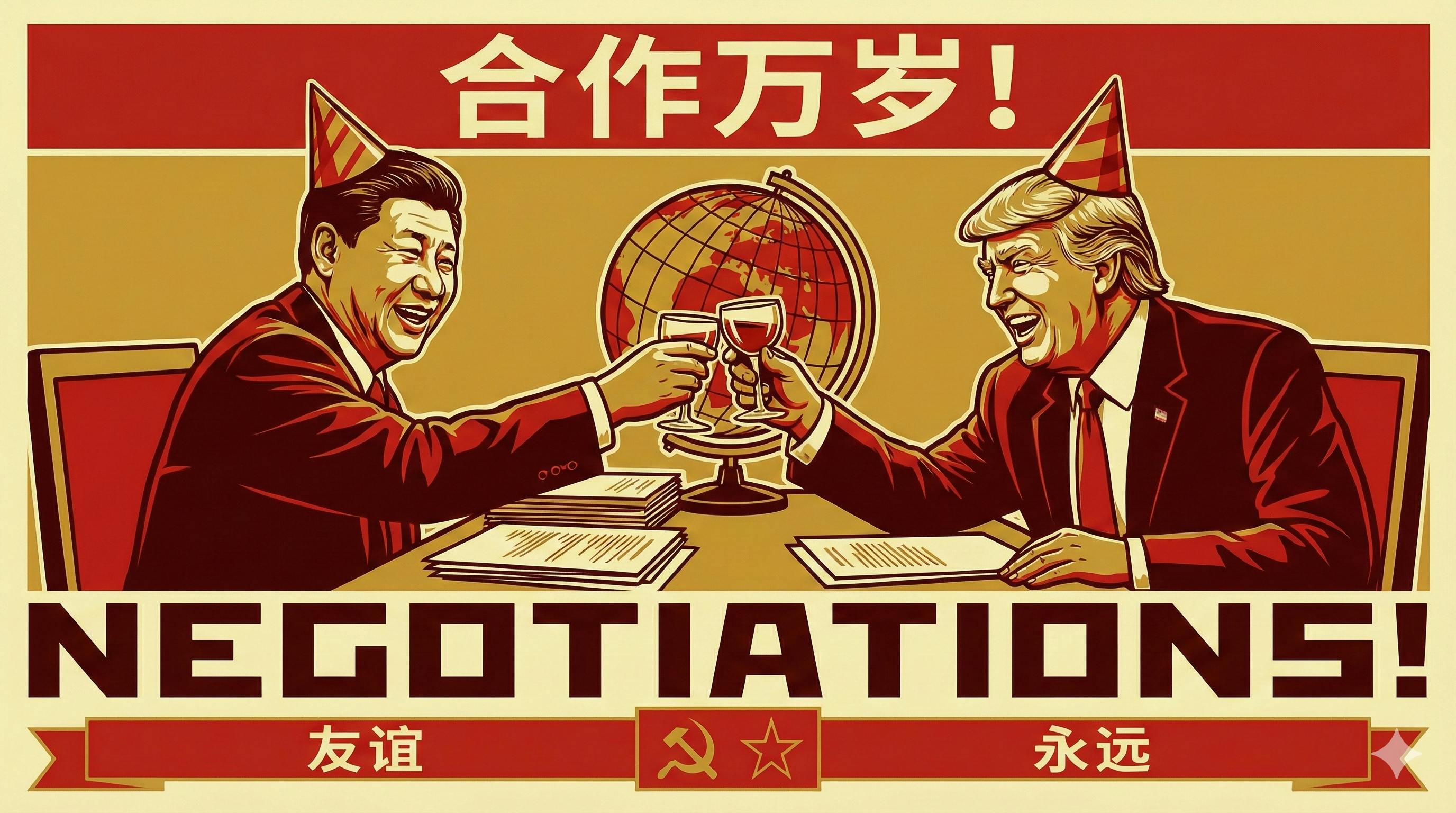
A nation's ability to sustain political will and cohesion is more decisive than possessing specific economic or technological leverage points. This modern application of Mao's 'paper tiger' concept suggests staying power is the ultimate form of leverage.

For the first time, China's economic power—measured by purchasing power parity, manufacturing output, and control over critical minerals—has shifted the global power balance. This gives President Xi a stronger negotiating position than his U.S. counterpart, as China can now weaponize economic dependencies more effectively.

Unlike the US's focus on quarterly results and election cycles, China's leadership operates on a civilizational timescale. From their perspective, the US is a recent phenomenon, and losing the US market is an acceptable short-term cost in a much longer game of survival and dominance. This fundamental difference in strategic thinking is often missed.

The administration was influenced by bearish Wall Street analyses after China's zero-COVID policy and the "Peak China" narrative in the strategic community. This led them to believe China was economically weaker than it was, causing them to miscalculate China's ability and willingness to retaliate in a trade war.
While the U.S. employs aggressive, short-term tactics, China plays a long game. They use economic incentives and a 'friendly' image to win allies, which erodes America's global standing over time as nations seek a less volatile partner.

Beijing believes that as the U.S. midterm elections approach, the Trump administration will feel increasing pressure to secure a tangible "win" or deal. By prolonging negotiations, China aims to maximize its leverage and extract more favorable terms, mapping this strategy from the first trade war.
China plays the long game. Instead of direct confrontation, its strategy is to wait for the U.S. to weaken itself through expensive military interventions and political division. This allows China to gain relative power without firing a shot, similar to its rise during the War on Terror.

While the U.S. oscillates between trade policies with each new administration, China executes consistent long-term plans, like shifting to high-quality exports. This decisiveness has enabled China to find new global markets and achieve a record trade surplus, effectively outmaneuvering U.S. tactics.

The primary goal of certain US tariffs is not to generate revenue but to strategically weaken China's economy. By incentivizing US businesses to leave China, the US aims to slow its rival's growth, thereby protecting the dollar's global reserve status from the rising yuan.
