Get your free personalized podcast brief
We scan new podcasts and send you the top 5 insights daily.
A nation's ability to sustain political will and cohesion is more decisive than possessing specific economic or technological leverage points. This modern application of Mao's 'paper tiger' concept suggests staying power is the ultimate form of leverage.

Related Insights
The US response to the Soviet Sputnik launch was a massive, confident mobilization of science and industry. In contrast, the current response to China's rise is denial and dismissiveness. This shift from proactive competition to reactive denial signals a loss of national vitality and ambition.

China's key learning from the past year is not that the U.S. lacks economic leverage, but that it lacks the political will to use it. Beijing perceives an unwillingness in Washington to endure domestic consequences, like higher consumer prices during an election year, to win a trade war.
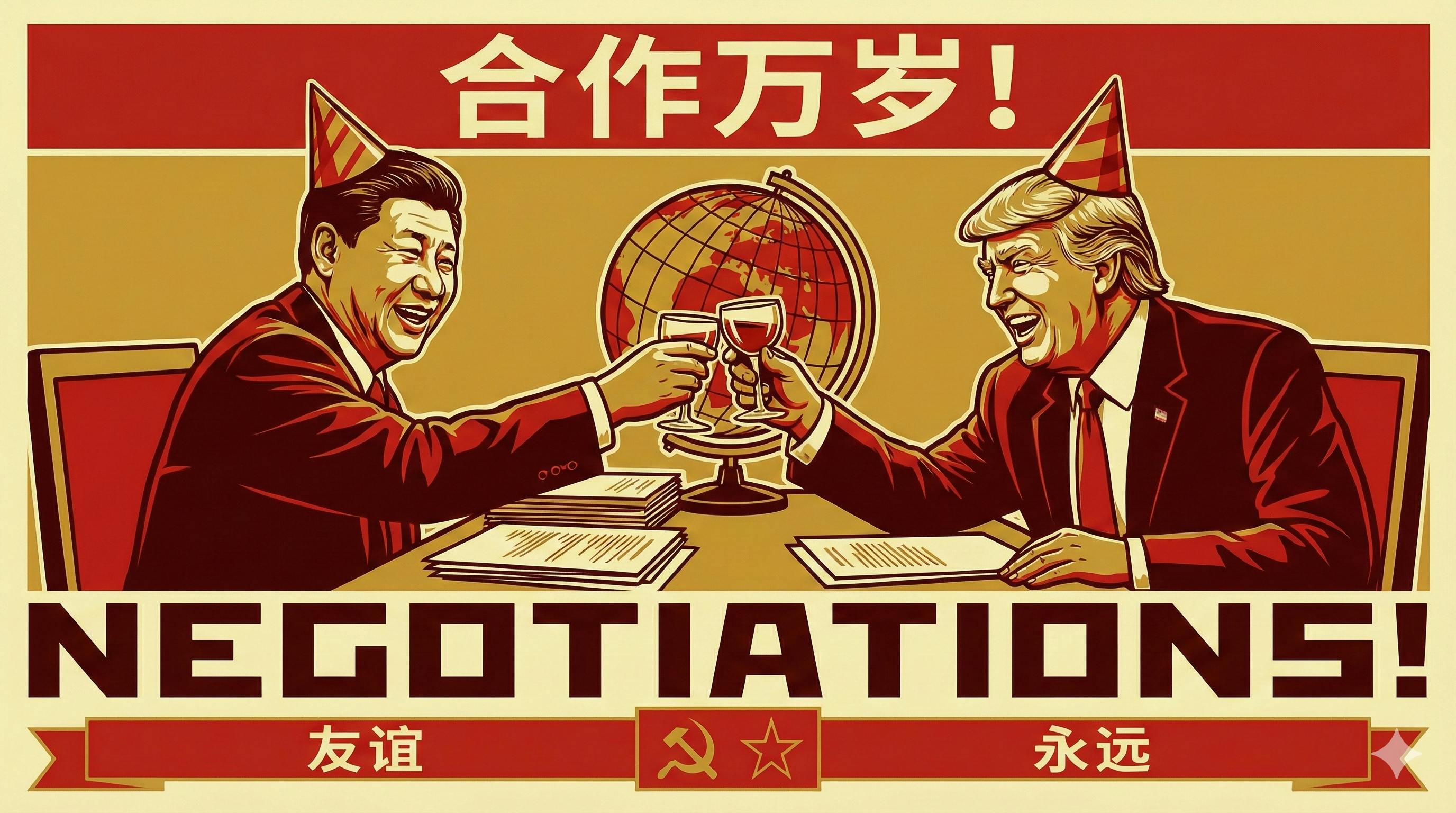
For the first time, China's economic power—measured by purchasing power parity, manufacturing output, and control over critical minerals—has shifted the global power balance. This gives President Xi a stronger negotiating position than his U.S. counterpart, as China can now weaponize economic dependencies more effectively.

Instead of a risky invasion, Xi Jinping's preference is to slowly suffocate Taiwan's will to resist. This strategy involves chipping away at U.S. commitments and eroding the conviction of regional allies, buying time while avoiding a costly direct conflict.

The strategic competition with China is often viewed through a high-tech military lens, but its true power lies in dominating the low-tech supply chain. China can cripple other economies by simply withholding basic components like nuts, bolts, and screws, proving that industrial basics are a key geopolitical weapon.
The US-China competition is a cyclical race where the leader inevitably trips. When one nation gets ahead, it becomes overconfident and makes self-sabotaging mistakes—like China's 2021 tech crackdowns—allowing the other to adapt and catch up. It's a neck-and-neck race driven by hubris.

Recent global conflicts suggest a shift in international relations where coercive strength is more effective than diplomacy when dealing with superpowers. Examples like China's rare earth threats and Iran's actions in the Strait of Hormuz are teaching other nations that aggressive leverage works.

China is successfully capitalizing on perceptions of American political instability. By presenting itself as a rational, stable power with a long-term vision, it is attracting allies who are weary of the US's perceived chaotic and unhinged behavior on the world stage.

While the U.S. employs aggressive, short-term tactics, China plays a long game. They use economic incentives and a 'friendly' image to win allies, which erodes America's global standing over time as nations seek a less volatile partner.

China plays the long game. Instead of direct confrontation, its strategy is to wait for the U.S. to weaken itself through expensive military interventions and political division. This allows China to gain relative power without firing a shot, similar to its rise during the War on Terror.
