Get your free personalized podcast brief
We scan new podcasts and send you the top 5 insights daily.
The administration was influenced by bearish Wall Street analyses after China's zero-COVID policy and the "Peak China" narrative in the strategic community. This led them to believe China was economically weaker than it was, causing them to miscalculate China's ability and willingness to retaliate in a trade war.
Related Insights
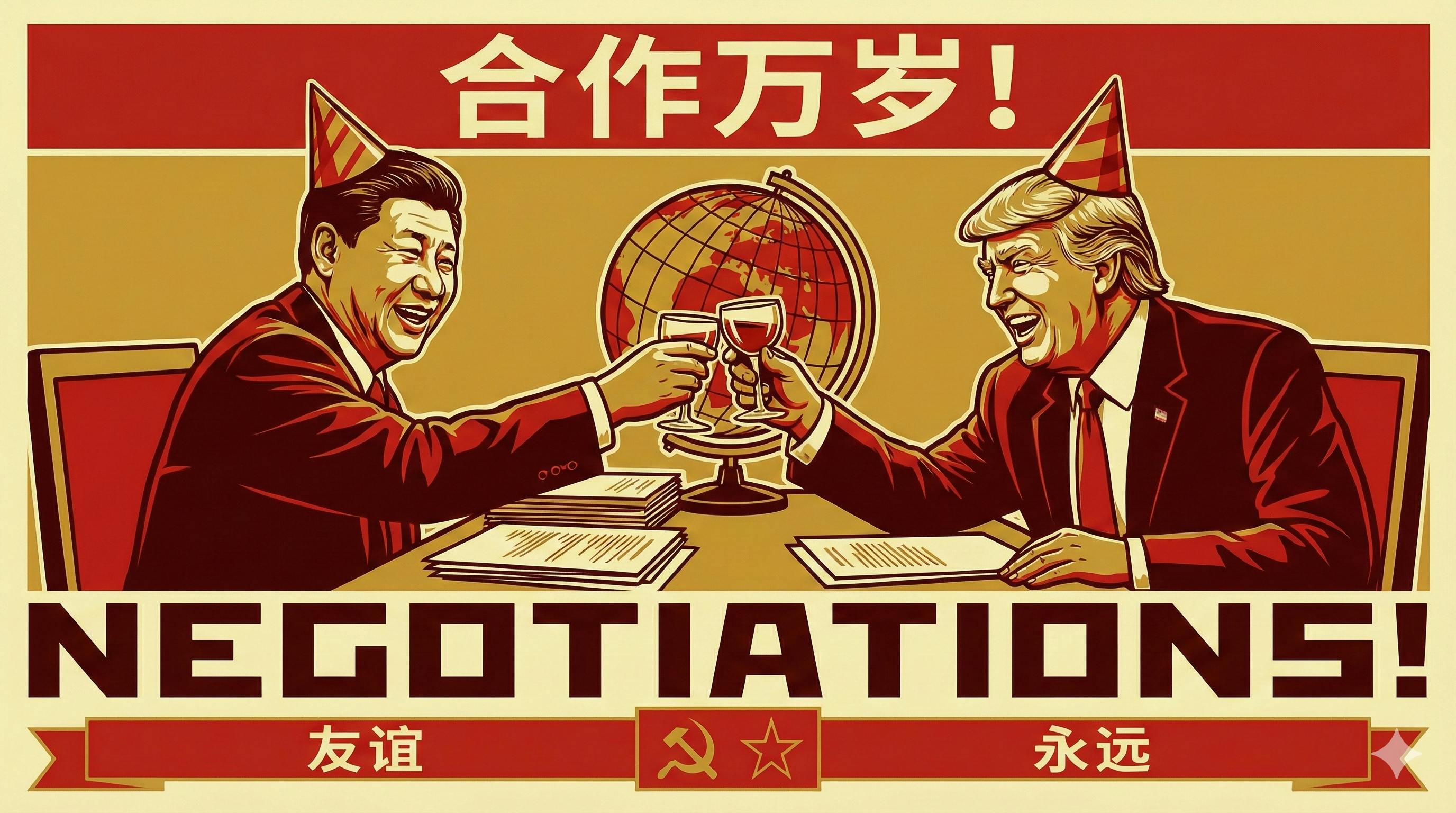
China's key learning from the past year is not that the U.S. lacks economic leverage, but that it lacks the political will to use it. Beijing perceives an unwillingness in Washington to endure domestic consequences, like higher consumer prices during an election year, to win a trade war.
Unlike the US's focus on quarterly results and election cycles, China's leadership operates on a civilizational timescale. From their perspective, the US is a recent phenomenon, and losing the US market is an acceptable short-term cost in a much longer game of survival and dominance. This fundamental difference in strategic thinking is often missed.

Contrary to its goals, the U.S. trade war has resulted in self-isolation. Data shows the U.S. is the only country buying less from China, while U.S. allies and developing nations have increased their trade, leading to a record $1 trillion surplus for China. This highlights a strategic miscalculation in U.S. foreign trade policy.

China demonstrated its significant leverage over the U.S. by quickly pressuring the Trump administration through a partial embargo on rare earth metals. This showcased a powerful non-tariff weapon rooted in its control of critical mineral supply chains, which are also vital for defense applications.

The success of tariffs hinges on the insight that China's economic model prioritizes volume and employment over per-unit profitability. This creates a vulnerability where Chinese producers are forced to absorb tariff costs to maintain output, effectively subsidizing the tariff revenue and preventing significant price increases for US consumers.
China operates as a two-speed economy. While the consumer side is slowing, Xi Jinping is pouring resources into a state-directed 'national security economy' focused on advanced tech and military modernization. U.S. policy should be narrowly tailored to disrupt this specific sector, not the broader economy.
While strategists view short-term trade tensions as a potential dip-buying opportunity, a sustained escalation presents a major risk. A scenario where both nations maintain trade barriers long-term could stall China's economy and negate the prevailing market thesis of an early-cycle 'rolling recovery' in the U.S.

Unlike the first trade war, where Beijing was caught flat-footed, it entered the second with a prepared policy plan and emotional resolve. China developed a toolkit of retaliatory measures, such as the rare earth card, and seized the initiative rather than simply reacting to U.S. actions.
The latest U.S. National Security Strategy drops confrontational rhetoric about China as an ideological threat, instead framing the relationship around economic rivalry and rebalancing. This shift prioritizes tangible deals over promoting American values globally, marking a departure from Reagan-era foreign policy.

While the U.S. oscillates between trade policies with each new administration, China executes consistent long-term plans, like shifting to high-quality exports. This decisiveness has enabled China to find new global markets and achieve a record trade surplus, effectively outmaneuvering U.S. tactics.