Get your free personalized podcast brief
We scan new podcasts and send you the top 5 insights daily.
For AI-powered game creation platform Astrocade, the most difficult technical challenge isn't generating games with AI, but building a recommendation system. Unlike video or images, the open-ended nature of games and diverse user goals make it incredibly hard to match the right playable content to the right user.

Related Insights
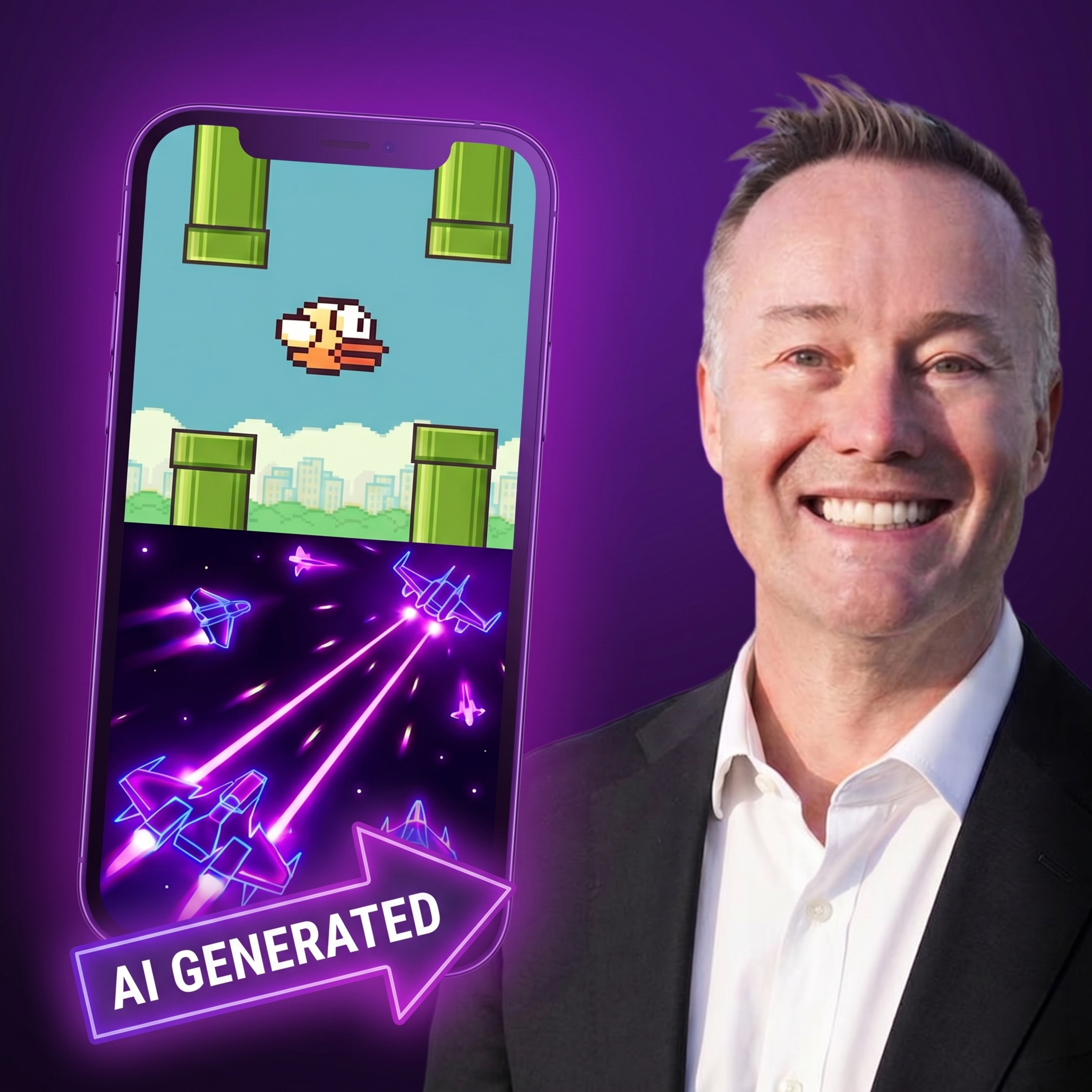
Nanogram, a 'TikTok for games' app, uses AI agents and a custom engine to allow users to generate fully playable 3D games from simple text prompts. What once took a programmer a week can now be accomplished in about 90 seconds, dramatically lowering the barrier to game creation.
While AI tools reduce the cost of creating game assets, Roblox's CEO argues this won't change the competitive dynamics. He believes consumer expectations for quality and polish increase at the same pace as the technology's capability, keeping the bar for success perpetually high.

Google's Project Genie can generate playable game worlds from text prompts, a feat that would have seemed like AGI recently. However, users' expectations immediately shift to the next challenge: demanding AI-generated game mechanics like timers, scoring, and complex interactions.

Creativity is simply remixing existing concepts, a task at which AI excels. Its current primary limitation is in selection. AI can generate a thousand options but doesn't know which one will best appeal to human taste, which requires a uniquely human ability to balance novelty and familiarity.

The common belief that AI can't truly understand human wants is debunked by existing technology. Adam D'Angelo points out that recommender systems on platforms like Instagram and Quora are already far better than any individual human at predicting what a user will find engaging.

The most immediate path for AI in gaming isn't building entire games from scratch ('vibe coding'), but rather in modding existing, popular games. This 'mashup' approach leverages established mechanics and communities, allowing for faster, more tractable innovation, much like the 'Harry Potter by Balenciaga' AI trend.

Astrocade's AI game creation platform is succeeding by focusing on "ultra casual" games, not complex, multi-hour experiences. Their content is designed for play sessions lasting only a few minutes, making it suitable for users who are simultaneously watching a movie or have limited attention spans.
Instead of relying on pre-written, choose-your-own-adventure paths, games can use AI to generate scenarios and consequences dynamically. This creates an emergent and unpredictable experience where player actions result in unique, on-the-fly narrative outcomes, moving beyond a limited set of pre-scripted options.

AI struggles to provide truly useful, serendipitous recommendations because it lacks any understanding of the real world. It excels at predicting the next word or pixel based on its training data, but it can't grasp concepts like gravity or deep user intent, a prerequisite for truly personalized suggestions.

AI tailors recommendations to individual user history and inferred intent, such as being budget-minded versus quality-focused. This means there is no single, universal ranking; visibility depends on aligning with specific user profiles, not a monolithic algorithm.
