Get your free personalized podcast brief
We scan new podcasts and send you the top 5 insights daily.
Astrocade's AI game creation platform is succeeding by focusing on "ultra casual" games, not complex, multi-hour experiences. Their content is designed for play sessions lasting only a few minutes, making it suitable for users who are simultaneously watching a movie or have limited attention spans.

Related Insights
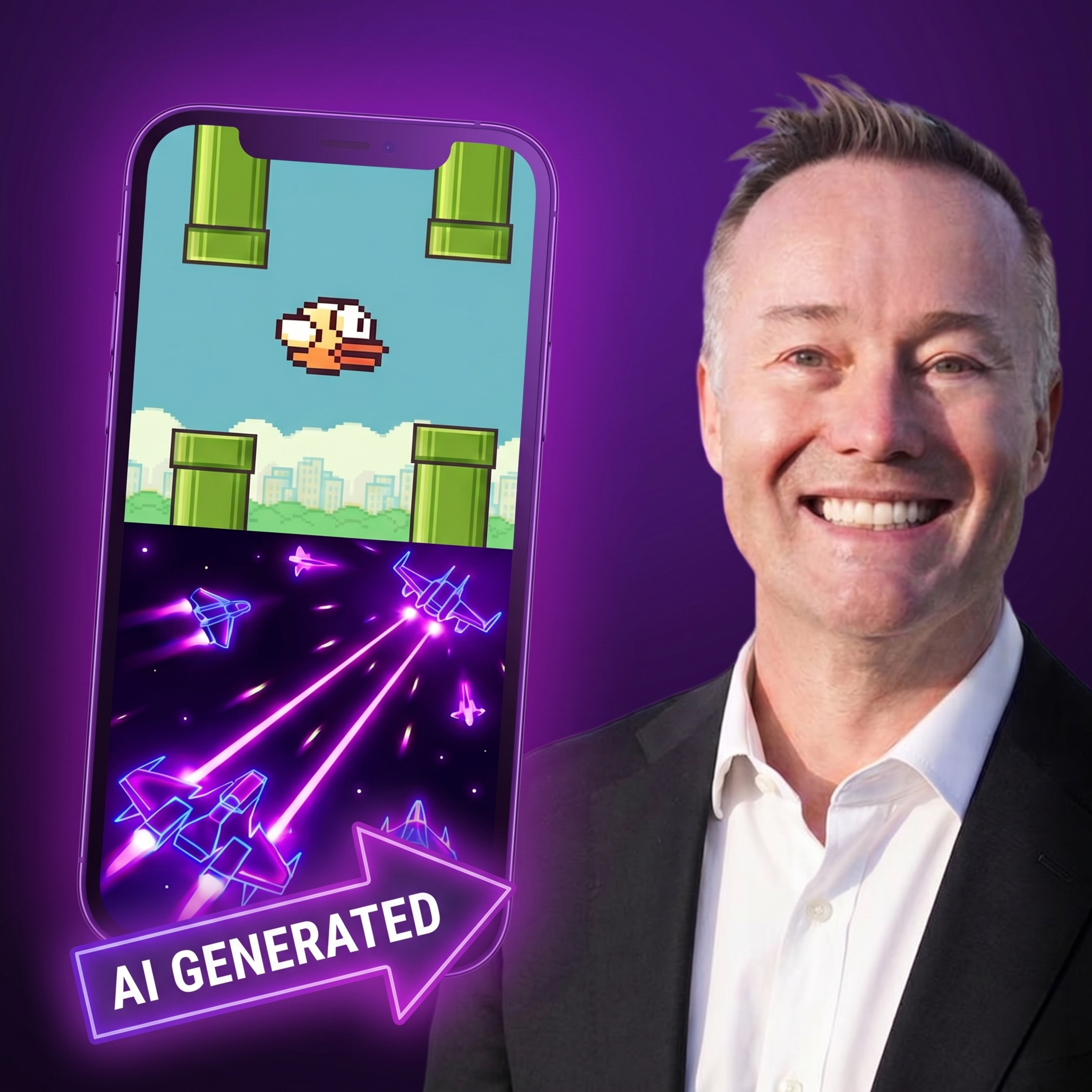
Nanogram, a 'TikTok for games' app, uses AI agents and a custom engine to allow users to generate fully playable 3D games from simple text prompts. What once took a programmer a week can now be accomplished in about 90 seconds, dramatically lowering the barrier to game creation.
Today's dominant AI tools like ChatGPT are perceived as productivity aids, akin to "homework helpers." The next multi-billion dollar opportunity is in creating the go-to AI for fun, creativity, and entertainment—the app people use when they're not working. This untapped market focuses on user expression and play.

The mobile gaming app has 20% of its users playing over 25 games per session, with average session times of 21 minutes. This high level of engagement, achieved without a sophisticated content algorithm, indicates a powerful core product loop and strong initial product-market fit.
Rather than writing detailed specifications, Felix Lee demonstrated that a high-level FigJam flowchart can serve as the sole input for an AI to generate a complete, playable game like Flappy Bird. The AI interprets the user flow and game logic to build the application with animations and scoring in minutes.

Brands can use AI coding tools like Gemini to quickly build simple, themed games. These games act as engaging, shareable content for social media marketing campaigns, offering a fresh way to capture audience attention beyond traditional ads and posts.

The most immediate path for AI in gaming isn't building entire games from scratch ('vibe coding'), but rather in modding existing, popular games. This 'mashup' approach leverages established mechanics and communities, allowing for faster, more tractable innovation, much like the 'Harry Potter by Balenciaga' AI trend.

For AI-powered game creation platform Astrocade, the most difficult technical challenge isn't generating games with AI, but building a recommendation system. Unlike video or images, the open-ended nature of games and diverse user goals make it incredibly hard to match the right playable content to the right user.
The highly engaging, flow-state experience of creating with AI is so enjoyable that people will willingly trade traditional entertainment expenses, like going to the movies, for more AI model credits and development time.

Sam Altman suggests AI will create a new form of entertainment on the spectrum between passive movies and intense games. Experiences will be more interactive than a film but less demanding than a typical video game, allowing users to lean back while also having moments of creative input.

AI coding assistants have radically lowered the barrier to software creation. A 14-year-old with no coding background successfully built a complex game in seven days by writing a PRD-like document and feeding it to an AI tool, demonstrating the new accessibility of development.
