Get your free personalized podcast brief
We scan new podcasts and send you the top 5 insights daily.
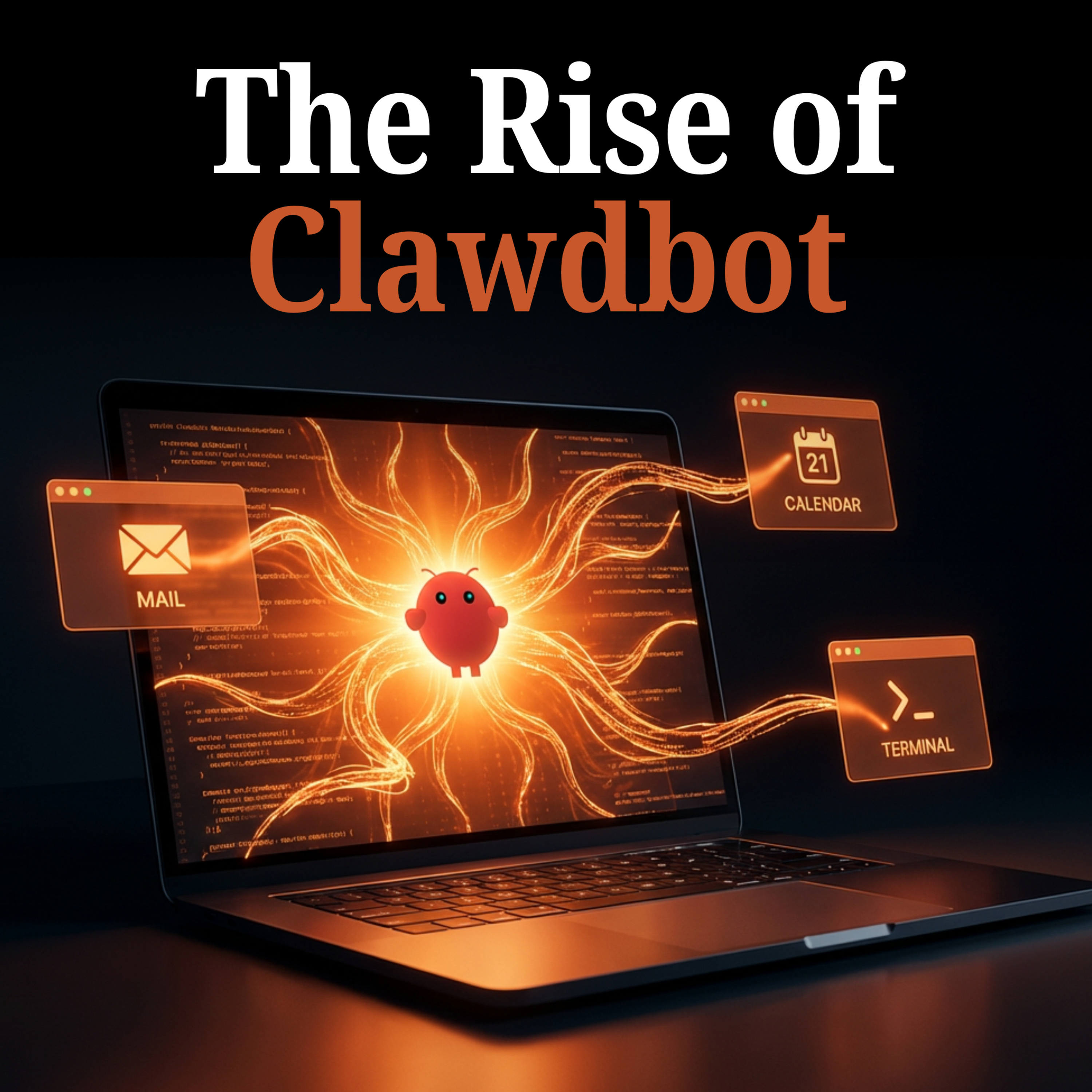
The AI.com Super Bowl ad was a wrapper for OpenClaw, an open-source agent framework that had only gone viral two weeks prior. This demonstrates the unprecedented speed of the current AI hype cycle, where a new technology can become the basis for a multi-million dollar ad campaign almost instantly.

Related Insights
In the emerging AI agent space, open-source projects like 'Claude Bot' are perceived by technical users as more powerful and flexible than their commercial, venture-backed counterparts like Anthropic's 'Cowork'. The open-source community is currently outpacing corporate product development in raw capability.

The development of Claude Cowork demonstrates a massive acceleration in product velocity. The entire application was written by its underlying AI agent, Claude Code, in just a week and a half. This showcases how AI-driven coding is collapsing development cycles for new software products.

Early AI ads, like OpenAI's first, positioned AI as a monumental step in human history. The next wave is expected to be more pragmatic, focusing on specific, relatable use cases for the average consumer. This marketing evolution reflects the technology's maturation from a conceptual wonder to a practical tool for the mass market.
Investor Brent Beshore's experience demonstrates a step-function change, not a gradual evolution. His firm's agentic AI projects, which failed after months of effort, were completed in minutes using Claude Cowork just weeks later. This highlights the surprisingly rapid transition of agentic AI from a theoretical concept to a practical, value-creating tool.
AI is a foundational layer, not a niche. Asking if a company is an 'AI startup' will soon be as meaningless as asking if it has a website. The adoption timeline is radically compressed: what took the internet 15 years for ubiquity will take AI only four, with non-adopters facing extinction.

AI tools allow for incredibly fast turnarounds, enabling brands to create ads that are timely and specific to current events, like the NBA Finals. This is impossible with traditional, long-lead-time production cycles.
AI tools drastically reduce the time and expertise needed to enter new domains. This allows startups to pivot their entire company quickly to capitalize on shifting investor sentiment and market narratives, making them more agile in a hype-driven environment where narrative alignment attracts capital.
OpenAI's initial Super Bowl ad was a high-concept, tech-centric piece. The expectation for their next ad is a shift towards showing tangible, everyday use cases, aiming to demystify AI for the average consumer and integrate ChatGPT into their daily lives, much like a classic Budweiser commercial appeals to the masses.
While OpenAI and Anthropic ran abstract, niche, or philosophical ads, Google demonstrated a tangible, heartwarming use case for its AI (planning a room remodel). For a mainstream Super Bowl audience unfamiliar with the technology, showing a simple, delightful product experience is far more effective than trying to explain complex concepts or engage in industry inside jokes.
Clawdbot, an open-source project, has rapidly achieved broad, agentic capabilities that large AI labs (like Anthropic with its 'Cowork' feature) are slower to release due to safety, liability, and bureaucratic constraints.