Get your free personalized podcast brief
We scan new podcasts and send you the top 5 insights daily.
The comparison reveals that different AI models excel at specific tasks. Opus 4.5 is a strong front-end designer, while Codex 5.1 might be better for back-end logic. The optimal workflow involves "model switching"—assigning the right AI to the right part of the development process.
Related Insights
An effective AI development workflow involves treating models as a team of specialists. Use Claude as the reliable 'workhorse' for building an application from the ground up, while leveraging models like Gemini or GPT-4 as 'advisory models' for creative input and alternative problem-solving perspectives.

Recognizing there is no single "best" LLM, AlphaSense built a system to test and deploy various models for different tasks. This allows them to optimize for performance and even stylistic preferences, using different models for their buy-side finance clients versus their corporate users.

High productivity isn't about using AI for everything. It's a disciplined workflow: breaking a task into sub-problems, using an LLM for high-leverage parts like scaffolding and tests, and reserving human focus for the core implementation. This avoids the sunk cost of forcing AI on unsuitable tasks.

A 'GenAI solves everything' mindset is flawed. High-latency models are unsuitable for real-time operational needs, like optimizing a warehouse worker's scanning path, which requires millisecond responses. The key is to apply the right tool—be it an optimizer, machine learning, or GenAI—to the specific business problem.

Rather than committing to a single LLM provider like OpenAI or Gemini, Hux uses multiple commercial models. They've found that different models excel at different tasks within their app. This multi-model strategy allows them to optimize for quality and latency on a per-workflow basis, avoiding a one-size-fits-all compromise.

Building a single, all-purpose AI is like hiring one person for every company role. To maximize accuracy and creativity, build multiple custom GPTs, each trained for a specific function like copywriting or operations, and have them collaborate.
Initially, even OpenAI believed a single, ultimate 'model to rule them all' would emerge. This thinking has completely changed to favor a proliferation of specialized models, creating a healthier, less winner-take-all ecosystem where different models serve different needs.

Separating AI agents into distinct roles (e.g., a technical expert and a customer-facing communicator) mirrors real-world team specializations. This allows for tailored configurations, like different 'temperature' settings for creativity versus accuracy, improving overall performance and preventing role confusion.
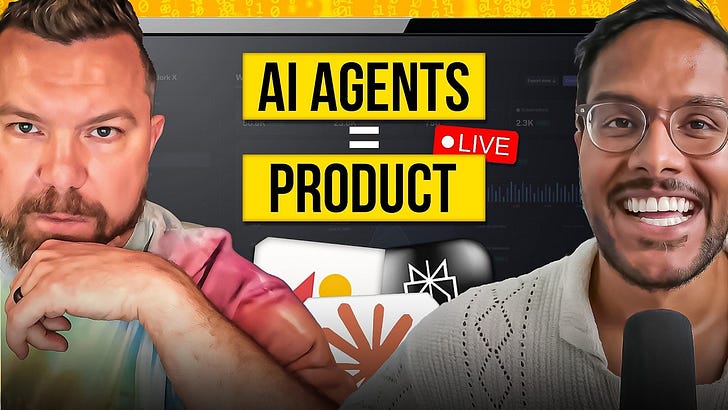
Instead of relying on a single, all-purpose coding agent, the most effective workflow involves using different agents for their specific strengths. For example, using the 'Friday' agent for UI tasks, 'Charlie' for code reviews, and 'Claude Code' for research and backend logic.

Top performers won't rely on a single AI platform. Instead, they will act as a conductor, directing various specialized AI agents (like Claude, Gemini, ChatGPT) to perform specific tasks. This requires understanding the strengths of different tools and combining their outputs for maximum productivity.
