Get your free personalized podcast brief
We scan new podcasts and send you the top 5 insights daily.
Donald Trump targeted the Gordie Howe Bridge, a C$6 billion project entirely funded by Canada, to create a trade dispute. He forced a "new deal" over future profit sharing, which is unlikely to materialize for decades. The maneuver served primarily to create a political victory with little tangible gain.

Related Insights
While the US exports less to Canada by volume, its exports (electronics, pharma) have far higher margins and shareholder value multiples than Canadian exports (lumber, oil). Therefore, for every dollar of trade disrupted by tariffs, the US loses significantly more economic value, making the policy self-defeating.

Canada's long-term economic strategy is built on the belief that the era of increasing integration with the US is permanently over. The leadership anticipates that future American politicians will find it difficult to remove trade barriers, necessitating a fundamental, long-term pivot for Canada's economy away from US dependency.
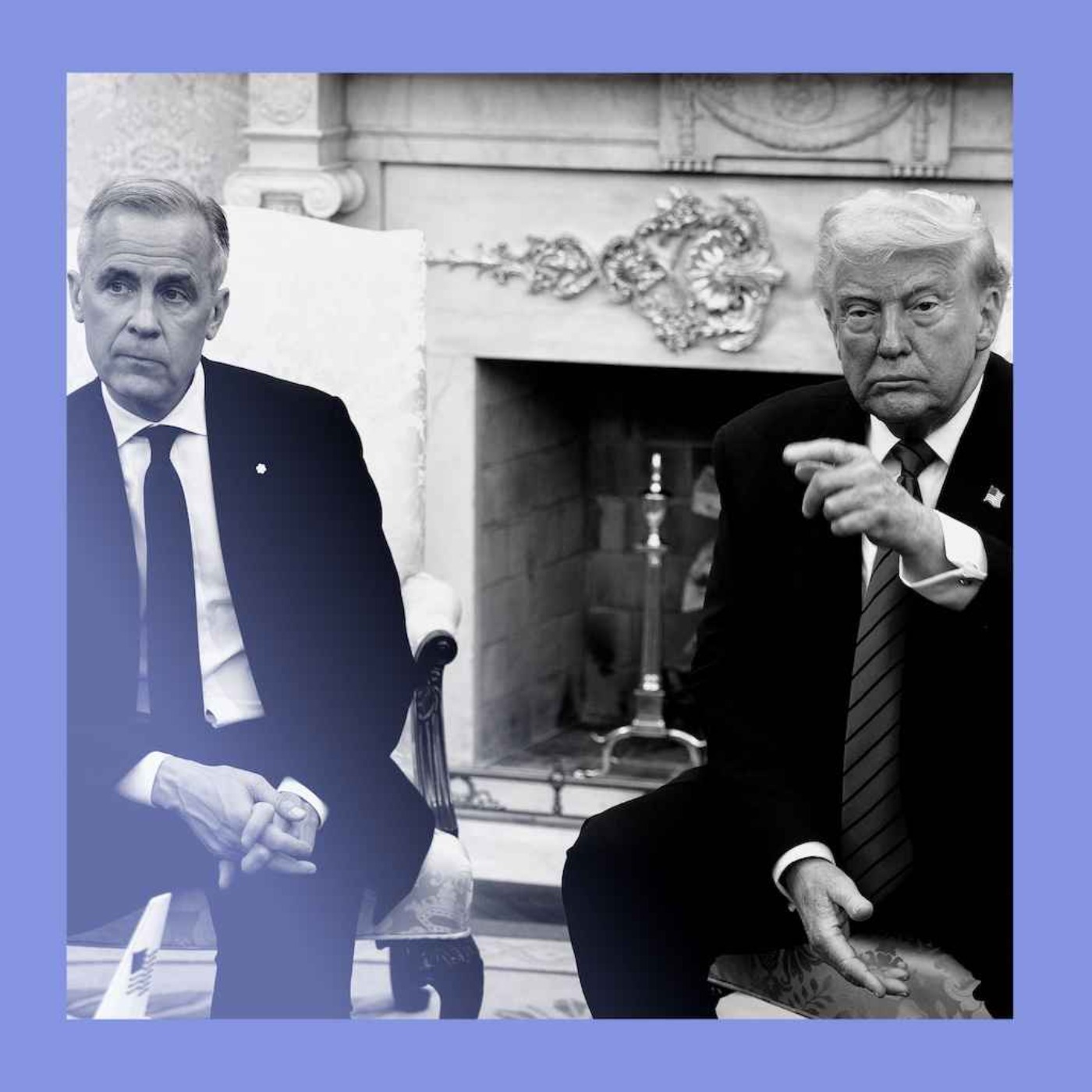
The trade dispute over the Gordie Howe Bridge has angered the Canadian public, who perceive America's tactics as bullying. This sentiment is pressuring Canada's government to adopt a more aggressive, "elbows up" negotiating stance, inspired by the hockey player the bridge is named after, Gordie Howe.
Unlike previous administrations that used trade policy for domestic economic goals, Trump's approach is distinguished by his willingness to wield tariffs as a broad geopolitical weapon against allies and adversaries alike, from Canada to India.

To counteract US trade barriers, Canada's long-term strategy involves removing its own internal trade barriers between provinces. This move is projected to boost GDP by a quarter of a trillion dollars, enough to offset even a complete breakdown of the US trade deal.
A central contradiction exists in Trump's vision for a dominant North American economic bloc. His master plan requires deep cooperation with Canada and Mexico, yet his first actions involved voiding trade agreements and publicly alienating the very leaders whose partnership he needs for the plan to succeed.

The US exports high-margin products like iPhones, generating significant shareholder value per dollar of trade. Canadian exports like timber have low margins. This makes the trade relationship far more beneficial to the US, contradicting the grievance narrative used to justify tariffs.

When trade policies force allies like Canada to find new partners, it's not a temporary shift. They build new infrastructure and relationships that won't be abandoned even if the political climate changes. The trust is broken, making the economic damage long-lasting and difficult to repair.
The Trump administration perceives its new influence over Venezuela's vast heavy oil resources as a strategic advantage in upcoming USMCA trade negotiations. While not a direct substitute for Canadian crude, the perception of reduced dependence is being wielded as political leverage against a key trading partner.

During NAFTA talks with the Trump administration, Canada didn't just deal with the executive branch. It actively engaged Congress, governors, unions, and businesses to build broad support for the relationship, effectively creating a network of influence around a single, powerful counterpart.
