Get your free personalized podcast brief
We scan new podcasts and send you the top 5 insights daily.
The deep focus required by computational scientists clashes with the open-office model. Furthermore, the emerging behavior of researchers verbally interacting with AI models introduces new acoustic and privacy challenges, making traditional layouts unsuitable for the focused nature of modern R&D.
Related Insights
Designs like Charlie Munger's windowless "Dormzilla" embody a tech-centric focus on minimizing distractions to maximize output. This philosophy directly contradicts architectural research showing that varied, aesthetically pleasing environments can reduce stress, highlighting a fundamental tension between productivity culture and human well-being.

As AI and automation become central to drug discovery, the physical layout and infrastructure of a lab are no longer just a facility. They are a core competitive advantage, an "experiment upon themselves" that companies actively protect as valuable IP to prevent replication by rivals.
To bypass the social awkwardness of dictating in open offices, a new behavior is emerging: entire teams are adopting cheap podium mics to quietly whisper to their computers. This creates a surreal but highly productive environment, transforming workplace culture around a new technology and normalizing voice input.

Contrary to the remote-first trend, Crisp.ai's founder advises against a fully distributed model for initial product development. He argues for gathering the core team in one physical location to harness the energy and efficiency of in-person collaboration. Distributed teams are better suited for iterating on an already established product.
The 'Cathedral Effect' shows that your physical environment biases your cognitive state. High ceilings or open skies promote abstract, creative thinking. Conversely, lower ceilings facilitate focused, detailed, and analytical work. You can leverage this by choosing different rooms or even wearing a brimmed hat to create a lower 'virtual' ceiling for detail-oriented tasks.

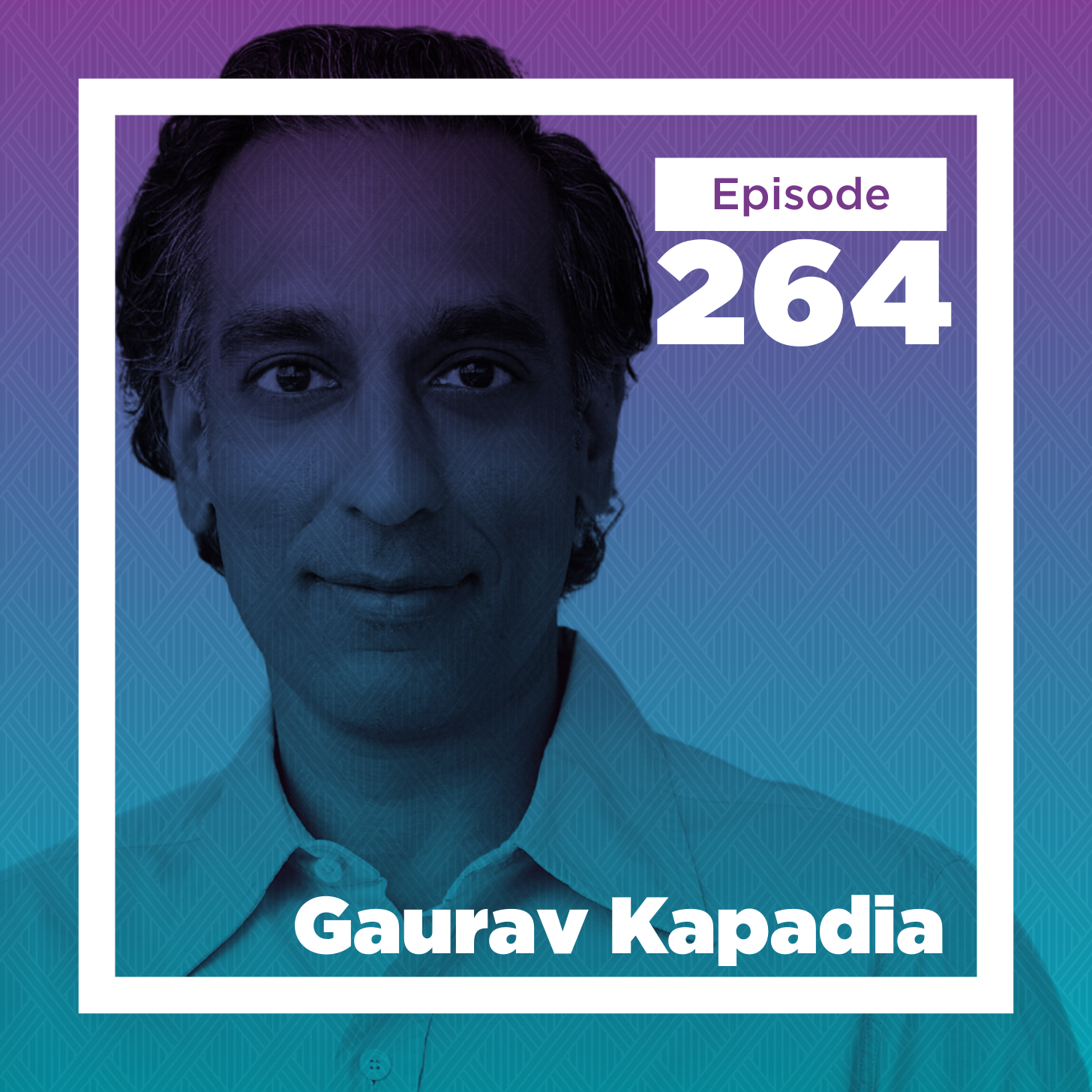
Gaurav Kapadia defends open-plan offices, arguing they are necessary for modern investment analysis. As sectors like software, power, and semiconductors become deeply intertwined, an open layout facilitates the essential, Socratic, cross-disciplinary conversations required to form a coherent investment thesis that would be siloed otherwise.
While AI firms are leasing office space now, the widespread adoption of AI will likely reduce the need for office workers across many industries. This long-term trend of job displacement is expected to create far more vacancy than the current leasing from AI companies fills.

A key driver of AI adoption in the workplace is its ability to smooth over moments of high cognitive effort, like starting a document from a blank page. For brains already exhausted by constant context switching, this is a welcome relief but ultimately creates a dependency that further weakens the ability to focus.

Gensler's strategy for post-pandemic work is to transform the office into a compelling destination people choose to visit. This involves reducing individual desks in favor of diverse, flexible collaboration spaces that offer experiences and social connections unavailable at home, making the commute worthwhile.

CZI's Biohub model fosters cross-disciplinary breakthroughs by physically sitting engineers and biologists together. This simple organizational tactic encourages informal communication and collaboration, proving more effective at solving complex problems than formal structures and reporting lines.
