Get your free personalized podcast brief
We scan new podcasts and send you the top 5 insights daily.
To ensure reliability, especially for agents on remote machines, create a secondary "manager" agent (e.g., Codex in VS Code). This manager can SSH into the primary agent's environment to diagnose, debug, and fix issues, preventing downtime when you can't access the machine physically.

Related Insights
For stubborn bugs, use an advanced prompting technique: instruct the AI to 'spin up specialized sub-agents,' such as a QA tester and a senior engineer. This forces the model to analyze the problem from multiple perspectives, leading to a more comprehensive diagnosis and solution.

When installing a complex system like OpenClaw, use a standard AI like Claude as a troubleshooter. By providing it with screenshots of errors and a link to the official documentation, the AI can read the docs and provide exact command-line fixes.

For time-intensive tasks like coding an application, instruct your main AI agent to delegate the task to a sub-agent. This preserves the main agent's availability for interactive brainstorming and quick queries, preventing it from being locked up. The main agent simply passes the necessary context to the sub-agent.
A recent feature allows you to command Claude Code to run your server in the background. This grants the AI direct access to your server logs, enabling it to debug crashes and other runtime issues without you needing to manually copy and paste error messages.
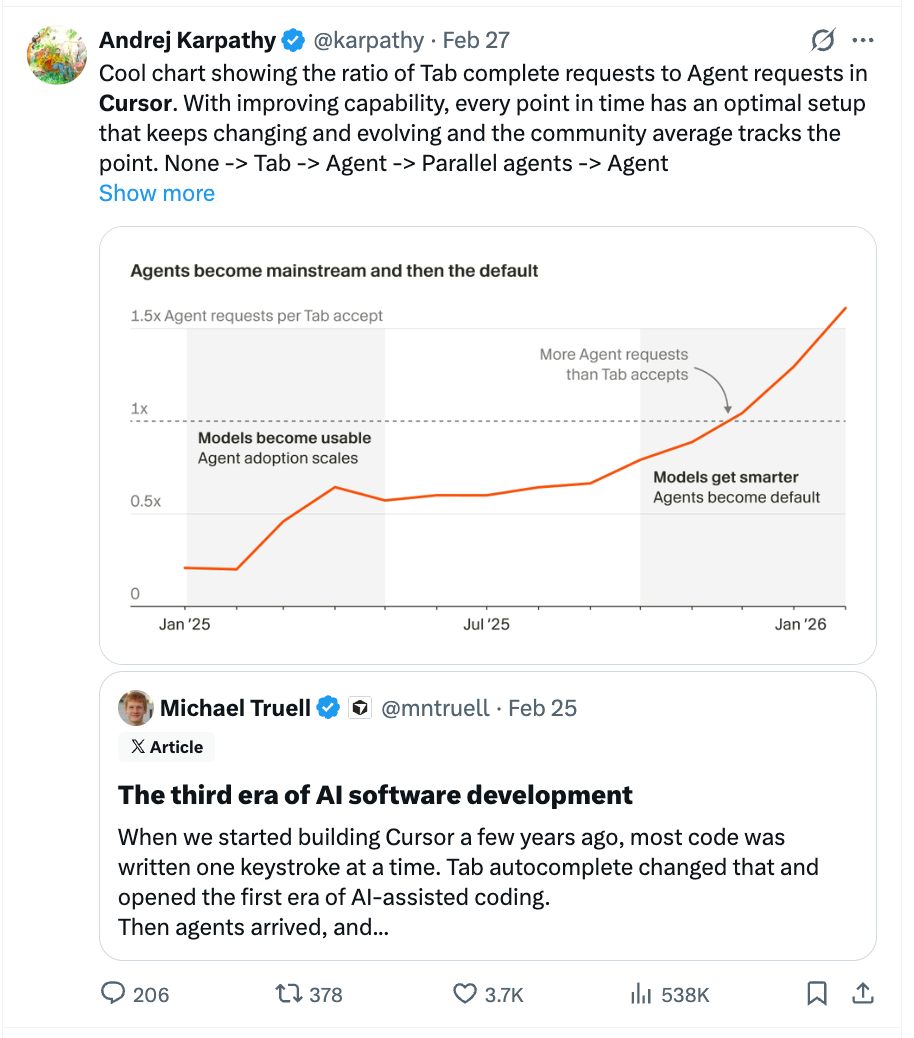
Cursor discovered that agents need more than just code access. Providing a full VM environment—a "brain in a box" where they can see pixels, run code, and use dev tools like a human—was the step-change needed to tackle entire features, not just minor edits.
Cursor's "cloud agent diagnosis" command allows a primary agent to spin up specialized sub-agents that use integrations like Datadog to explore logs and diagnose another agent's failure. This creates a multi-agent system where agents act as external debuggers for each other.
Instead of using local machines like Mac Minis, host client agents in isolated cloud virtual machines (e.g., via Orgo). This provides a secure, sandboxed environment and allows you (and your own management agent) to remotely access, debug, and update all client agents from a single platform, making fulfillment vastly more efficient.
To ensure high reliability, don't wait for clients to report issues. Implement "watchdogs" to auto-restart crashed components. More importantly, configure each client's agent with its own email address to proactively alert you directly when a job or skill fails, allowing you to fix it before the customer even notices.
When a specialized custom agent breaks, don't debug it manually. Instead, use a more powerful, general agent like Codex to analyze the failure. By providing a screenshot or context, the primary agent can diagnose the issue and rewrite the broken agent's underlying architecture.

For advanced debugging, use a dedicated coding agent to manage your other agents. Claire Vo points Clawed Code at her OpenClaw directory to diagnose issues, fix configurations, or even "transplant" memories and tasks between her different agents, acting as a high-level administrator.
