Get your free personalized podcast brief
We scan new podcasts and send you the top 5 insights daily.
Instead of using local machines like Mac Minis, host client agents in isolated cloud virtual machines (e.g., via Orgo). This provides a secure, sandboxed environment and allows you (and your own management agent) to remotely access, debug, and update all client agents from a single platform, making fulfillment vastly more efficient.

Related Insights
Because agentic frameworks like OpenClaw require broad system access (shell, files, apps) to be useful, running them on a personal computer is a major security risk. Experts like Andrej Karpathy recommend isolating them on dedicated hardware, like a Mac Mini or a separate cloud instance, to prevent compromises from escalating.

Running multiple, complex AI coding agents simultaneously is computationally prohibitive on local machines. Stripe's success relies on their ability to spin up numerous isolated cloud development environments in parallel, a crucial investment for any team serious about agentic engineering.
Don't install powerful agents like OpenClaw on your primary computer. The agent can manipulate files and configurations, posing a risk of accidental data deletion or misconfiguration. Using a dedicated machine (like a Mac Mini or old laptop) creates a secure, isolated workspace.

While cloud hosting for AI agents seems cheap and easy, a local machine like a Mac Mini offers key advantages. It provides direct control over the agent's environment, easy access to local tools, and the ability to observe its actions in real-time, which dramatically accelerates your learning and ability to use it effectively.
To address security concerns, powerful AI agents should be provisioned like new human employees. This means running them in a sandboxed environment on a separate machine, with their own dedicated accounts, API keys, and access tokens, rather than on a personal computer.
To prevent an AI agent from accessing personal data if compromised, set it up on a separate computer (like a Mac mini) with its own unique accounts, passwords, and even a virtual credit card for APIs. This creates a secure, sandboxed environment.

While local coding agents have product-market fit today, OpenAI's Michael Bolin argues the long-term trend is remote agents. To achieve true automation—like having an agent autonomously tackle every new bug ticket—workloads must run in the cloud, unconstrained by a developer's personal machine.

Cloud environments like AWS EC2 can limit an AI agent's ability to browse websites or access certain services. A dedicated, clean machine provides greater autonomy, flexibility, and a more stable user experience for complex agent tasks, avoiding common blocks and restrictions found in sandboxed environments.
Claude Cowork runs in a lightweight VM on the user's machine. This "subcomputer" concept provides a secure, sandboxed environment where the AI can install tools and operate freely without compromising the host system or requiring complex cloud permissions for every local resource.
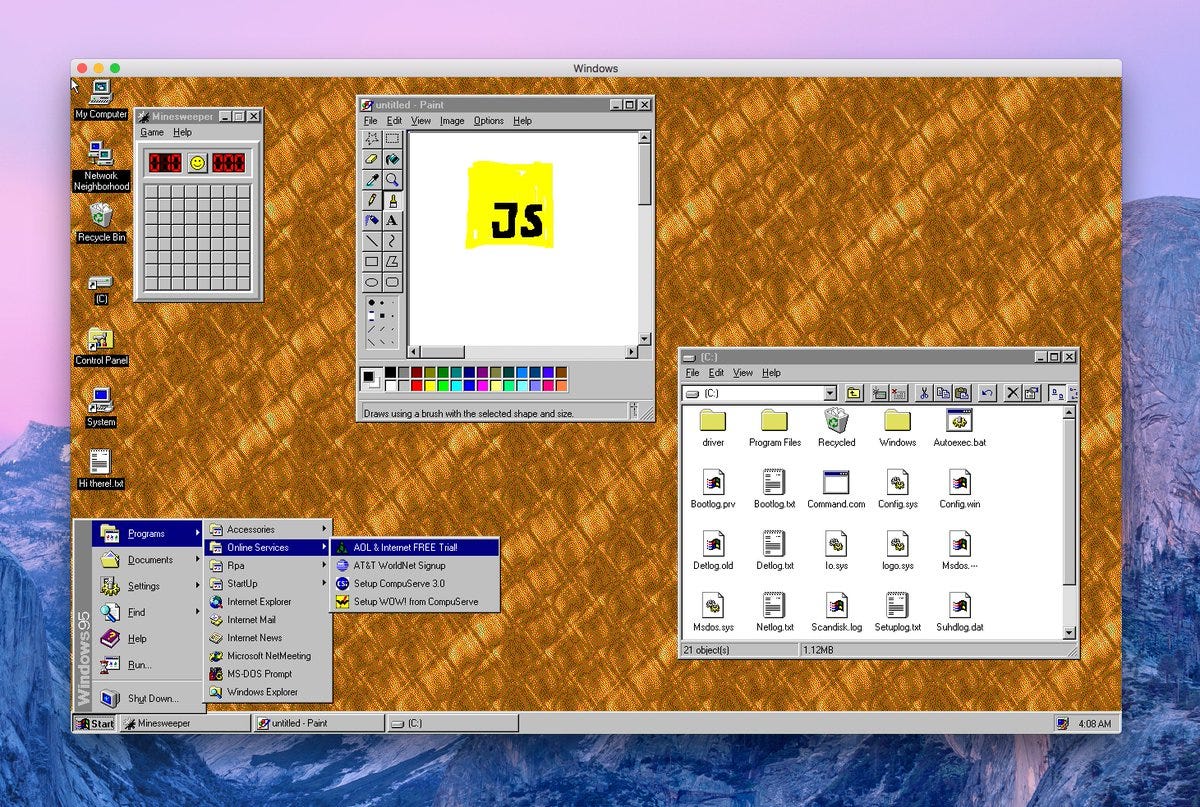
As AI agents evolve from information retrieval to active work (coding, QA testing, running simulations), they require dedicated, sandboxed computational environments. This creates a new infrastructure layer where every agent is provisioned its own 'computer,' moving far beyond simple API calls and creating a massive market opportunity.
