Get your free personalized podcast brief
We scan new podcasts and send you the top 5 insights daily.
The convergence of autonomous, shared, and electric mobility will drive the marginal cost of travel towards zero, resembling a utility like electricity or water. This shift will fundamentally restructure the auto industry, making personal car ownership a "nostalgic privilege" rather than a daily necessity for most people.

Related Insights
After proving its robo-taxis are 90% safer than human drivers, Waymo is now making them more "confidently assertive" to better navigate real-world traffic. This counter-intuitive shift from passive safety to calculated aggression is a necessary step to improve efficiency and reduce delays, highlighting the trade-offs required for autonomous vehicle integration.

The common narrative for a post-labor future is Universal Basic Income (UBI). However, Elon Musk's perspective is "Universal High Income." This vision is not about wealth redistribution but about radical technological deflation, where the costs of energy, labor, and transportation approach zero, creating massive abundance and purchasing power for everyone.

As the operational cost of autonomous vehicles plummets, the business model will shift from fare-based revenue to advertising. By leveraging user data and AI like Grok, the car becomes a platform for hyper-targeted ads and commerce recommendations. This could eventually make rides free for consumers willing to engage with advertisers.
David Risher dismisses the zero-sum view of competing with Uber. He points out that the total rideshare market (2.5B annual rides) is dwarfed by the personal car market (160B rides). Lyft's true growth strategy is to convert personal car trips into rideshare, making direct competition a much smaller part of the picture.
The neural nets powering autonomous vehicles are highly generalizable, with 80-90% of the underlying software being directly applicable to other verticals like trucking. A company's long-term value lies in its scaled driving data and core AI competency, not its initial target market.
Lyft's CEO argues the competition is not a binary battle with Uber for their combined 2.5 billion annual rides. Instead, the true target market is the 160 billion rides Americans take in their own cars. This reframes the opportunity from market share theft to massive market expansion and conversion.
Instead of building its own AV tech or committing to one exclusive partner, Lyft is embracing a 'polyamorous' approach by working with multiple AV companies like Waymo, May Mobility, and Baidu. This de-risks their strategy, positioning them as an open platform that can integrate the best technology as it emerges, rather than betting on a single winner.
The transition from selling cars to operating a RoboTaxi network transforms Tesla's business model. A car sold for a one-time $4,000 profit could generate $200,000 in profit over a five-year period as an autonomous taxi. This 100x increase in lifetime value per unit represents a massive financial unlock for the company.
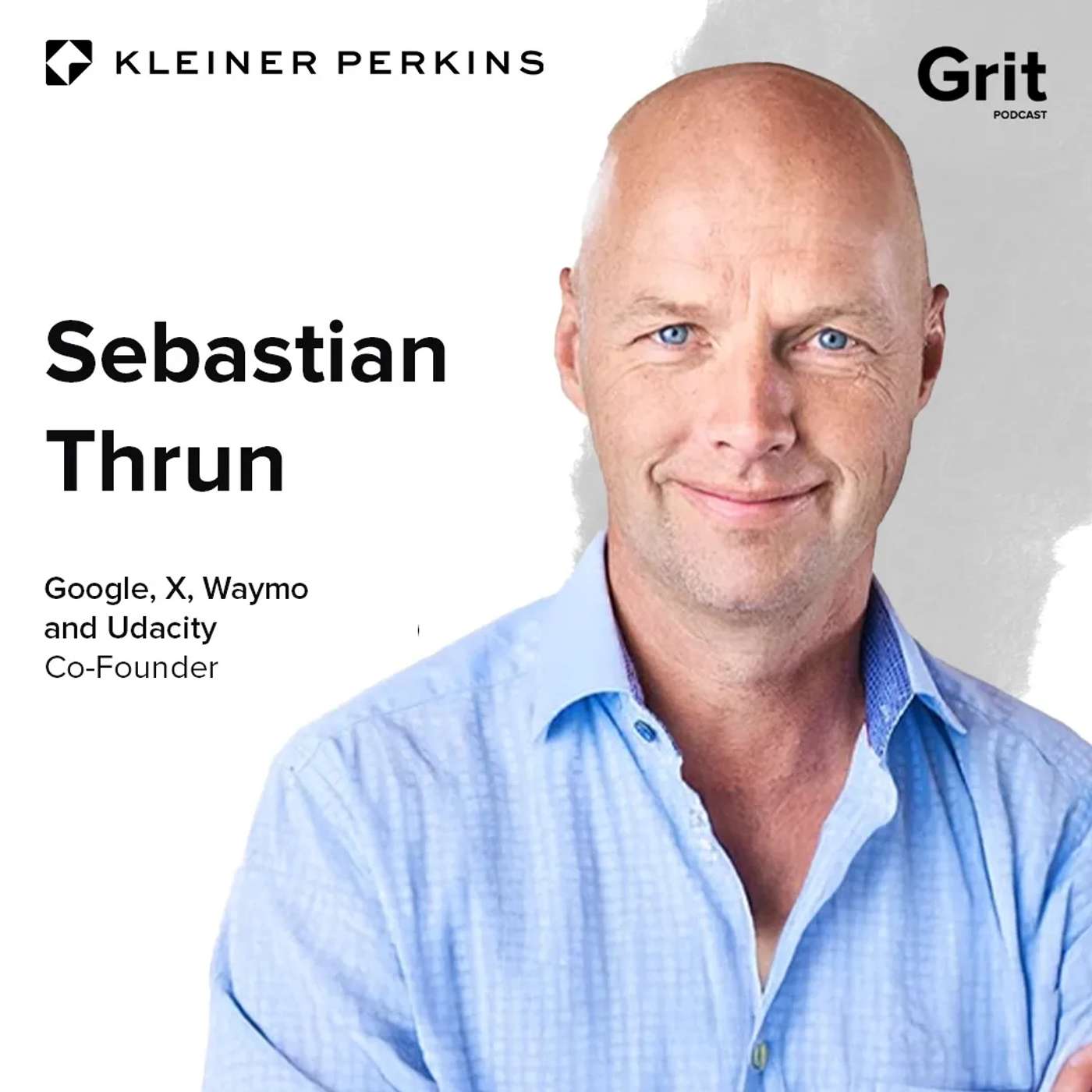
Sebastian Thrun points out a startling fact: even a highway at a standstill is 92% empty space due to inefficient car spacing and lane design. This illustrates the immense, untapped capacity in our infrastructure that could be unlocked by the precision of coordinated, self-driving vehicles.
CEO David Risher describes Lyft's autonomous vehicle strategy as "polyamorous." Instead of betting on one technology partner, they are integrating with multiple AV companies like Waymo, May Mobility, and Baidu. This approach positions Lyft as the essential network for any AV provider to access riders, regardless of who builds the best car.