Get your free personalized podcast brief
We scan new podcasts and send you the top 5 insights daily.
Pahlavi contrasts the anti-American regime with the populace by citing a key historical fact: after 9/11, Iranians were the only people in the region to hold candlelight vigils for American victims. This is presented as proof of a natural friendship suffocated by the current government.

Related Insights
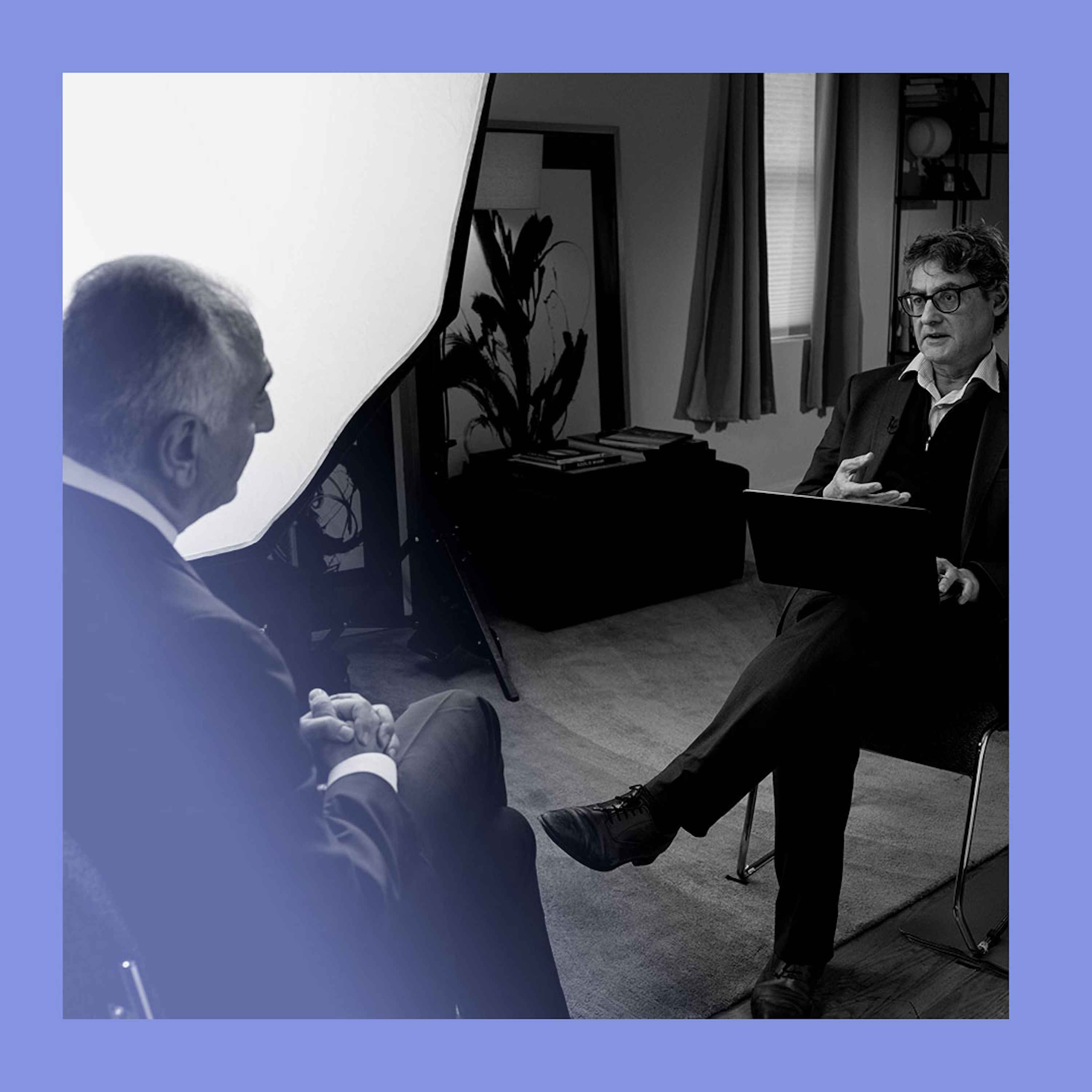
Reza Pahlavi, the exiled son of the last Shah, has become a legitimate political figure. This surprising resurgence is not organic but driven by a decade of well-produced, mysteriously-funded satellite TV documentaries romanticizing the pre-revolution era for Iran's large, young population.

Contrary to the typical anti-war sentiment in the West, anecdotal evidence suggests that an overwhelming majority of Iranians who oppose the regime—perhaps 80% or more—would welcome outside help. They feel abandoned after the US promised support for protesters, making them receptive to foreign intervention.

Young Iranians, with no memory of the Shah's era, embrace a romanticized vision of pre-1979 Iran's social freedoms and global standing. This nostalgia, combined with the regime's suppression of internal leaders, has elevated Reza Pahlavi as a symbolic, default leader for a nationalist reclamation.

Beyond the immediate conflict, Israeli strategists see a long-term opportunity. If the current regime falls, they hope to restore the strong alliance that existed with non-Arab Iran before the 1979 Islamic Revolution, which was based on shared regional interests.

The Islamic Revolution in Iran provided a powerful and enduring model for political Islam. Its legacy, including the hostage crisis, shaped the American perception of the Middle East and global politics more profoundly than Communism did in the 21st century.

Reza Pahlavi's strategy is not based on domestic uprising alone. He believes protestors are "sacrificial lambs" who cannot succeed without direct American military intervention, framing them as a "fort waiting for the cavalry." This dependence makes his plan vulnerable to US political shifts.
The Islamic regime's support base is limited to an aging demographic that participated in or benefited from the 1979 revolution. The country's overwhelmingly young population, a result of a post-revolution population boom, bears the brunt of the regime's failures and is staunchly opposed to it.
Shervin Peshavar frames the modern fight for a democratic Iran within a 2,500-year historical context. He connects the principles of human rights from Persian king Cyrus the Great to the American Declaration of Independence via Thomas Jefferson, arguing the current movement continues this ancient legacy.
The iconic term used by Iranian leaders to describe the United States was coined by Ayatollah Khomeini the day after the embassy seizure. It is not a traditional Quranic term but a modern political slogan crafted to cast the conflict in Manichaean terms of good versus evil.
The 47-year rule of the Islamic Republic has had a paradoxical effect. The oppressive theocracy has led to a population that is now arguably the most secular in the Middle East and, despite its anti-American government, one of the most pro-American populations in the region, desperate to separate mosque and state.