Get your free personalized podcast brief
We scan new podcasts and send you the top 5 insights daily.
Grand Theft Auto's virtual world succeeds where Meta's struggled by providing a complex fantasy life, not a digital replica of the user. It shows players are drawn to the escapism of being someone else, complete with virtual relationships and self-care, not just a VR version of themselves.

Related Insights
The rapid growth of the app Status, where users role-play as characters in fictional universes, indicates a new entertainment phase. Fandom is moving beyond passive consumption (watching shows) and community discussion (Reddit) to active, immersive participation powered by AI and social simulation.

Instead of working for decades to climb a social ladder, people can enter virtual worlds where AI characters admire them as kings. This readily available "status" could be a powerful and addictive alternative to real-world achievement.

Beyond hardware issues, VR's primary adoption barrier is its isolating, 'antisocial' nature. While gaming trends toward shared, social experiences, VR requires users to strap on hardware and disconnect from their physical surroundings, creating a fundamental conflict with modern user behavior.

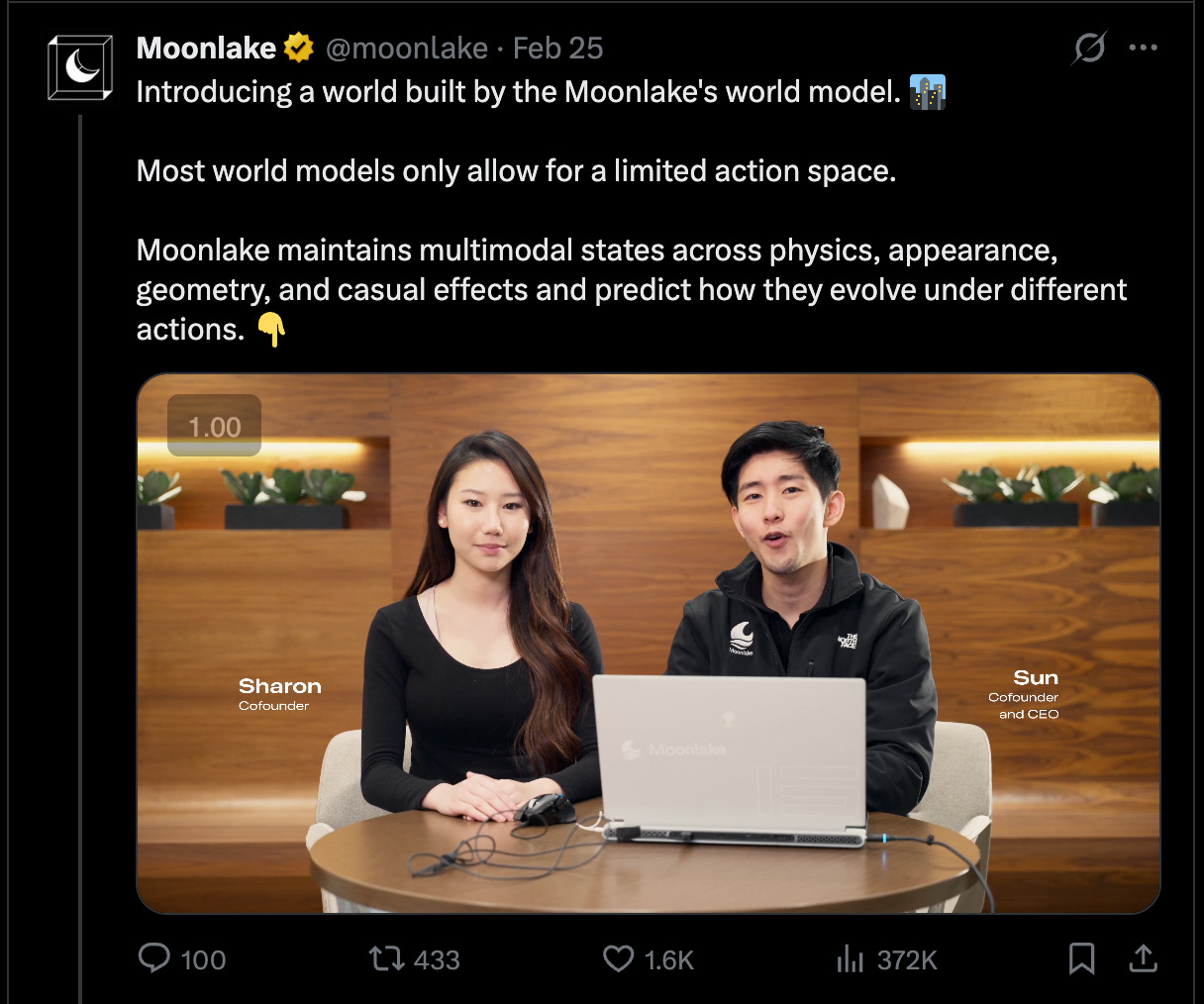
Great games are defined by their concept and gameplay, not just visual fidelity. Many successful games use primitive graphics, while visually stunning games often fail if mechanics are poor. This justifies focusing on a strong underlying world model that enables robust interaction.
The ability to generate playable 3D worlds from text, as demonstrated by Google's Genie 3, suggests future games won't be developed but generated on-demand. This capability is viewed as an existential threat to the traditional game industry, potentially making franchises like Grand Theft Auto obsolete.

Enduring games like Roblox succeed because they are vessels for players to create their own fun, enabling self-expression and social roleplay. This avoids the unsustainable "content treadmill" where publishers must constantly create new narratives, instead letting player ingenuity drive engagement and scale.

Roblox's leadership frames their total addressable market beyond the $200 billion gaming industry. They are building for the "human co-experience market," viewing their platform as a new communication medium akin to a sci-fi holodeck where people share experiences.
The feeling that life is unreal stems from algorithms creating a placid simulation of dating, friendship, and achievement. This simulation keeps us engaged while feeding off our attention and resources, much like the machines in the movie "The Matrix."

Experiences like The Sphere or IMAX are compelling as short-term, sensory-rich events, but they are not blueprints for a world to live in. The human mind and body desire a return to reality after sensory overload. This suggests that the most valuable technology will enhance our existing world, not replace it.

Contrary to the classic view of games as competitive, modern player data shows that motivations like self-expression and companionship are far more prevalent. Riot Games' success with cosmetic skins exemplifies the financial power of catering to this new hierarchy of player needs.
