Get your free personalized podcast brief
We scan new podcasts and send you the top 5 insights daily.
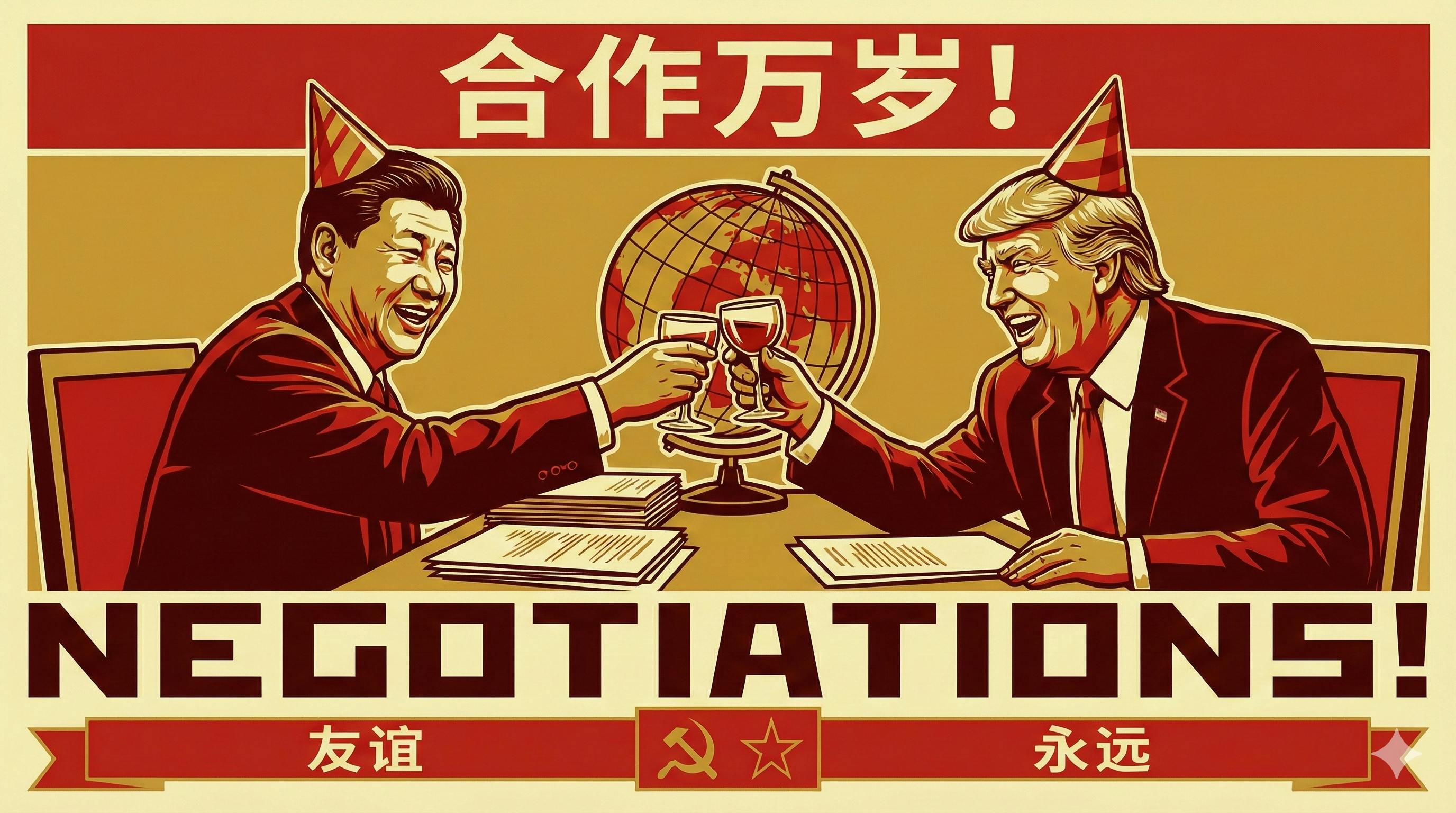
The US Trade Representative is reportedly exploring a radical shift in trade policy towards a 'managed trade' system with China. This would function like a barter arrangement, where the two countries agree on specific import and export volumes, abandoning free-market principles to directly control the trade deficit.

Related Insights
To counter the economic threat from China's state-directed capitalism, the U.S. is ironically being forced to adopt similar strategies. This involves greater government intervention in capital allocation and industrial policy, representing a convergence of economic models rather than a clear victory for free-market capitalism.

Contrary to its goals, the U.S. trade war has resulted in self-isolation. Data shows the U.S. is the only country buying less from China, while U.S. allies and developing nations have increased their trade, leading to a record $1 trillion surplus for China. This highlights a strategic miscalculation in U.S. foreign trade policy.

China's trade surplus is on track to exceed $1.2 trillion, a scale unprecedented in modern peacetime history. This massive imbalance, driven by a strategy of import substitution, raises critical questions about whether the global economy can absorb these surpluses without significant political and economic backlash.

The shift away from the post-Cold War trade system started well before Trump. As early as 2009, the Obama administration recognized that the Doha Round framework was unworkable with China's economic model and began warning Beijing that the 'benign international environment' it relied on was at risk.

While the U.S. oscillates between trade policies with each new administration, China executes consistent long-term plans, like shifting to high-quality exports. This decisiveness has enabled China to find new global markets and achieve a record trade surplus, effectively outmaneuvering U.S. tactics.
Beyond raw materials, China's national ambition is to achieve near-total self-sufficiency. The prevailing mood is that there is "nothing for which it wants to rely on foreigners a single day longer than it has to." This philosophy of aggressive import substitution signals a fundamental break with the logic of reciprocal global trade.
The long-standing American political consensus favoring lower trade barriers has been replaced. Industrial policy, with active government shaping of key sectors via tariffs and investment, is now a durable, bipartisan strategy seen under both Trump and Biden administrations.

Despite escalating rhetoric, the U.S. and China are unlikely to fully decouple their supply chains. Their relationship is maintained by a fragile equilibrium where the U.S. provides semiconductor chips in exchange for China's critical rare earth minerals, making a return to the status quo the most probable outcome.
The latest US-China trade talks signal a shift from unilateral US pressure to a negotiation between equals. China is now effectively using its control over critical exports, like rare earth minerals, as a bargaining chip to compel the U.S. to pause its own restrictions on items like semiconductors.

China effectively steered talks away from major macroeconomic imbalances and unfair trade practices. Instead, the focus has been "whittled down" to sector-specific issues like TikTok or soybean purchases, allowing China to manage concessions without addressing core U.S. grievances in a game of "whack-a-mole."