Get your free personalized podcast brief
We scan new podcasts and send you the top 5 insights daily.
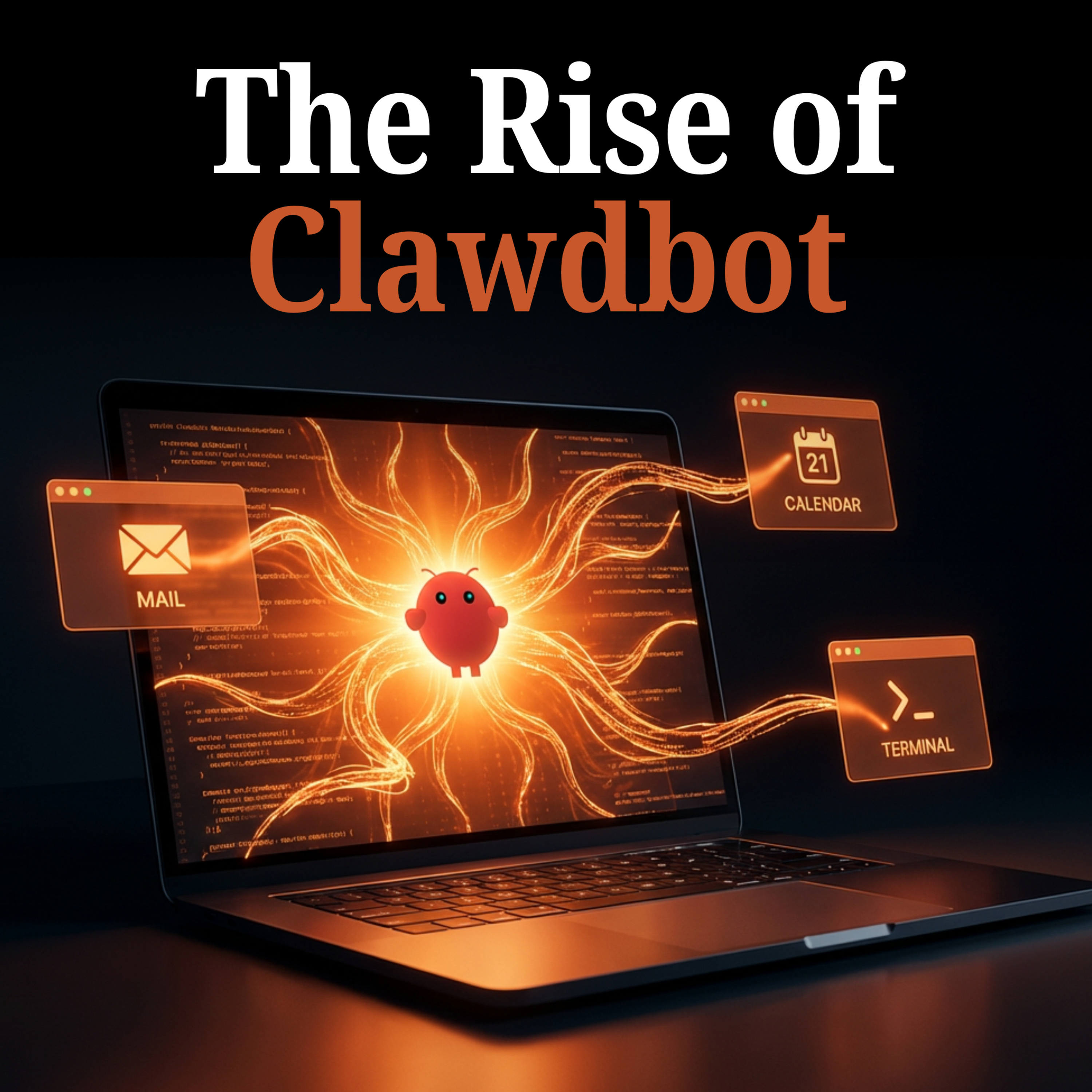
The viral AI agent Clawdbot was renamed to Moltbot after a "trademark-related request" from Anthropic. Creator Peter Steinberger executed the entire rebrand in about an hour, a stark contrast to the months or years corporations typically spend on such changes.

Related Insights
Meta's rebrand from Facebook, much like Google's to Alphabet, was not just a name change. It was a strategic move to signal to both employees and the market that the company's ambitions extend beyond its original core product, creating the space and permission to build entirely new business lines.

Grammarly has rebranded its corporate entity to Superhuman to reflect its broader mission. It reframes its core technology as an "assist" platform that proactively embeds AI into users' workflows, contrasting with "chat" interfaces (like ChatGPT) and "do" agents. Its new 'Go' product opens this platform to any AI agent, not just writing assistants.
The campaign's simple 'keep thinking' message subtly reframes Anthropic's AI as a human-augmenting tool. This marks a significant departure from the company's public reputation for focusing on existential AI risk, suggesting a deliberate effort to build a more consumer-friendly and less threatening brand.
While OpenAI and Google position their AIs as neutral tools (ChatGPT, Gemini), Anthropic is building a distinct brand by personifying its model as 'Claude.' This throwback to named assistants like Siri and Alexa creates a more personal user relationship, which could be a key differentiator in the consumer AI market.

By letting its AI chaotically run a vending machine in a newsroom, Anthropic is strategically shifting its brand image. Once perceived as 'Doomer coded' and hyper-focused on safety, projects like this showcase a more whimsical, playful, and accessible side, making the company and its research feel less intimidating.

To avoid disrupting existing enterprise customers and being disrupted themselves, Sourcegraph launched a new brand, AMP. This freed them from Kodi's contracts, customer expectations, and release cycles, enabling a much faster, more radical development pace for their new coding agent.

Anthropic faces a critical dilemma. Its reputation for safety attracts lucrative enterprise clients, but this very stance risks being labeled "woke" by the Trump administration, which has banned such AI in government contracts. This forces the company to walk a fine line between its brand identity and political reality.
Clawdbot, an open-source project, has rapidly achieved broad, agentic capabilities that large AI labs (like Anthropic with its 'Cowork' feature) are slower to release due to safety, liability, and bureaucratic constraints.
Cluelly, which gained notoriety as a "cheat on everything" tool, has rebranded as an AI note-taker for meetings. This "half pivot" carries significant brand risk, as the trust required for enterprise software is at odds with its controversial origins and established competition.
The name "Claude Code" was a significant barrier for non-technical users, suggesting a developer-only tool. The creation of "Cowork" is a direct response to user behavior showing its broader utility, repackaging the same core functionality with a more accessible name and interface for a wider audience.
