Get your free personalized podcast brief
We scan new podcasts and send you the top 5 insights daily.
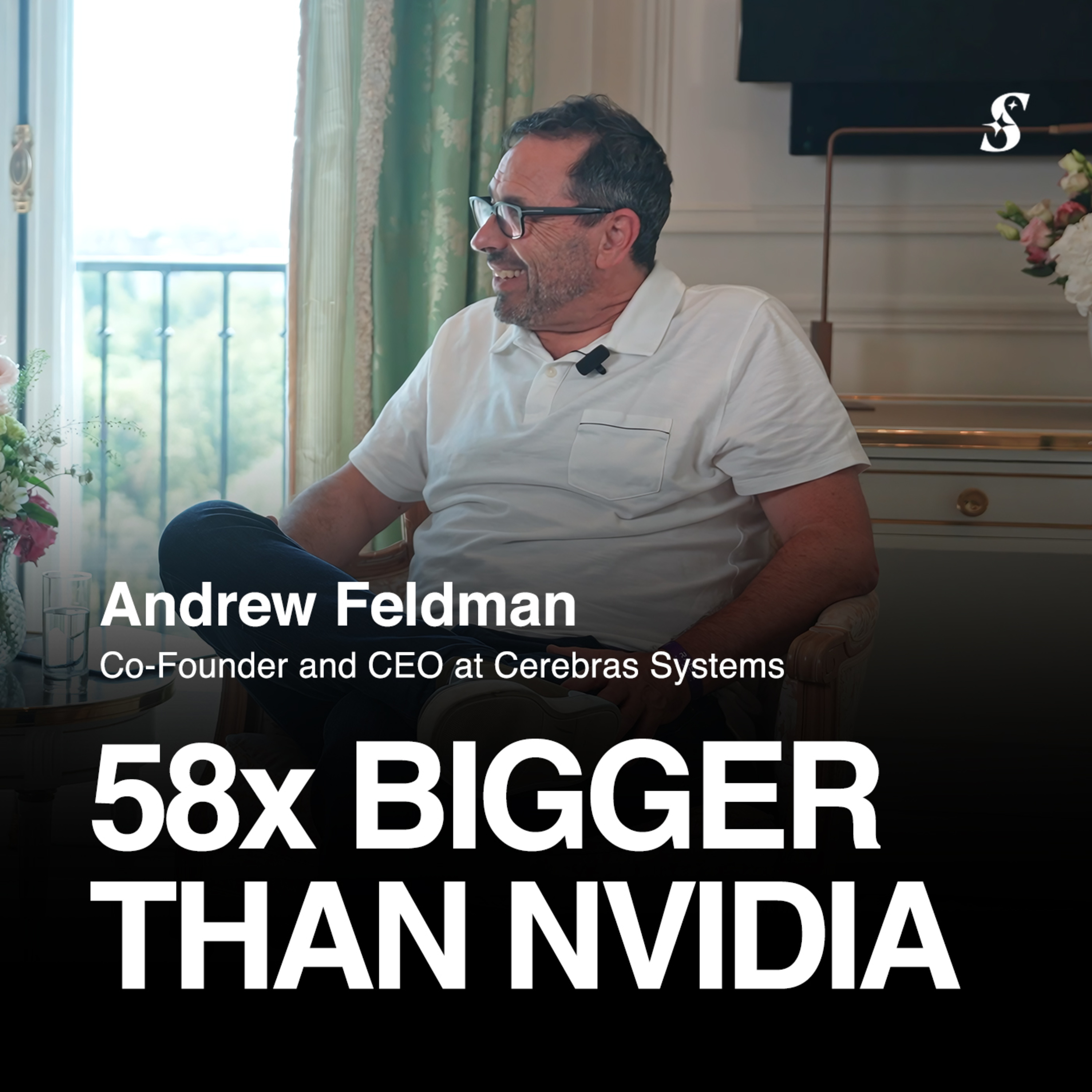
Andrew Feldman finds more satisfaction in rewarding employees who bet years of their careers on his company than in satisfying diversified investors. He views ensuring their financial success not just as a perk, but as a core part of his responsibility and a source of daily pride.
Related Insights
The CEO identifies the single most important decision behind Semafor's success as a maniacal focus on talent and a psychologically healthy culture. He directly links this disciplined approach to hiring and culture protection to achieving a profitable, $40 million revenue model, framing it as a core business driver, not a soft benefit.

Vineet Jain’s first startup had a successful exit where investors made money. However, he views it as a personal failure because the 70 employees did not generate wealth. This redefinition of success—prioritizing employee outcomes—became a core driver for building his next company, Egnyte.

The most profound professional achievement for a founder isn't just the exit, but creating significant economic security for the team. This shifts the focus from personal wealth to shared prosperity, defining legacy by the number of employees who became millionaires alongside the founder.

Exceptional CEOs sometimes exhibit true altruism, prioritizing shareholders above personal enrichment. Mark Leonard of Constellation Software cutting his salary to zero and refusing options is a prime example. This rare trait signals a deep alignment with long-term shareholder value creation.

A manager's personal investment in an employee's well-being, like loaning money for an apartment, can create profound loyalty. It demonstrates belief in the person beyond their immediate performance, which is more motivating than any professional incentive and shows that business is ultimately about people.

Thiel observes that the less an early-stage CEO is paid, the better the company performs. A low salary (under $150k) paired with high equity aligns the CEO with long-term value creation and sets a culture of shared sacrifice, whereas high pay incentivizes protecting the status quo.
Founder Peter Daring deliberately avoids outside investors to protect Peak Design's core mission: for employees to live "happy and meaningful lives." This employee-forward culture is prioritized over the growth-at-all-costs pressure that comes with external capital, shaping every business decision.

When one employee leverages AI to generate massive value (e.g., a new million-dollar revenue stream), standard compensation is inadequate. Companies need new models, like significant one-time bonuses, to reward and retain these high-impact individuals.

Contrary to a shareholder-first dogma, these leaders operate on an employee-first principle. They believe that well-treated, empowered employees provide superior customer service. This creates loyal customers, which drives sustainable profits and ultimately delivers superior long-term returns for shareholders.

Despite the challenges, the real reason to pursue executive roles is the opportunity to mentor and develop future leaders. The lasting fulfillment comes from "paying it back" by planting seeds that help others grow in their careers, which is worth more than any paycheck or stock option.
