Get your free personalized podcast brief
We scan new podcasts and send you the top 5 insights daily.
The Klan's rapid downfall was triggered not by external opposition but by a scandal. Indiana's Grand Dragon, David C. Stephenson, kidnapped, raped, and murdered Madge Oberholzer. His conviction exposed the movement's hypocrisy, and its membership collapsed from hundreds of thousands to just 4,000 in two years.

Related Insights
In 1921, a New York World series exposing Klan violence, intended to discredit the group, backfired. The publicity made the organization seem exciting and powerful, leading to a massive surge in membership applications and confirming the "any press is good press" maxim for extremist movements.
Klan terrorism was a calculated political strategy. By creating persistent violence and chaos, white Southern Democrats aimed to exhaust the North's will to enforce Reconstruction. They correctly gambled that Northerners would eventually tire of the costly project and withdraw federal power.
Counterintuitively, the first KKK chapter in Tennessee was ordered to disband by its leader not because it was defeated, but because it had become unnecessary. A new, more moderate state government began implementing their goals, such as restoring Confederate voting rights and introducing poll taxes, making the Klan's violent tactics redundant.
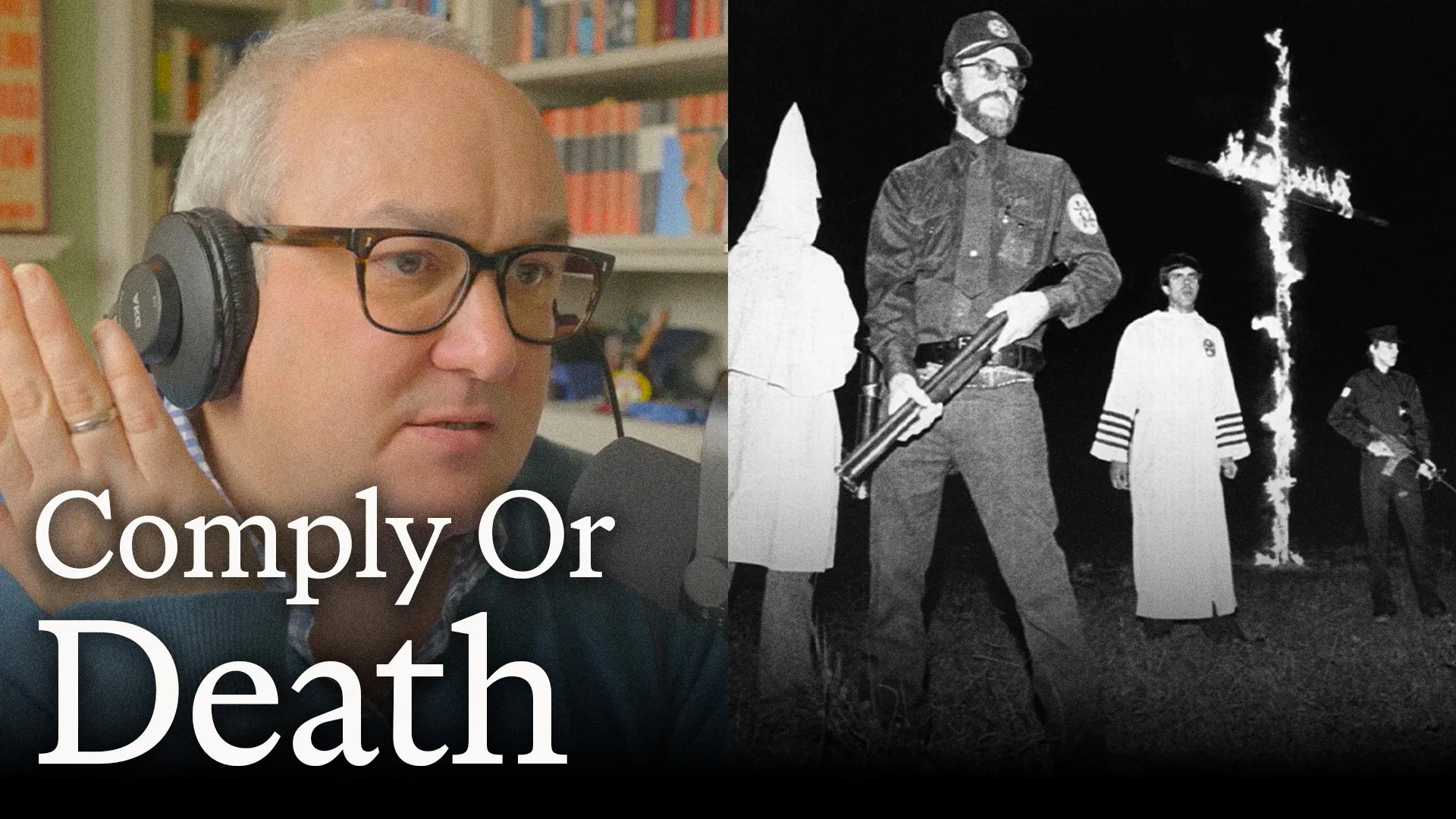
The Klan's terror campaign was a holistic effort to restore pre-war racial hierarchy. Beyond suppressing votes, they targeted Black churches, schools, landowners, and even women who displayed self-respect. This reveals a broader goal: to crush any sign of Black autonomy and re-establish total white supremacy in every aspect of Southern life.
The Indiana Klan operated a highly effective political organization. It compiled detailed data on all political candidates, published approved slates in church newsletters, and organized massive get-out-the-vote efforts, successfully installing a governor and dominating the state legislature.
The Klan's popularity waned partly because it succeeded. The passage of the restrictive Johnson-Reed Immigration Act of 1924 and the spread of state-level eugenics laws meant two of its central political objectives had been codified into law, making the organization itself seem less necessary to its members.
Contrary to the image of a fringe movement, the Klan was composed of and led by the Southern elite. Eyewitness accounts consistently identified lawyers, doctors, planters, and sheriffs as perpetrators of the violence. This highlights how extremist movements can be driven by the most powerful and 'respectable' members of a society.
The Klan's founders were ousted in a power struggle driven by greed and accusations of immorality. A Texas dentist, Hiram Evans, used his control over membership lists—much like Stalin controlled the party apparatus—to seize power, buying out the original founder for a large sum.
While not a perfect match for European fascism—it lacked a single charismatic leader and expansionist war goals—the 1920s KKK shared key traits: a cult of victimhood, paramilitary violence, mass rituals, and a demographic base of anxious, middle-class Protestants and small businessmen.
Contrary to its common image, the second Klan's strongholds were not in the former Confederacy but in future Rust Belt states like Indiana, Ohio, and Oregon. This reflects its primary focus on anti-immigrant and anti-Catholic sentiment rather than post-Civil War racial dynamics.