Get your free personalized podcast brief
We scan new podcasts and send you the top 5 insights daily.
Contrary to its common image, the second Klan's strongholds were not in the former Confederacy but in future Rust Belt states like Indiana, Ohio, and Oregon. This reflects its primary focus on anti-immigrant and anti-Catholic sentiment rather than post-Civil War racial dynamics.

Related Insights
The Klan was not ubiquitous across the South. It was most successful in counties where black and white populations were roughly equal, creating maximum social and political friction. It failed to gain traction in majority-black areas (due to fear of reprisal) or overwhelmingly white areas (due to lack of a perceived threat).
The Klan used a repeatable playbook to infiltrate local churches. Organizers would march into a service, give a donation to the minister (often a secret member), and receive a public endorsement, effectively converting entire congregations and gaining crucial social proof.
Klan terrorism was a calculated political strategy. By creating persistent violence and chaos, white Southern Democrats aimed to exhaust the North's will to enforce Reconstruction. They correctly gambled that Northerners would eventually tire of the costly project and withdraw federal power.
The second Klan, founded in 1915, was by far the largest, with up to five million members. Its power base was not the South but the industrial North and Midwest. While white supremacist, its primary focus was nativist, anti-Semitic, and especially anti-Catholic.
Counterintuitively, the first KKK chapter in Tennessee was ordered to disband by its leader not because it was defeated, but because it had become unnecessary. A new, more moderate state government began implementing their goals, such as restoring Confederate voting rights and introducing poll taxes, making the Klan's violent tactics redundant.
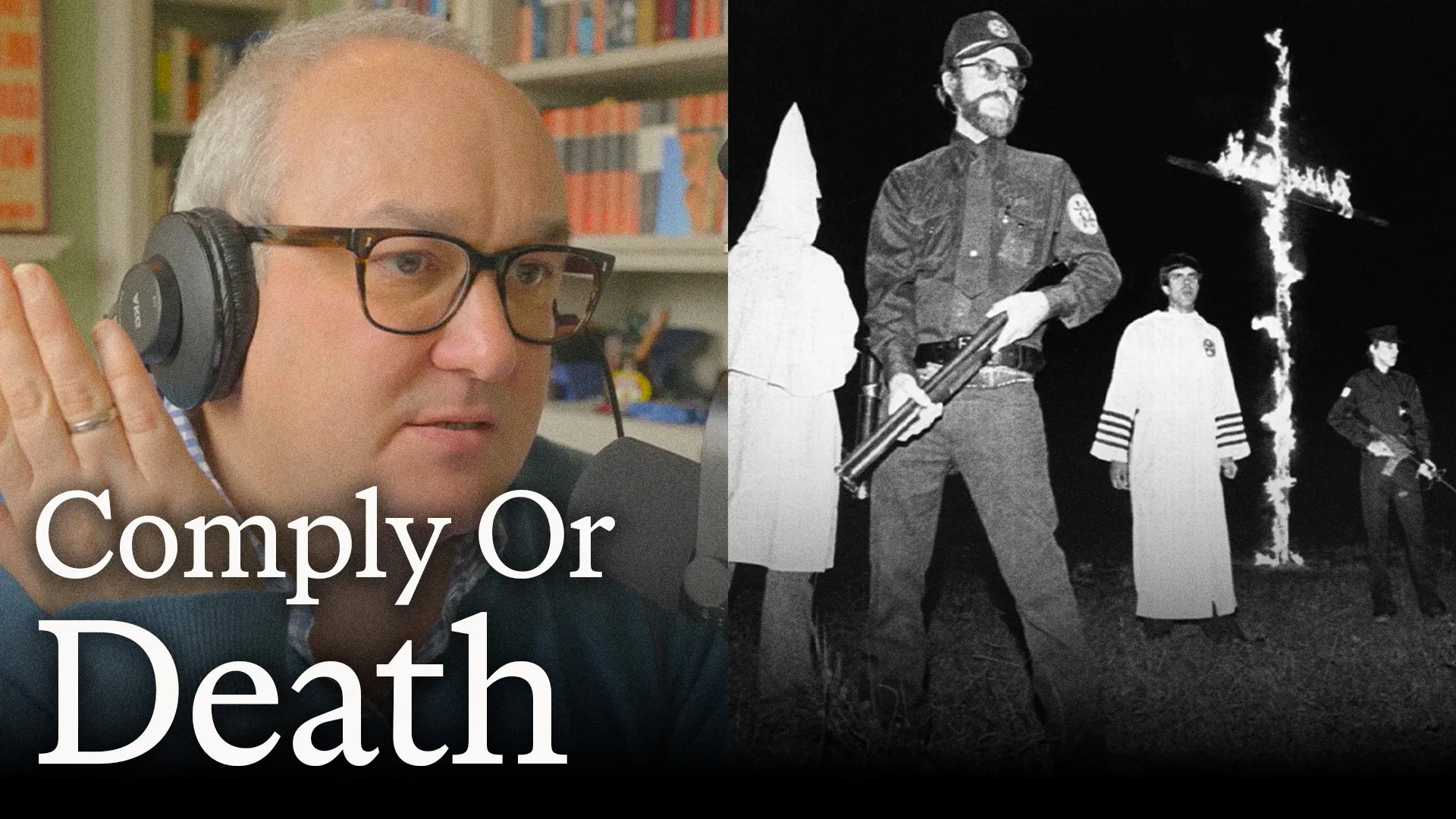
The Klan's explosive growth was not organic. PR professionals Edward Young Clark and Elizabeth Tyler treated the organization as a product, designing an aggressive sales operation and marketing message that resonated with public anxieties, transforming a failing club into a national force.
While committed to white supremacy, the second Klan's main targets were white Catholics and Jews, whom they considered a greater menace to "Americanism" than African Americans. This focus fueled its popularity in Northern states with small Black populations.
The KKK positioned itself as the moral authority violently enforcing Prohibition, a task federal and local authorities struggled with. This resonated with temperance-supporting Protestants and provided a pretext for vigilantism against immigrant communities, particularly Catholics.
The KKK had three separate incarnations: a post-Civil War paramilitary group (1866), a massive anti-Catholic and nativist movement popular in the North (1915), and a smaller far-right group fighting the Civil Rights movement (1940s). Each had different characteristics and goals.
Contrary to popular imagery, the original post-Civil War Ku Klux Klan never burned crosses. This iconic act of terror was introduced by the second Klan, founded in 1915, which was inspired by its depiction in the film "The Birth of a Nation."