Get your free personalized podcast brief
We scan new podcasts and send you the top 5 insights daily.
Counterintuitively, the first KKK chapter in Tennessee was ordered to disband by its leader not because it was defeated, but because it had become unnecessary. A new, more moderate state government began implementing their goals, such as restoring Confederate voting rights and introducing poll taxes, making the Klan's violent tactics redundant.
Related Insights
The Klan was not ubiquitous across the South. It was most successful in counties where black and white populations were roughly equal, creating maximum social and political friction. It failed to gain traction in majority-black areas (due to fear of reprisal) or overwhelmingly white areas (due to lack of a perceived threat).

During the 1868 presidential election, the Ku Klux Klan operated as an unofficial paramilitary wing for the Democratic Party. Its campaign of violence and intimidation was explicitly designed to suppress the Black Republican vote and advance the Democrats' platform of white supremacy, making terror a key electoral strategy.
The first Ku Klux Klan was not founded as a paramilitary force but as a fraternity-style social club in Pulaski, Tennessee. Its founders were young, well-educated veterans seeking amusement through secret rituals and costumes, only later evolving into a violent political entity.
Klan terrorism was a calculated political strategy. By creating persistent violence and chaos, white Southern Democrats aimed to exhaust the North's will to enforce Reconstruction. They correctly gambled that Northerners would eventually tire of the costly project and withdraw federal power.
Although the first iteration of the Ku Klux Klan was ultimately suppressed by 1872, it had already achieved its primary long-term goals. It successfully destroyed the Republican Party's infrastructure in the South and, crucially, exhausted the North's political will to continue Reconstruction, paving the way for generations of white supremacist rule.
The KKK's campaign of terror had a quantifiable and devastating impact on elections. In some Georgia counties with Black majorities, the Republican vote for Ulysses S. Grant was reduced from over a thousand to single digits, or even zero. This demonstrates that paramilitary violence was a brutally effective tool for achieving political outcomes.
The story of York County, South Carolina, provides a powerful counter-narrative of what was possible during Reconstruction. When President Grant finally suspended habeas corpus and flooded the region with troops, the mass arrests effectively dismantled the Klan's power structure. This demonstrates that federal force, when applied decisively, could work.
The Klan's terror campaign was a holistic effort to restore pre-war racial hierarchy. Beyond suppressing votes, they targeted Black churches, schools, landowners, and even women who displayed self-respect. This reveals a broader goal: to crush any sign of Black autonomy and re-establish total white supremacy in every aspect of Southern life.
The KKK had three separate incarnations: a post-Civil War paramilitary group (1866), a massive anti-Catholic and nativist movement popular in the North (1915), and a smaller far-right group fighting the Civil Rights movement (1940s). Each had different characteristics and goals.
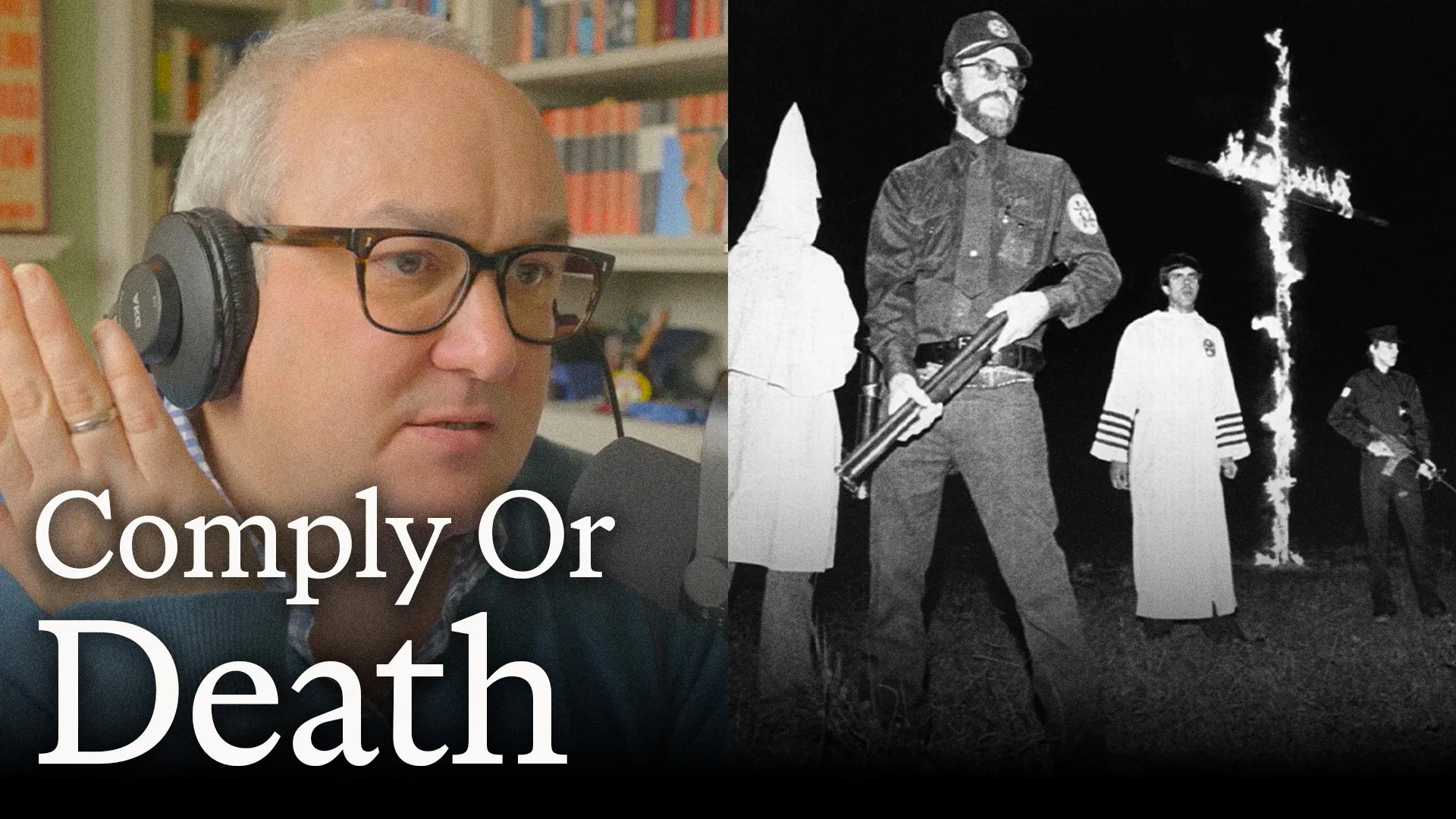
Contrary to popular imagery, the original post-Civil War Ku Klux Klan never burned crosses. This iconic act of terror was introduced by the second Klan, founded in 1915, which was inspired by its depiction in the film "The Birth of a Nation."