Get your free personalized podcast brief
We scan new podcasts and send you the top 5 insights daily.
The Indiana Klan operated a highly effective political organization. It compiled detailed data on all political candidates, published approved slates in church newsletters, and organized massive get-out-the-vote efforts, successfully installing a governor and dominating the state legislature.

Related Insights
Contrary to its traditionalist image, the Klan actively recruited women, with about half a million joining. It supported women's right to vote and work, viewing female voters as key to advancing its white Protestant agenda. Women became crucial organizers, planners, and activists for the movement.
The Klan used a repeatable playbook to infiltrate local churches. Organizers would march into a service, give a donation to the minister (often a secret member), and receive a public endorsement, effectively converting entire congregations and gaining crucial social proof.
The KKK's massive growth was driven by a sophisticated sales operation where recruiters (Cleagles) earned large commissions on new members' fees. This financial incentive, structured like a modern pyramid scheme, was a primary driver of its national expansion.
The KKK's campaign of terror had a quantifiable and devastating impact on elections. In some Georgia counties with Black majorities, the Republican vote for Ulysses S. Grant was reduced from over a thousand to single digits, or even zero. This demonstrates that paramilitary violence was a brutally effective tool for achieving political outcomes.
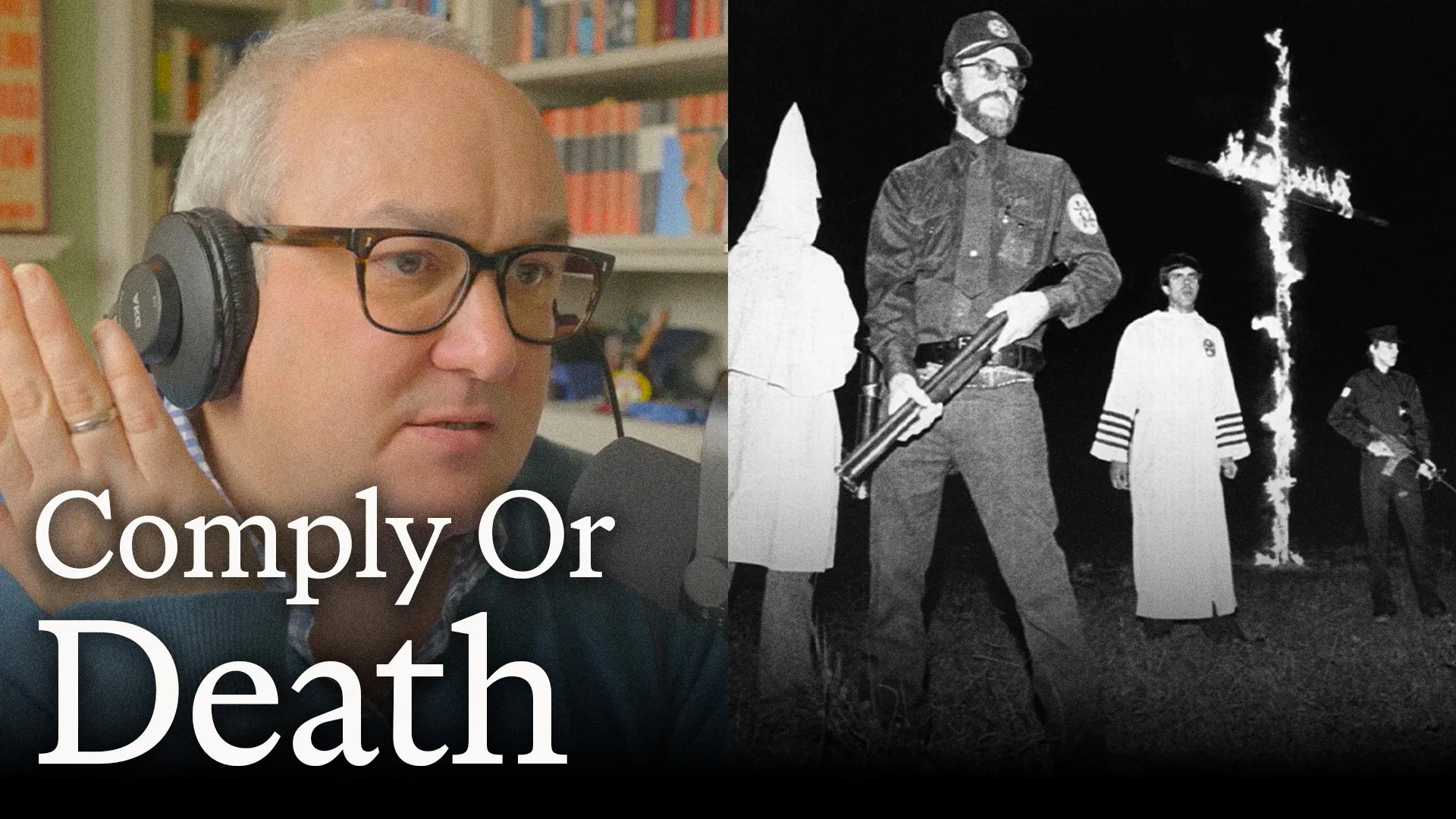
In an attempt to enter mainstream politics, the KKK propaganda machine adopted an unlikely hero: former Democratic President Grover Cleveland. They admired his Protestant background and perhaps his reputation for personal scandals, holding him up as an aspirational figure for their members to follow.
The Klan's explosive growth was not organic. PR professionals Edward Young Clark and Elizabeth Tyler treated the organization as a product, designing an aggressive sales operation and marketing message that resonated with public anxieties, transforming a failing club into a national force.
The KKK's success was not just about violence but about creating a social movement. It hosted picnics, parades, and even circuses, embedding its hateful ideology into ordinary, taken-for-granted community life for millions of white Protestants, making it seem normal and even wholesome.
The Klan's popularity waned partly because it succeeded. The passage of the restrictive Johnson-Reed Immigration Act of 1924 and the spread of state-level eugenics laws meant two of its central political objectives had been codified into law, making the organization itself seem less necessary to its members.
While not a perfect match for European fascism—it lacked a single charismatic leader and expansionist war goals—the 1920s KKK shared key traits: a cult of victimhood, paramilitary violence, mass rituals, and a demographic base of anxious, middle-class Protestants and small businessmen.
Contrary to its common image, the second Klan's strongholds were not in the former Confederacy but in future Rust Belt states like Indiana, Ohio, and Oregon. This reflects its primary focus on anti-immigrant and anti-Catholic sentiment rather than post-Civil War racial dynamics.