Get your free personalized podcast brief
We scan new podcasts and send you the top 5 insights daily.
The Klan's founders were ousted in a power struggle driven by greed and accusations of immorality. A Texas dentist, Hiram Evans, used his control over membership lists—much like Stalin controlled the party apparatus—to seize power, buying out the original founder for a large sum.

Related Insights
The Klan used a repeatable playbook to infiltrate local churches. Organizers would march into a service, give a donation to the minister (often a secret member), and receive a public endorsement, effectively converting entire congregations and gaining crucial social proof.
The KKK's massive growth was driven by a sophisticated sales operation where recruiters (Cleagles) earned large commissions on new members' fees. This financial incentive, structured like a modern pyramid scheme, was a primary driver of its national expansion.
The Klan's rapid downfall was triggered not by external opposition but by a scandal. Indiana's Grand Dragon, David C. Stephenson, kidnapped, raped, and murdered Madge Oberholzer. His conviction exposed the movement's hypocrisy, and its membership collapsed from hundreds of thousands to just 4,000 in two years.
The Klan's explosive growth was not organic. PR professionals Edward Young Clark and Elizabeth Tyler treated the organization as a product, designing an aggressive sales operation and marketing message that resonated with public anxieties, transforming a failing club into a national force.
The Klan's popularity waned partly because it succeeded. The passage of the restrictive Johnson-Reed Immigration Act of 1924 and the spread of state-level eugenics laws meant two of its central political objectives had been codified into law, making the organization itself seem less necessary to its members.
The Klan used a bizarre, fantasy-like hierarchy with titles like "Grand Goblin" and "Exalted Cyclops." This gamified structure provided status and escapism for men in ordinary towns, making a sinister organization feel like an exciting and exclusive club.
Rather than building from scratch, the KKK tapped into pre-existing social networks, particularly the Freemasons. Recruiters specifically targeted Masonic lodges, leveraging their membership lists and offering a familiar structure of ritual, networking, and community.
Contrary to the image of a fringe movement, the Klan was composed of and led by the Southern elite. Eyewitness accounts consistently identified lawyers, doctors, planters, and sheriffs as perpetrators of the violence. This highlights how extremist movements can be driven by the most powerful and 'respectable' members of a society.
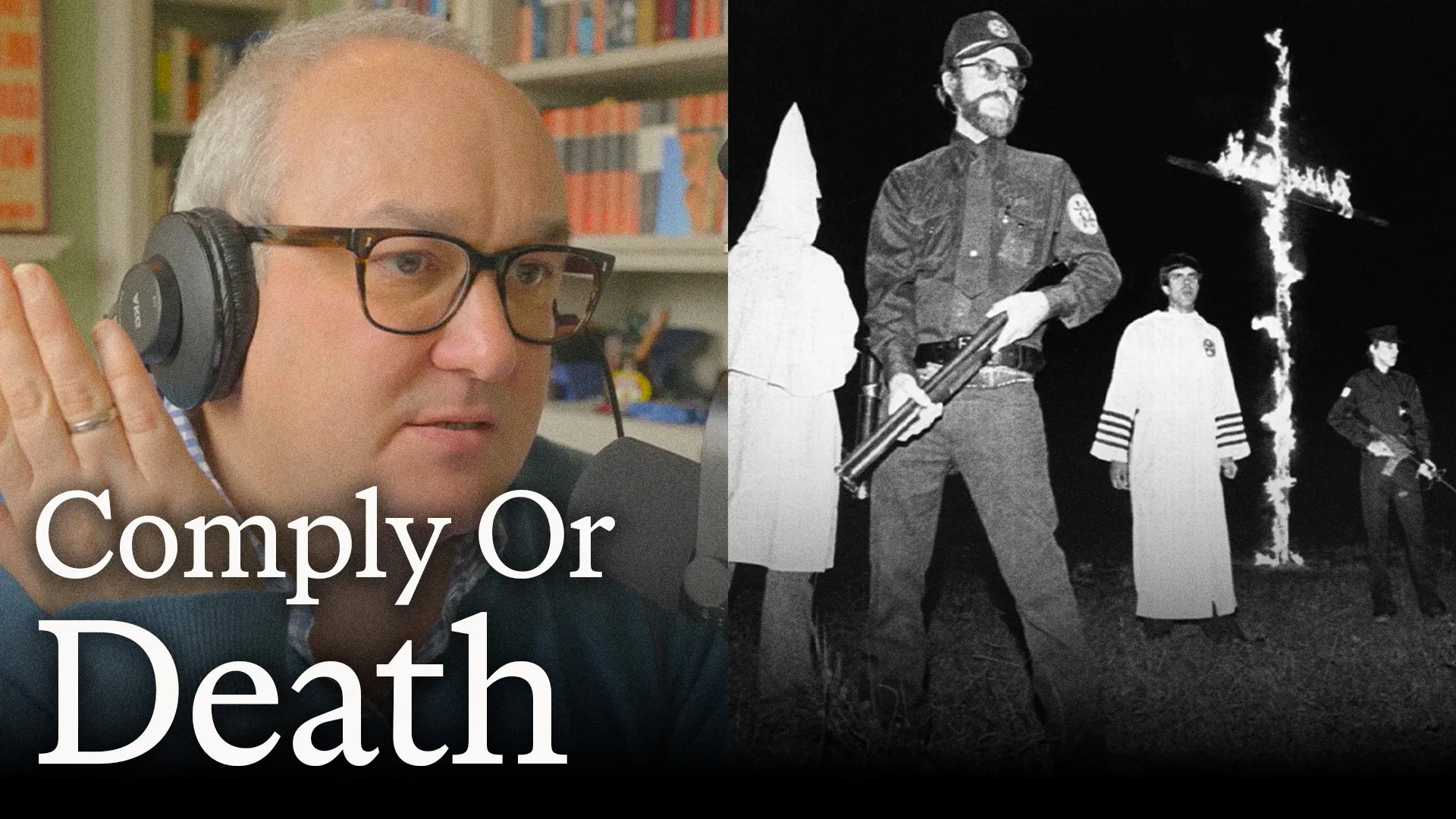
While not a perfect match for European fascism—it lacked a single charismatic leader and expansionist war goals—the 1920s KKK shared key traits: a cult of victimhood, paramilitary violence, mass rituals, and a demographic base of anxious, middle-class Protestants and small businessmen.
The KKK had three separate incarnations: a post-Civil War paramilitary group (1866), a massive anti-Catholic and nativist movement popular in the North (1915), and a smaller far-right group fighting the Civil Rights movement (1940s). Each had different characteristics and goals.