Get your free personalized podcast brief
We scan new podcasts and send you the top 5 insights daily.
Auren Hoffman's firm automates deal sourcing using AI agents that monitor for specific signals. A prime example is tracking when engineers at top tech companies change their LinkedIn profile to "Stealth," which acts as a trigger for immediate outreach about their new venture.

Related Insights
Honeybook built a ChatGPT agent that logs into LinkedIn, searches for candidates based on a job description, and applies nuanced filters (e.g., tenure, location, activity). This automates a time-consuming, multi-step workflow, freeing up the hiring team for higher-value tasks.

Instead of manually researching venture capital firms for fundraising, an AI agent can investigate dozens of targets simultaneously. It pulls data on fund size, relevant partners, investment theses, and recent social media activity, then organizes everything into a ready-to-use spreadsheet, saving weeks of analyst work.

Traditional signals like funding announcements are weak. AI's power is processing unstructured data *within* that signal (e.g., a press release or job description) to find the specific project that justifies outreach. This turns a generic signal into a precise, timely 'reason to call.'

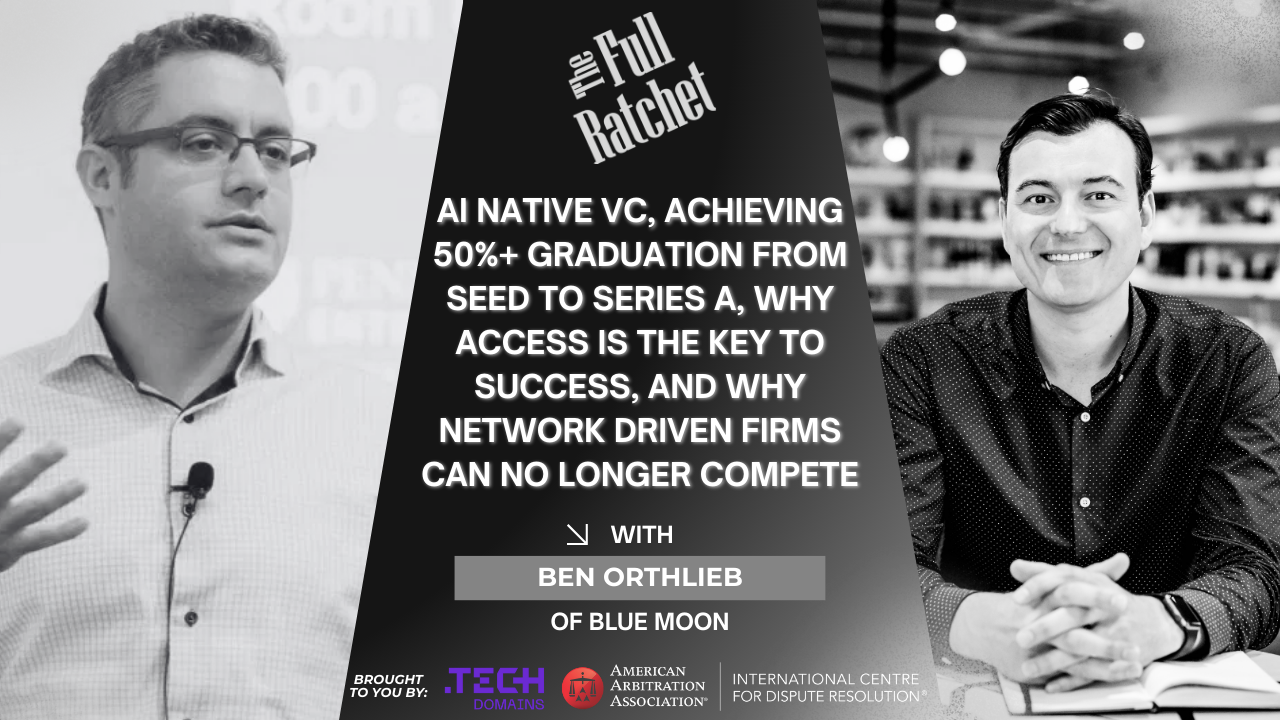
Traditional VC reliance on "differentiated networks" is obsolete as data sources and professional networks are now commodities. To compete, modern VCs must replace this outdated advantage with proprietary intelligence platforms that algorithmically source deals and identify the right signals for where to focus time.
LinkedIn's new AI-driven search moves beyond exact job titles. Prospecting now involves natural language queries, like finding founders in a specific industry who previously worked at a certain company. This allows for much more nuanced and effective lead generation for premium users.

Veteran investor Jason Lemkin argues that the quality of a top founder can be identified without a live conversation, based on asynchronous interactions like cold emails. Having closed multiple billion-dollar exits from such inbounds, he suggests AI could replicate and scale this initial screening process effectively.

An AI agent can monitor job boards for specific hiring signals, like a company hiring a "Head of Growth." The agent then enriches the company data, finds the relevant decision-maker, and drafts a personalized outreach email referencing the job post, automating top-of-funnel sales.
An AI-native VC firm operates like a product company, developing in-house intelligence platforms to amplify human judgment. This is a fundamental shift from simply using tools like Affinity or Harmonics, creating a defensible operational advantage in sourcing, screening, and winning deals.
Auren Hoffman predicts that by late 2026, the initial VC screening process will be automated. A VC's AI agent will "meet" a founder's AI agent to exchange information and assess fit, making the process more efficient before any human interaction occurs.
Configure an AI agent to scan job boards for roles that signal budget allocation (e.g., "Head of Growth"). The agent can then identify the decision-maker, enrich their contact info, and automatically draft a personalized outreach email that references the specific job posting.