Get your free personalized podcast brief
We scan new podcasts and send you the top 5 insights daily.
Honeybook built a ChatGPT agent that logs into LinkedIn, searches for candidates based on a job description, and applies nuanced filters (e.g., tenure, location, activity). This automates a time-consuming, multi-step workflow, freeing up the hiring team for higher-value tasks.

Related Insights
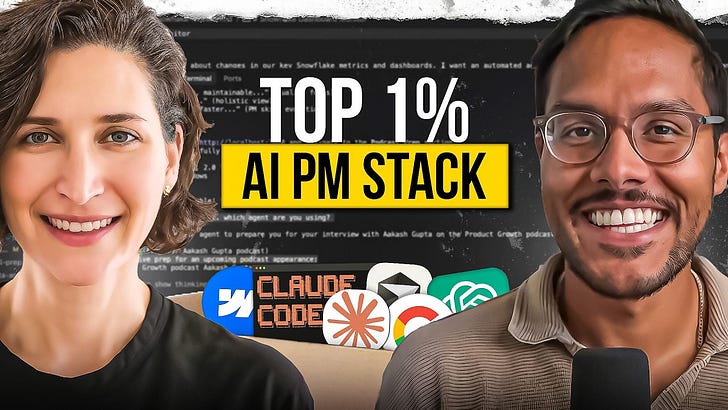
Webflow's CPO uses a custom set of AI agents built with Claude and Cursor to analyze her calendar for delegation opportunities and triage her inbox by archiving junk, flagging important emails, and drafting replies. This offloads significant cognitive and administrative load from the executive.
Countering the idea that AI sacrifices quality for speed, Honeybook's recruiting agent found four net-new, high-quality candidates the team had missed manually. The fifth candidate it found was one the team was already pursuing, validating the AI's quality and ability to augment human efforts.
Advanced management techniques, like using AI to suggest team improvements, no longer require specialized software or data science teams. A manager can use an off-the-shelf tool like ChatGPT, feed it a simple spreadsheet of performance data, and ask it to run the analysis, democratizing access to managerial 'superpowers'.

The next frontier for AI in product is automating time-consuming but cognitively simple tasks. An AI agent can connect CRM data, customer feedback, and product specs to instantly generate a qualified list of beta testers, compressing a multi-week process into days.
Vercel's CTO Malte Ubl suggests a simple method for finding valuable internal automation tasks: ask people, "What do you hate most about your job?" This uncovers tedious work that requires some human judgment, making it a perfect sweet spot for the capabilities of current-generation AI agents.

Instead of a generalist AI, LinkedIn built a suite of specialized internal agents for tasks like trust reviews, growth analysis, and user research. These agents are trained on LinkedIn's unique historical data and playbooks, providing critiques and insights impossible for external tools.

The company developed an AI that conducts highly technical expert network interviews, automating a high-friction manual process. This enables new, scalable content creation like monthly channel checks across dozens of industries—a task too repetitive for human analysts to perform consistently at scale.

By building a custom AI agent for inbound lead qualification, Vercel reduced its inbound SDR team from ten people to one. The agent, which cost only $1,000 per year to run, maintained conversion rates while decreasing response time and number of touches needed.

LinkedIn is piloting a "Full Stack Builder" model where individuals handle the entire product lifecycle. The model's goal is to automate most tasks, allowing builders to focus on uniquely human traits: vision, empathy, communication, creativity, and especially judgment.
This emerging role applies engineering and AI to GTM functions, building agents to automate tasks like lead qualification and personalized outreach. This dramatically increases efficiency, allowing one person, with an AI agent, to do the work of ten.