Get your free personalized podcast brief
We scan new podcasts and send you the top 5 insights daily.
The shift to consumption pricing (e.g., Clay's "actions") forces a new mindset on GTM and Ops leaders. Unlike predictable subscriptions, they must now meticulously forecast and budget for usage, creating friction and uncertainty. This pressures teams to justify every workflow financially, a new challenge for the operations function.

Related Insights
For years, flat-rate AI subscriptions heavily subsidized power users, masking the true cost of token consumption. As providers shift to usage-based billing, this subsidy is ending. Enterprises now face "sticker shock" and must justify AI spend with clear ROI, moving from rampant experimentation to cost-conscious implementation.
![The AI Token Shortage Begins [AI Monthly Recap] thumbnail](https://d3t3ozftmdmh3i.cloudfront.net/staging/podcast_uploaded_nologo/41472609/41472609-1752234663609-8665756a468e5.jpg)
Aggregate consumption revenue is often stable and predictable at the macro level, making it manageable for a CFO's office. However, for individual sales reps forecasting specific customer usage, the process is highly volatile and difficult, akin to predicting sporadic umbrella purchases versus a steady stream.

Traditional software budgeting fails for generative AI, where costs are variable and tied to tokens and usage. A CFO noted a team's daily per-person cost jumped 50% in one week. Companies must accept this volatility, run pilots to establish baseline costs, and then determine ROI, rather than trying to set a fixed budget upfront.

Warp's initial subscription model, offering a fixed number of AI credits, became unprofitable as heavy usage grew. They were forced to switch to a consumption-based model, trading user complaints for sustainable, margin-positive growth, a crucial lesson for pricing AI applications.

Usage-based pricing for AI faces strong customer resistance. Unlike cloud storage where usage is directly controlled, AI credit consumption can be driven by new vendor-pushed features. This lack of control and predictability leads to bill shock, making customers prefer the stability of per-seat models.

The move away from seat-based licenses to consumption models for AI tools creates a new operational burden. Companies must now build governance models and teams to track usage at an individual employee level—like 'Bob in accounting'—to control unpredictable costs.

Beyond upfront pricing, sophisticated enterprise customers now demand cost certainty for consumption-based AI. They require vendors to provide transparent cost structures and protections for when usage inevitably scales, asking, 'What does the world look like when the flywheel actually spins?'
Just as uncontrolled cloud spending in the 2010s spawned the FinOps field, the shift to consumption-based AI pricing will necessitate a similar discipline. This involves attributing costs to specific workloads, setting granular budgets, and providing real-time visibility to prevent budget overruns and measure ROI accurately.
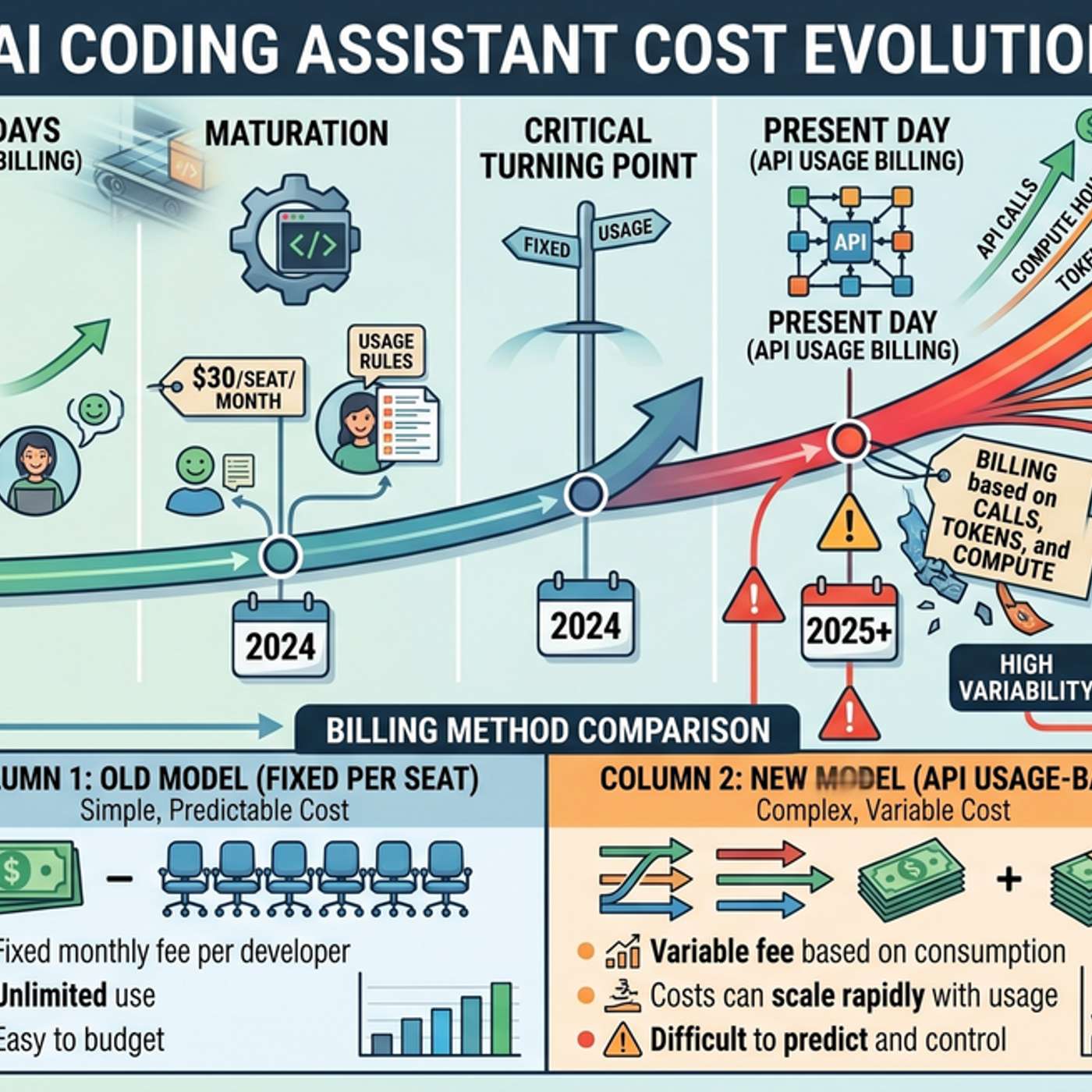
Enterprises struggle to adopt AI agents due to unpredictable, consumption-based pricing. The inability to budget for fluctuating token or credit usage makes scalable deployment nearly impossible for finance departments to approve, creating a significant hurdle to widespread adoption.
SaaS companies like HubSpot are shifting to credit-based pricing for AI features where costs are variable and opaque. This makes it nearly impossible for business leaders to budget for AI usage and operationalize new intelligent workflows effectively.