Get your free personalized podcast brief
We scan new podcasts and send you the top 5 insights daily.
Annual budgets are insufficient for managing volatile AI costs. Because token spend can balloon unexpectedly and value capture can change quickly, finance teams must implement monthly or quarterly re-forecasts for AI-specific line items. This agile approach allows for faster decisions to kill, fund, or scale projects.

Related Insights
FP&A teams must develop a new muscle for managing AI costs, which behave like consumption-based cloud spend, not predictable recurring software fees. Uncapped token usage can lead to massive budget blowouts, requiring more dynamic tracking and forecasting than traditional expenses.
Annual budgets lock capital into plans that quickly become obsolete. A better model uses 90-day cycles where teams re-evaluate priorities and re-allocate resources. This creates organizational agility and ensures money flows to the most important current initiatives, not outdated ones.

Traditional software budgeting fails for generative AI, where costs are variable and tied to tokens and usage. A CFO noted a team's daily per-person cost jumped 50% in one week. Companies must accept this volatility, run pilots to establish baseline costs, and then determine ROI, rather than trying to set a fixed budget upfront.

An anecdote about an engineer spending $100M in a month on AI tokens reveals a core enterprise issue. For Lenovo's CFO, the problem isn't the amount but its lack of planning and clear ROI. This signals a shift from predictable software subscriptions to volatile, usage-based AI compute costs.

Unlike predictable seat-based SaaS, consumption-based AI is a fungible resource. Companies must treat 'intelligence' like capital, creating budgets and allocating it to the most productive people and projects. This requires a new financial discipline beyond simple software procurement.

The shift to agentic AI means costs are no longer predictable per-seat subscriptions but variable expenses based on usage (tokens, compute). This requires managing AI like a capital allocation or a new form of labor, not just another software tool, a reality that early adopters are now grappling with.

The shift from predictable seat-based software to consumption-based AI creates massive financial uncertainty. One CFO reported needing to budget for AI compute costs within a 400% range of certainty, making traditional financial planning nearly impossible and highlighting the extreme volatility of "token maxing."

Insatiable demand for AI tools is causing corporate AI spending to explode much faster than anticipated. Some companies have exhausted their entire annual AI budget in just three months, forcing leaders to scramble to ration usage, manage costs, and justify the return on investment.

Just as uncontrolled cloud spending in the 2010s spawned the FinOps field, the shift to consumption-based AI pricing will necessitate a similar discipline. This involves attributing costs to specific workloads, setting granular budgets, and providing real-time visibility to prevent budget overruns and measure ROI accurately.
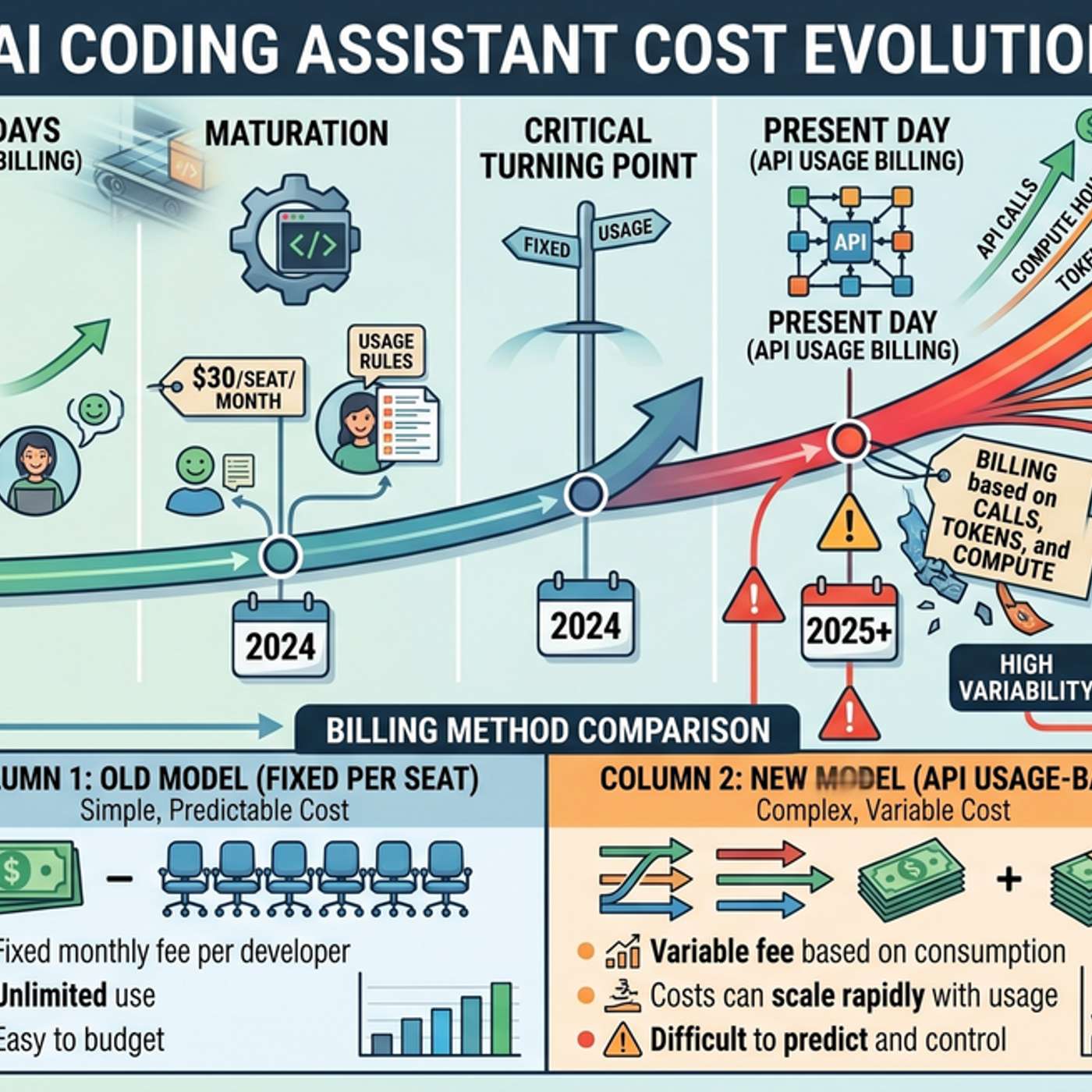
AI's usage-based pricing doesn't fit traditional seat-based software budgets. Frame it like a marketing program (e.g., paid ads). If increased spending on AI tools generates high ROI, it justifies a larger, flexible budget, shifting the conversation with finance from fixed cost to performance investment.
