Get your free personalized podcast brief
We scan new podcasts and send you the top 5 insights daily.
An anecdote about an engineer spending $100M in a month on AI tokens reveals a core enterprise issue. For Lenovo's CFO, the problem isn't the amount but its lack of planning and clear ROI. This signals a shift from predictable software subscriptions to volatile, usage-based AI compute costs.

Related Insights
For years, flat-rate AI subscriptions heavily subsidized power users, masking the true cost of token consumption. As providers shift to usage-based billing, this subsidy is ending. Enterprises now face "sticker shock" and must justify AI spend with clear ROI, moving from rampant experimentation to cost-conscious implementation.
![The AI Token Shortage Begins [AI Monthly Recap] thumbnail](https://d3t3ozftmdmh3i.cloudfront.net/staging/podcast_uploaded_nologo/41472609/41472609-1752234663609-8665756a468e5.jpg)
Companies exceeding their AI token budgets isn't just a cost control problem. It's a sign their 2025 forecasts completely missed the exponential increase in the utility and adoption of AI tools that occurred after November 2025, suggesting unexpected product-market fit.

Traditional software budgeting fails for generative AI, where costs are variable and tied to tokens and usage. A CFO noted a team's daily per-person cost jumped 50% in one week. Companies must accept this volatility, run pilots to establish baseline costs, and then determine ROI, rather than trying to set a fixed budget upfront.

The most heated topic among Fortune 500 CIOs is no longer which AI model is most powerful, but how to manage unpredictable and soaring token costs. Companies are struggling to find the right strategies—from workload prioritization to user-based access tiers—to create a predictable cost model in a rapidly evolving tech landscape.
The shift to AI-driven development introduces a wildly unpredictable cost: token consumption. This expense could range from a minor line item to exceeding the entire engineering payroll, creating an unprecedented budgeting challenge for CFOs and threatening companies' profitability if not managed correctly.

The shift from predictable seat-based software to consumption-based AI creates massive financial uncertainty. One CFO reported needing to budget for AI compute costs within a 400% range of certainty, making traditional financial planning nearly impossible and highlighting the extreme volatility of "token maxing."

Insatiable demand for AI tools is causing corporate AI spending to explode much faster than anticipated. Some companies have exhausted their entire annual AI budget in just three months, forcing leaders to scramble to ration usage, manage costs, and justify the return on investment.

After encouraging rampant AI usage in Q1, CFOs are now discovering the massive, unbudgeted costs. This has triggered a sudden, widespread 'penny drop' moment across corporations, leading to the rapid implementation of spending caps and formal budgets, which will likely slow the pace of AI adoption in the short term.

Just as uncontrolled cloud spending in the 2010s spawned the FinOps field, the shift to consumption-based AI pricing will necessitate a similar discipline. This involves attributing costs to specific workloads, setting granular budgets, and providing real-time visibility to prevent budget overruns and measure ROI accurately.
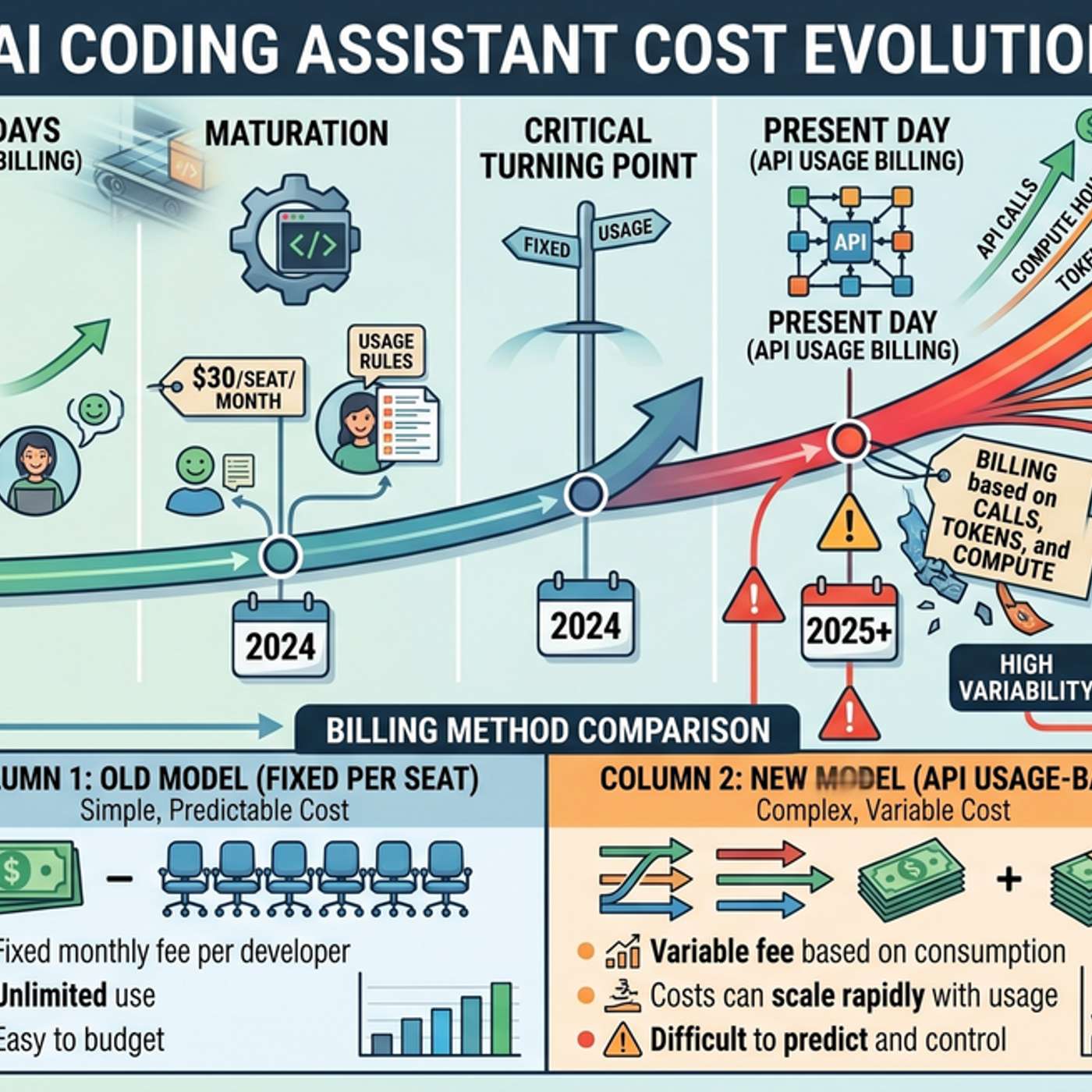
AI's usage-based pricing doesn't fit traditional seat-based software budgets. Frame it like a marketing program (e.g., paid ads). If increased spending on AI tools generates high ROI, it justifies a larger, flexible budget, shifting the conversation with finance from fixed cost to performance investment.
