Get your free personalized podcast brief
We scan new podcasts and send you the top 5 insights daily.
For PMs struggling to get AI experience at their current job, building a ChatGPT app serves as a powerful portfolio project. The end-to-end process—from prompting an idea to running evals—simulates the full AI product development lifecycle, demonstrating valuable, hands-on skills to potential employers.
Related Insights
For product managers not yet working on AI, the best way to gain experience is to build simple AI tools for personal use cases, like a parenting advisor or a board game timer. Using no-code prototyping tools, they can learn the entire development lifecycle—from ideation to prompting and user feedback—without needing an official AI project at work.
Traditional "writing-first" cultures create communication gaps and translation errors. With modern AI tools, product managers can now build working prototypes in hours. This "show, don't tell" approach gets ideas validated faster, secures project leadership, and overcomes language and team barriers.
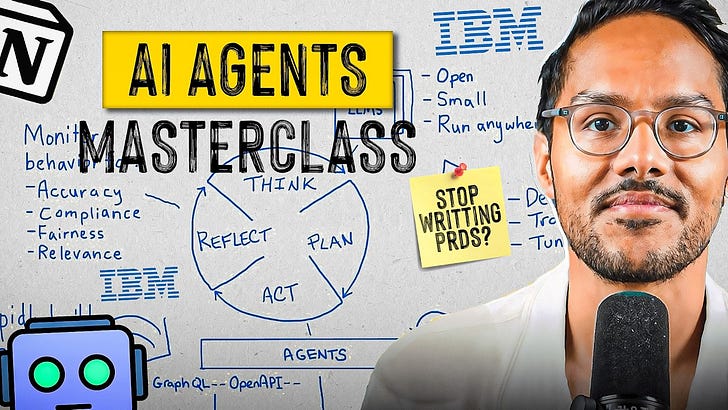
Capable AI coding assistants allow PMs to build and test functional prototypes or "skills" in a single day. This changes the product development philosophy, prioritizing quick validation with users over creating detailed UI mockups and specifications upfront.

Tools like Claude Code are democratizing software development. Product managers without a coding background can use these AI assistants to work in the terminal, manage databases, and deploy apps. This accelerates prototyping and deepens technical understanding, improving collaboration with engineers.

The traditional product management workflow (spec -> engineer build) is obsolete. The modern AI PM uses agentic tools to build, test, and iterate on the initial product, handing a working, validated prototype to engineering for productionalization.
![Building a Personal AI Model Map [AI Operators Bonus Episode] thumbnail](https://d3t3ozftmdmh3i.cloudfront.net/staging/podcast_uploaded_nologo/41472609/41472609-1752234663609-8665756a468e5.jpg)
AI tools like Vibe Coding remove the traditional dependency on design and engineering for prototyping. Product managers without coding expertise can now build and test functional prototypes with customers in hours, drastically accelerating problem-solution fit validation before committing development resources.

Lovable employs a full-time "vibe coder," a non-engineer who is an expert at using AI tools to build functional product prototypes, templates, and internal applications. This new role collapses the idea-to-feedback loop, allowing teams to prototype and ship at unprecedented speeds without relying on engineering resources for initial builds.

To build an AI-native team, shift the hiring process from reviewing resumes to evaluating portfolios of work. Ask candidates to demonstrate what they've built with AI, their favorite prompt techniques, and apps they wish they could create. This reveals practical skill over credentialism.

AI prototyping should be viewed as a fundamental skill for modern PMs, not an extra job responsibility. Just like using Figma to communicate design, AI prototyping tools allow PMs to make abstract AI concepts tangible for stakeholders and customers. This accelerates feedback loops and improves alignment on complex product behaviors.
Dramatically accelerate product development by "tool-hopping": use Perplexity for research, feed results to a custom ChatGPT for a PRD, generate a UI prototype with V0 from the PRD, and create a promotional video with Flow or Sora for stakeholder buy-in.