Get your free personalized podcast brief
We scan new podcasts and send you the top 5 insights daily.
The traditional product management workflow (spec -> engineer build) is obsolete. The modern AI PM uses agentic tools to build, test, and iterate on the initial product, handing a working, validated prototype to engineering for productionalization.
![Building a Personal AI Model Map [AI Operators Bonus Episode] thumbnail](https://d3t3ozftmdmh3i.cloudfront.net/staging/podcast_uploaded_nologo/41472609/41472609-1752234663609-8665756a468e5.jpg)
Related Insights
The traditional, linear handoff from product (PRDs) to design to dev is too slow for AI's rapid iteration cycles. Leading companies merge these roles into smaller, senior teams where design and product deliver functional prototypes directly to engineering, collapsing the feedback loop and accelerating development.

AI tools are blurring the lines between product, design, and engineering. The future PM will leverage AI to not only spec features but also create mockups and even write and check in code for smaller tasks, owning the entire lifecycle from idea to delivery.

Traditional "writing-first" cultures create communication gaps and translation errors. With modern AI tools, product managers can now build working prototypes in hours. This "show, don't tell" approach gets ideas validated faster, secures project leadership, and overcomes language and team barriers.
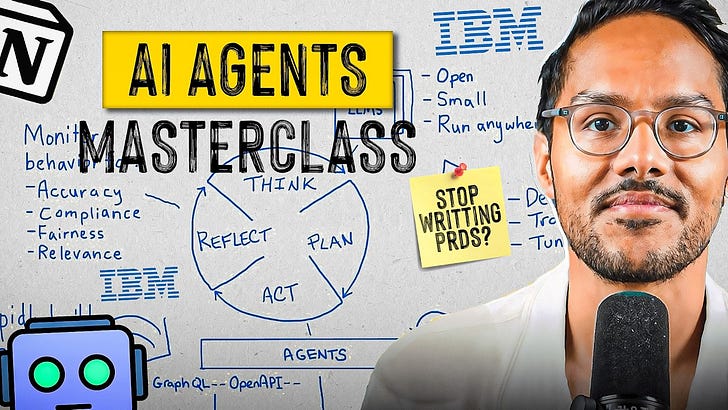
In AI, low prototyping costs and customer uncertainty make the traditional research-first PM model obsolete. The new approach is to build a prototype quickly, show it to customers to discover possibilities, and then iterate based on their reactions, effectively building the solution before the problem is fully defined.

AI tools like Vibe Coding remove the traditional dependency on design and engineering for prototyping. Product managers without coding expertise can now build and test functional prototypes with customers in hours, drastically accelerating problem-solution fit validation before committing development resources.

AI won't replace product managers but will elevate their role. PMs will shift from executing tasks like financial forecasting to managing a team of specialized AI agents, forcing them to focus on high-level strategy and assumption-checking.
Historically, resource-intensive prototyping (requiring designers and tools like Figma) was reserved for major features. AI tools reduce prototype creation time to minutes, allowing PMs to de-risk even minor features with user testing and solution discovery, improving the entire product's success rate.
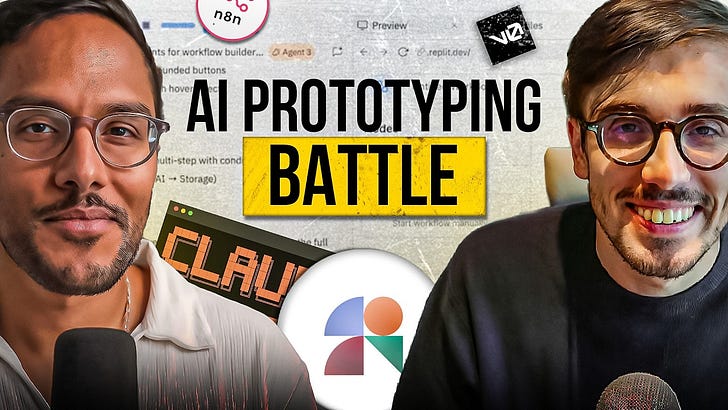
The rise of AI tools isn't replacing the PM role, but transforming it. PMs who embrace an "AI-enhanced" workflow for research, docs, and prototyping will gain a massive productivity advantage, ultimately displacing those who stick to traditional methods.
The product development cycle has shifted. Instead of writing a spec, Product Managers use AI coding tools like Bolt.new to build the initial working version of a product. They then hand this functional prototype to engineers for hardening, security, and scaling, dramatically accelerating the process.
Traditional agile development, despite its intent, still involves handoffs between research, design, and engineering which create opportunities for misinterpretation. AI tools collapse this sequential process, allowing a single person to move from idea to interactive prototype in minutes, keeping human judgment and creativity tightly coupled.
