Get your free personalized podcast brief
We scan new podcasts and send you the top 5 insights daily.
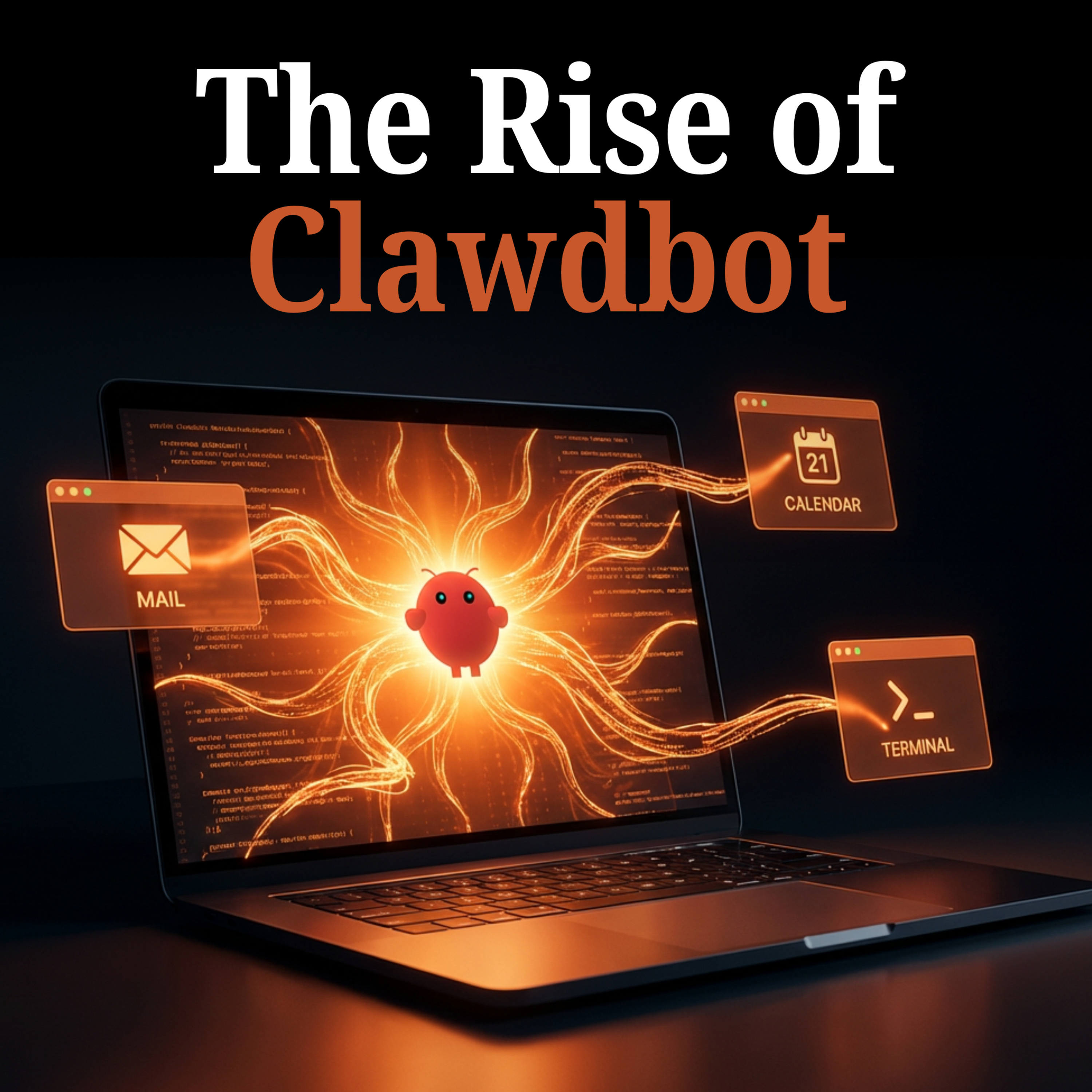
Create a simple yet powerful CRM you can talk to. By giving an OpenClaw agent access to a Google Sheet for leads, your Gmail for communication history, and your calendar for meetings, you can manage your sales pipeline with natural language. Simply ask 'Who do I need to follow up with?' to get a list and trigger draft emails.

Related Insights
Webflow's CPO uses a custom set of AI agents built with Claude and Cursor to analyze her calendar for delegation opportunities and triage her inbox by archiving junk, flagging important emails, and drafting replies. This offloads significant cognitive and administrative load from the executive.
A key use case for Claude Code is a single command that generates a daily standup summary. It pulls calendar events from Google, checks ticket statuses in Linear, reviews local notes, identifies blockers, and prepares you for the day without you ever leaving the terminal.

If a tool, like the meeting-note app Granola, lacks an official MCP for integration, you can write a simple script for your AI agent to execute. The script can fetch data and save it as local files, effectively making any external data source part of the agent's accessible context.

By granting an AI agent read-access to all company data streams—Slack, Notion, Google Docs, email—you can create a centralized oracle. This agent can answer any question about project status or client communication, instantly removing communication friction and breaking down departmental silos.
Create a dedicated AI agent pre-loaded with your company's specific deal qualifiers (budget, timeline, ICP). Feed it discovery call notes, and it can instantly score the opportunity or flag it as disqualified, preventing reps from wasting time on deals that will never close.

You don't need to be a developer to build custom marketing automation. By describing your workflow, providing screenshots of errors, and having a back-and-forth conversation, you can guide an AI like Claude to build a tailored software agent for your specific needs.

By connecting to services like G Suite, users can query their personal data (e.g., 'summarize my most important emails') directly within the LLM. This transforms the user interaction model from navigating individual apps to conversing with a centralized AI assistant that has access to siloed information.
Structure your CRM to minimize clicks and context switching for SDRs. Create a single, clean view showing a list of accounts with all relevant contacts and their data on one screen. This turns the CRM from a passive database into an active, high-efficiency prospecting workspace.

Christopher O'Donnell's new company, Day AI, is building a CRM from the ground up to be "LLM optimized." Unlike traditional CRMs that resemble spreadsheets, it ingests and stores all company interactions in a way that allows an AI agent to easily explore the network of relationships and answer complex, natural language questions instantly.

Instead of integrating with existing SaaS tools, AI agents can be instructed on a high-level goal (e.g., 'track my relationships'). The agent can then determine the need for a CRM, write the code for it, and deploy it itself.