Get your free personalized podcast brief
We scan new podcasts and send you the top 5 insights daily.
If a tool, like the meeting-note app Granola, lacks an official MCP for integration, you can write a simple script for your AI agent to execute. The script can fetch data and save it as local files, effectively making any external data source part of the agent's accessible context.

Related Insights
To elevate AI-driven analysis, connect it to unstructured data sources like Slack and project management tools. This allows the AI to correlate data trends with real-world events, such as a metric dip with a reported incident, mimicking how a senior human analyst thinks and providing deeper insights.

Browser-based ChatGPT cannot execute code or connect to external APIs, limiting its power. The Codex CLI unlocks these agentic capabilities, allowing it to interact with local files, run scripts, and connect to databases, making it a far more powerful tool for real-world tasks.

Create custom commands that automatically pass a curated set of context files (e.g., daily notes, project descriptions, personal workflows) to an AI agent in a single step. This dramatically speeds up delegation by eliminating repetitive manual setup and context-feeding.

Go beyond using Claude Projects for just knowledge retrieval. A power-user technique is to load them with detailed, sequential instructions on how specific MCP tools should be used in a workflow, dramatically improving the agent's reliability and output quality.

By granting an AI agent read-access to all company data streams—Slack, Notion, Google Docs, email—you can create a centralized oracle. This agent can answer any question about project status or client communication, instantly removing communication friction and breaking down departmental silos.

Instead of pre-engineering tool integrations, Block lets its AI agent Goose learn by doing. Successful user-driven workflows can be saved as shareable "recipes," allowing emergent capabilities to be captured and scaled. They found the agent is more capable this way than if they tried to make tools "Goose-friendly."

Establish a powerful feedback loop where the AI agent analyzes your notes to find inefficiencies, proposes a solution as a new custom command, and then immediately writes the code for that command upon your approval. The system becomes self-improving, building its own upgrades.
Using plain-English rule files in tools like Cursor, data teams can create reusable AI agents that automate the entire A/B test write-up process. The agent can fetch data from an experimentation platform, pull context from Notion, analyze results, and generate a standardized report automatically.

Instead of integrating with existing SaaS tools, AI agents can be instructed on a high-level goal (e.g., 'track my relationships'). The agent can then determine the need for a CRM, write the code for it, and deploy it itself.
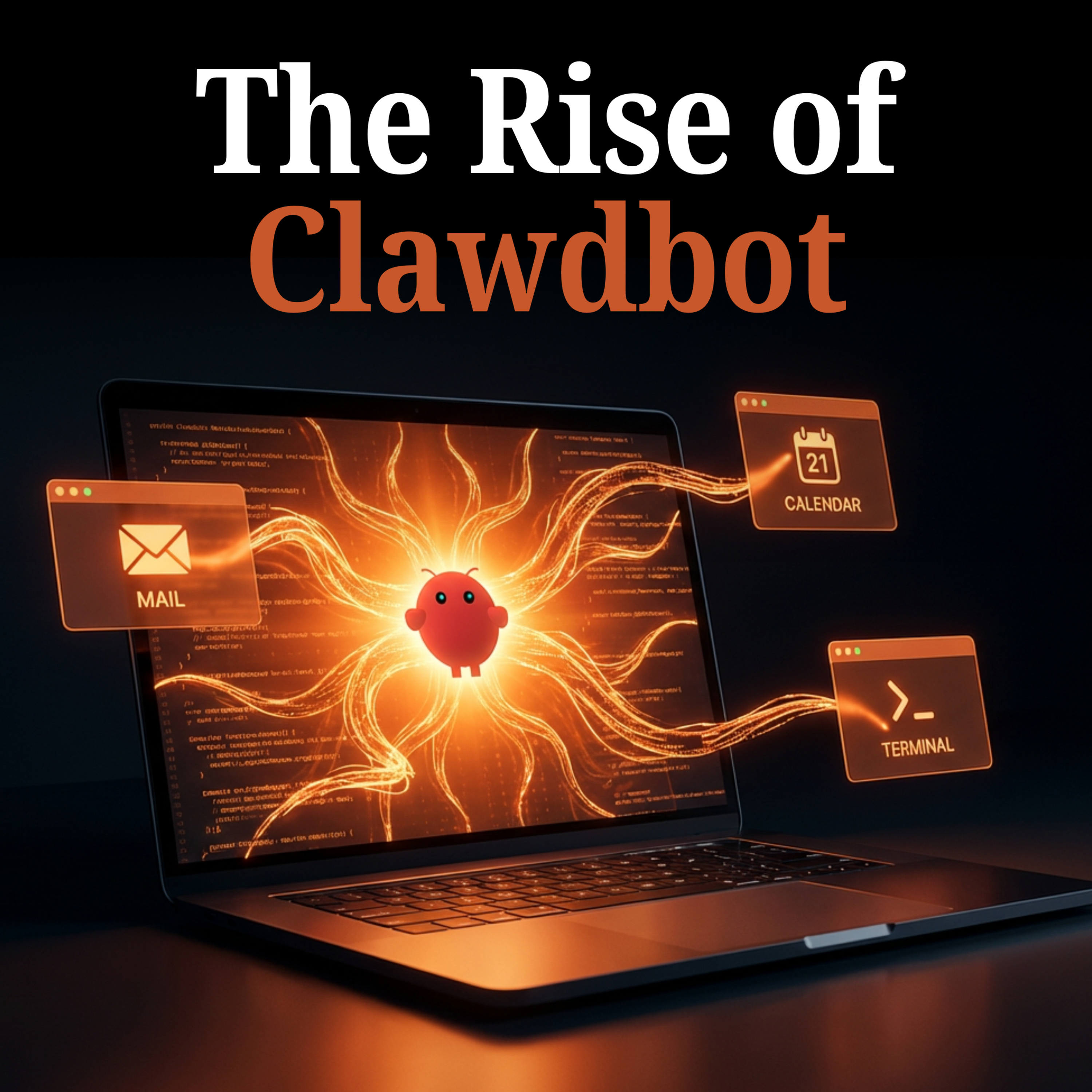
MCP provides a standardized way to connect AI models with external tools, actions, and data. It functions like an API layer, enabling agents in environments like Claude Code or Cursor to pull analytics data from Amplitude, file tickets in Linear, or perform other external actions seamlessly.