Get your free personalized podcast brief
We scan new podcasts and send you the top 5 insights daily.
Reposition your branding efforts away from self-glorification ("personal branding") and toward elevating your entire market ("market eminence"). This focus on industry-wide improvement attracts a wider range of stakeholders, including partners, investors, and acquirers, who are drawn to a mission larger than just you.

Related Insights
Don't rebrand for the sake of it. A successful rebrand should be a deliberate move to signal a fundamental shift in your business, such as an expansion, a new mission, or a deeper commitment to core values like sustainability. It's an external reflection of an internal change.

View your personal brand or "likeness" not just as a marketing tool, but as a strategic asset that generates deal flow. This asset grants access to rooms and relationships that can be converted into partnerships, ownership stakes, and long-term revenue streams, fundamentally shifting you from talent-for-hire to an equity holder.

Personal branding isn't just about being seen; it's about being found when potential clients are looking. The speaker presents a clear progression: a strong brand creates visibility, which in turn leads to findability online. In today's market, if you are not findable, you are forfeiting opportunities.

The term "personal brand" is modern slang for the timeless concept of reputation. Social media's power is that it acts as a lever, scaling that reputation to a much wider audience than ever before. A larger, more positive reputation directly translates to a higher volume of inbound personal and professional opportunities.

Stop viewing brand as a top-of-funnel activity. For elite companies, brand isn't a precursor to selling; it is the selling. It creates inbound demand that bypasses traditional conversion tactics like search ads or affiliate marketing, making it the most powerful and sustainable growth engine.
A powerful brand shifts its focus from "look at me" to "sit with me." Instead of a solo spotlight demanding attention, think of your brand as a campfire that invites others to gather around. This community-centric approach fosters deeper loyalty and engagement.

Branding is not just about reflecting a company's past; it can be a forward-looking tool for change. By defining a new, aspirational identity, a rebrand provides a clear path and a public commitment, guiding the organization to evolve and actively become the company it wants to be.

The foundation of a strong personal brand is not self-promotion but demonstrated value. The process is twofold: first, achieve something notable or put in extraordinary effort to gain unique insights. Second, share what you've done and learned. This provides genuine value to others, which is the core of brand building.

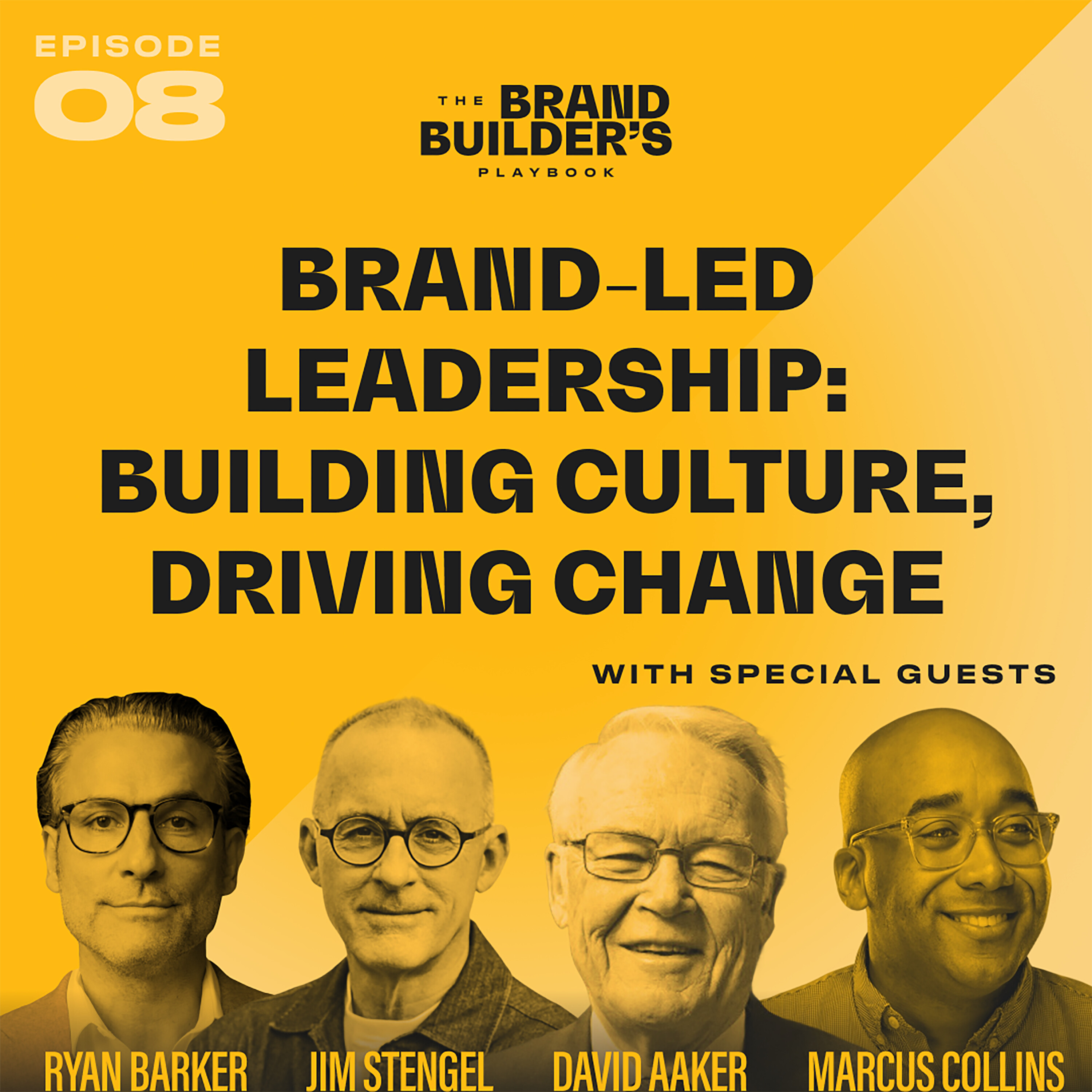
Reacting to a regression towards tactical performance marketing, branding expert David Aaker introduced his "Five Bs" framework (Relevance, Image, Loyalty, Portfolio, Equity). It reminds leaders that brand is a long-term asset and notably includes "Brand Portfolio" to emphasize that a strong brand rarely stands alone, requiring co-brands and endorsers.
To build an authentic brand, move beyond product features and engage in an introspective process. By answering these three core questions, a company can establish its foundational ethos. This 'universal truth' then serves as a guiding principle for all external communication and strategic decisions.