Get your free personalized podcast brief
We scan new podcasts and send you the top 5 insights daily.
Contrary to viewing the Iran conflict as a distraction for the US, Taiwanese observers are encouraged. They interpret US action as a defense of democracy against autocracy, drawing a parallel to their own situation with China. This bolsters their hope for American support in a potential conflict.

Related Insights
Contrary to the typical anti-war sentiment in the West, anecdotal evidence suggests that an overwhelming majority of Iranians who oppose the regime—perhaps 80% or more—would welcome outside help. They feel abandoned after the US promised support for protesters, making them receptive to foreign intervention.

Protests in Iran, if they disrupt the regime, could halt cheap oil flows to China. This would force China to buy from more expensive, US-friendly markets, strengthening the US dollar's global dominance and isolating anti-Western powers without direct US intervention.

Beijing’s core strategy for Taiwan is to convince its populace that "resistance is futile" and no outside help is coming. U.S. arms sales and rhetorical support from allies are particularly disruptive because they directly counter this psychological narrative of isolation, undermining China's goal of a coerced unification.
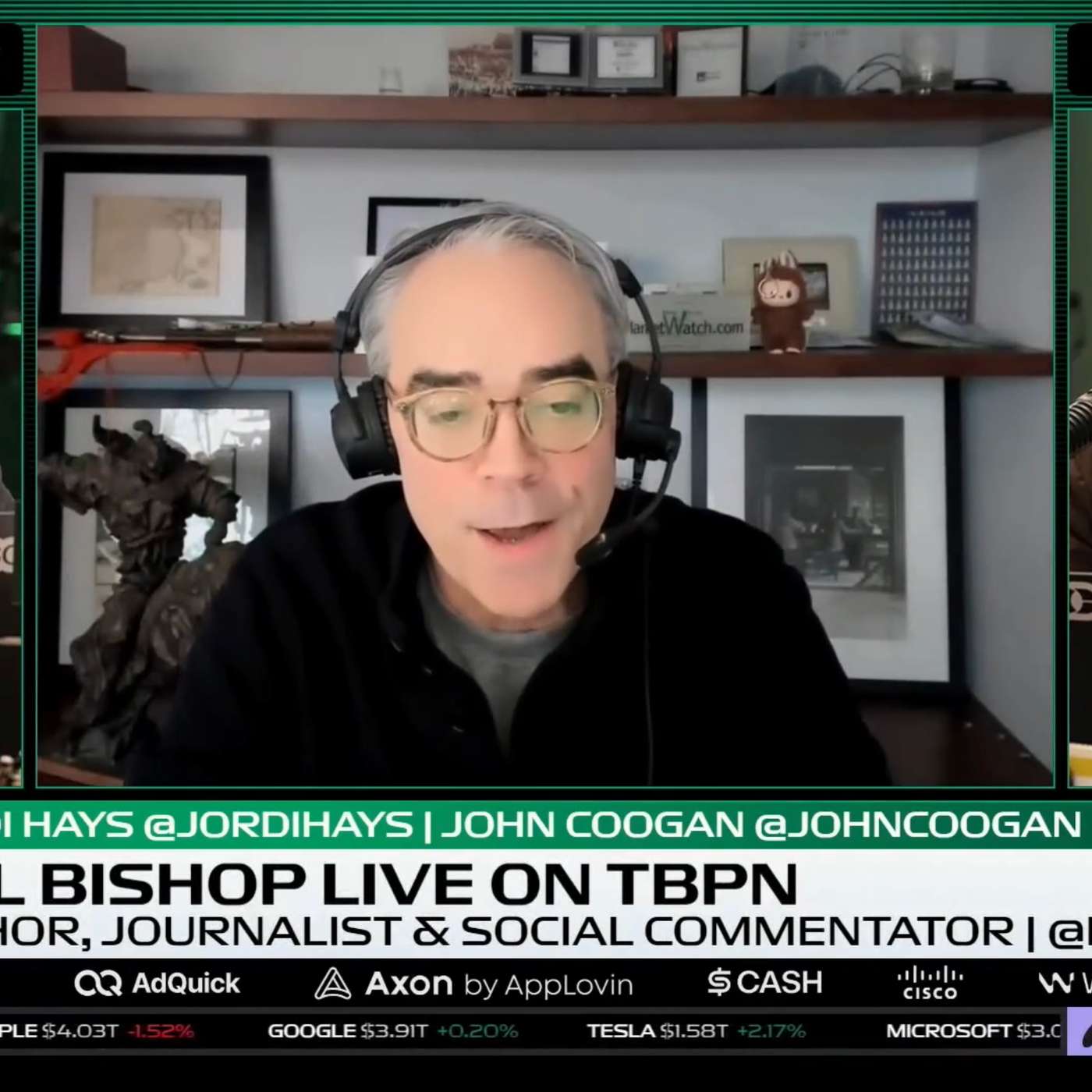
A potential invasion of Taiwan by China is less likely due to internal military purges and dissent than to US military posturing. An authoritarian leader like Xi Jinping cannot launch a complex invasion if he doesn't trust his own generals, making domestic instability a powerful, albeit unintentional, deterrent.

Chinese leadership believes time is not on its side regarding Taiwan. The growing sense of a distinct Taiwanese identity, especially among younger generations, creates pressure to act before a political 'reunification' becomes impossible, thus increasing the risk of military action.

Contrary to widespread fear, the probability of a Chinese invasion of Taiwan before 2028 is extremely low (~5%). China believes its goal of 'peaceful reunification' is progressing, its military is in disarray after deep purges, and it views President Trump as an accommodating US leader on the Taiwan issue.
By forcing the U.S. to operate its air defense systems at scale, the conflict in Iran is inadvertently providing China with a treasure trove of intelligence. The Chinese can observe how these systems perform, identify weaknesses, and refine their own tactics for a potential future conflict.

While facing economic headwinds from the oil crisis, China is positioning the US-Iran conflict as a geopolitical victory. It portrays the US as a chaotic, destabilizing force, contrasting itself as a stable superpower and capitalizing on the global fallout from what it terms 'poor strategic coordination' by Washington.
By prioritizing resource acquisition in its own sphere of influence (Venezuela), the US has effectively signaled it cannot or will not defend Taiwan. This action, whether an explicit deal or not, acts as a 'handshake,' giving China the green light to pursue its own regional strategic objectives.

Unlike nascent revolutionary states that rally against foreign attacks, late-stage dictatorships are weakened by military defeats. Iran's recent humiliations by Israel and the US have exposed incompetence and eroded the public's perception of strength, fueling protests and accelerating the regime's demise.