Get your free personalized podcast brief
We scan new podcasts and send you the top 5 insights daily.
Platforms grew dominant by acquiring competitors, a direct result of failed antitrust enforcement. Cory Doctorow argues debates over intermediary liability (e.g., Section 230) are a distraction from the core issue: a decades-long drawdown of anti-monopoly law.

Related Insights
When evaluating a media merger, regulators should narrowly define the market as "premium streaming platforms." Including user-generated content like YouTube or TikTok creates a misleadingly broad market definition that understates a company's true dominance, similar to a chicken producer claiming competition from pistachio farmers.

Recent antitrust lawsuits against Meta and Google resulted in minimal consequences ("nothing burgers"), signaling a more permissive regulatory environment. Combined with anticipated economic stimulus, this creates ideal conditions for a wave of large-scale M&A ($25B-$250B) among major tech companies in the coming year.
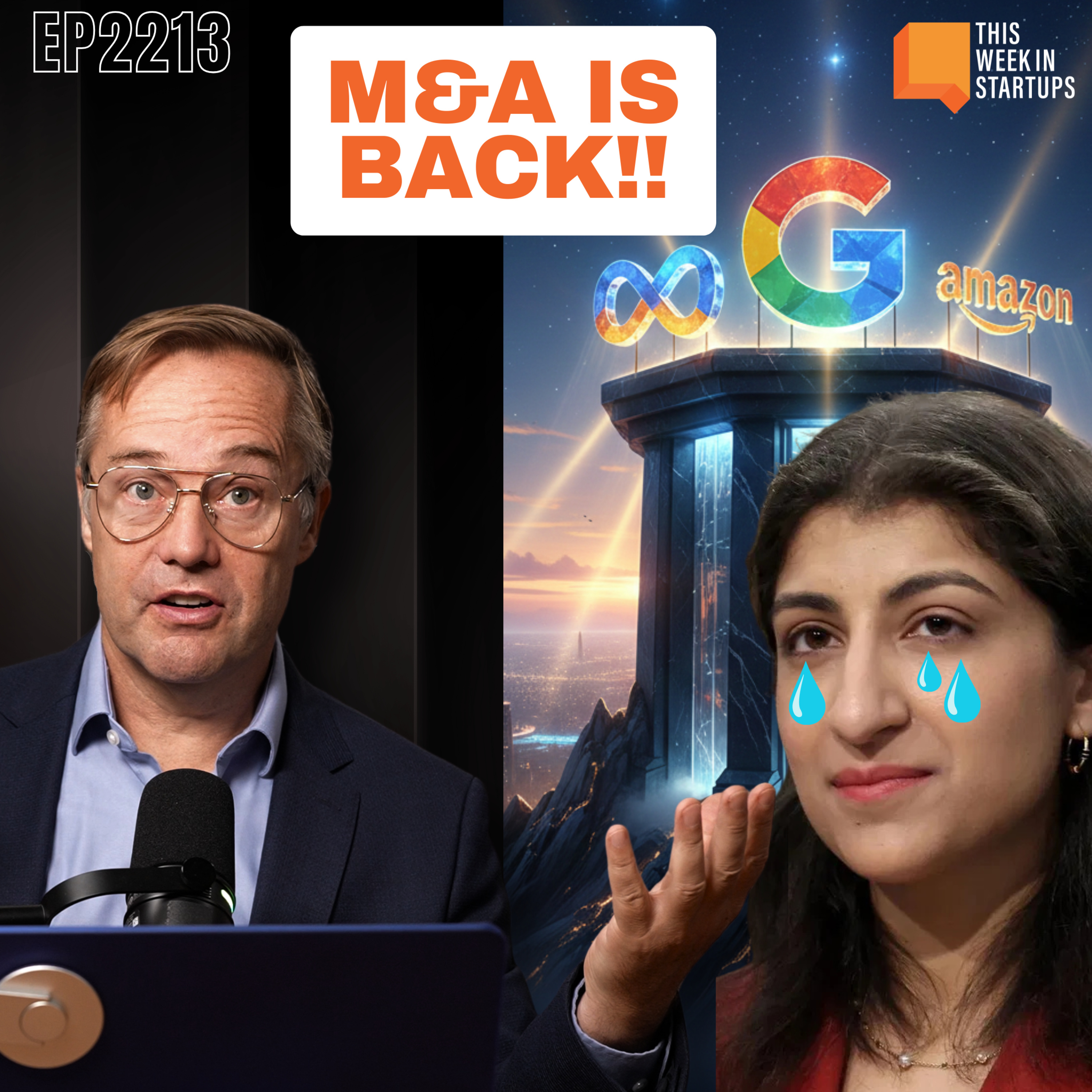
As traditional economic-based antitrust enforcement weakens, a new gatekeeper for M&A has emerged: political cronyism. A deal's approval may now hinge less on market concentration analysis and more on a political leader’s personal sentiment towards the acquiring CEO, fundamentally changing the risk calculus for corporate strategists.

An antitrust case against a Netflix-Warner Bros. merger is weak if the market is defined as all consumer 'eyeballs,' not just paid streaming. Including massive platforms like YouTube, TikTok, and Instagram, where most people spend their time, creates a landscape of intense competition, undermining monopoly claims.
The Democratic party's focus on antitrust, according to Warren, is not anti-business but fundamentally pro-market. By preventing monopolies, it fosters a competitive environment where companies are forced to continually innovate to succeed, unlike giants who grow complacent and raise prices.

A company's monopoly power can be measured not just by its pricing power, but by the 'noneconomic costs' it imposes on society. Dominant platforms can ignore negative externalities, like their product's impact on teen mental health, because their market position insulates them from accountability and user churn.
The idea of a truly "open web" was a brief historical moment. Powerful, proprietary "organizing layers" like search engines and app stores inevitably emerge to centralize ecosystems and capture value. Today's AI chatbots are simply the newest form of these organizing layers.
Meta's victory over the FTC's antitrust challenge is not just a legal footnote; it signals the end of a highly restrictive regulatory era. This will likely trigger a massive wave of M&A, as large tech companies are now emboldened to acquire stagnant, late-stage private "unicorns" that have been stuck without an exit path.

Recent streaming price increases, which are vastly outpacing inflation, serve as the primary evidence that the market is already too consolidated. Further mergers would grant companies like Netflix unchecked pricing power, transferring wealth from consumers and labor directly to shareholders in an oligopolistic environment.
The FTC's failure to prove Meta held a monopoly set a powerful legal precedent, signaling that regulators face a high burden of proof. This has effectively given a green light to large-scale acquisitions, kicking off a "golden age of M&A" as companies feel emboldened to pursue mega-deals without fear of being blocked.
