Get your free personalized podcast brief
We scan new podcasts and send you the top 5 insights daily.
Our emotional connection to pets makes us almost completely incapable of objective observation. We invent stories and infer motivations that often don't align with scientific reality. This highlights the power of cognitive bias in personal relationships and the need for objective data in understanding behavior.

Related Insights
We see a minuscule fraction (0.0035%) of the electromagnetic spectrum, meaning our perception of physical reality is already an abstraction. When applied to complex human behaviors, objective "truth" becomes nearly impossible to discern, as it's filtered through cognitive shortcuts and biases.

Our brains evolved a highly sensitive system to detect human-like minds, crucial for social cooperation and survival. This system often produces 'false positives,' causing us to humanize pets or robots. This isn't a bug but a feature, ensuring we never miss an actual human encounter, a trade-off vital to our species' success.
Salient emotional events feel vivid and true, boosting our confidence in the memory. However, this confidence is often misleading. Each time we recall and "reconstruct" these memories, we create more opportunities for errors to creep in, making them factually less reliable than we believe.

The brain doesn't strive for objective, verbatim recall. Instead, it constantly updates and modifies memories, infusing them with emotional context and takeaways. This process isn't a bug; its purpose is to create useful models to guide future decisions and ensure survival.

Compared to other social hunters or domesticated species, dogs do not possess exceptional cognitive abilities in areas like problem-solving or navigation. Their intelligence is adapted for their evolutionary niche, not for passing human-centric tests. This challenges our biased view of animal smarts.
Unlike dogs, which evolved from pack animals and see humans as leaders, cats formed a looser companionship with humans. They were tolerated for their rodent-hunting skills around grain stores. This history explains their independent nature; their bond is based on mutual benefit, not hierarchical attachment.
To counteract the brain's tendency to preserve existing conclusions, Charles Darwin deliberately considered evidence that contradicted his hypotheses. He was most rigorous when he felt most confident in an idea—a powerful, counterintuitive method for maintaining objectivity and avoiding confirmation bias.
![Charlie Munger and The Psychology of Human Misjudgement [Outliers] thumbnail](https://megaphone.imgix.net/podcasts/ffb628d4-c418-11f0-acd7-b3217b3943c4/image/37067138e685dc4ea5d98531397f6711.png?ixlib=rails-4.3.1&max-w=3000&max-h=3000&fit=crop&auto=format,compress)
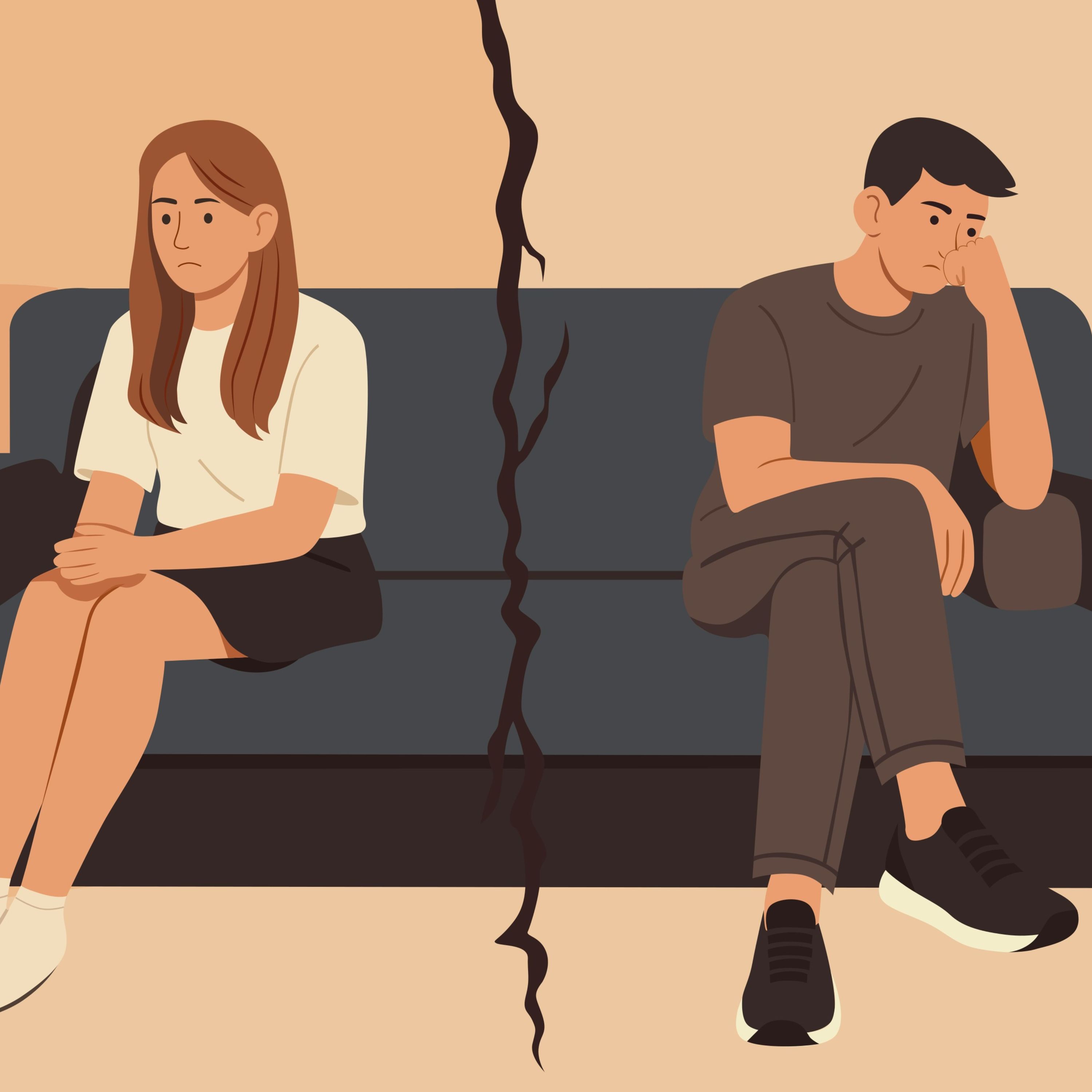
Research shows you can accurately guess a stranger's thoughts 20% of the time, a friend's 30%, and a romantic partner's just 40%. In emotional conversations, this plummets to 15%. This data proves why you must ask questions instead of assuming.

Research on contentious topics finds that individuals with the most passionate and extreme views often possess the least objective knowledge. Their strong feelings create an illusion of understanding that blocks them from seeking or accepting new information.
The brain's tendency to create stories simplifies complex information but creates a powerful confirmation bias. As illustrated by a military example where a friendly tribe was nearly bombed, leaders who get trapped in their narrative will only see evidence that confirms it, ignoring critical data to the contrary.