Get your free personalized podcast brief
We scan new podcasts and send you the top 5 insights daily.
A CIO of a single-family office, as the sole investment professional, has successfully used AI tools like Claude as a de facto analyst. This has allowed her to handle tasks from legal review to building custom tools, postponing the need to hire a human team member.

Related Insights
Monologue's developer treats AI tools like Claude Code and GPT-5 as his engineering team. He credits GPT-5's ability to navigate poorly documented, legacy Mac code from the 1980s as a "biggest unlock," enabling him to build a production-grade app without hiring specialist developers.

Webflow's CPO uses a custom set of AI agents built with Claude and Cursor to analyze her calendar for delegation opportunities and triage her inbox by archiving junk, flagging important emails, and drafting replies. This offloads significant cognitive and administrative load from the executive.
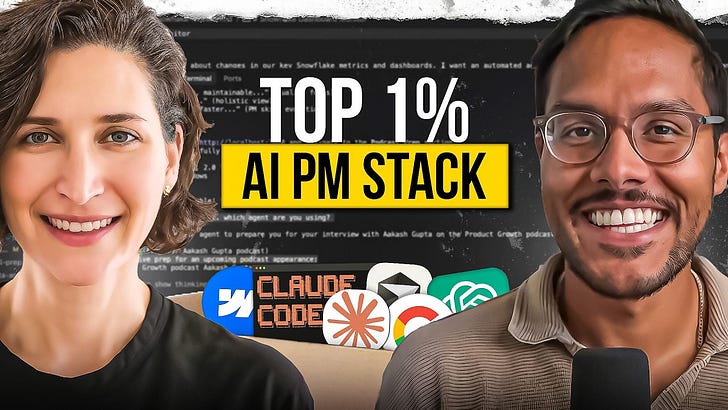
AI coding assistants are creating a new class of "vibe coders." The primary market isn't experienced developers but non-technical professionals. For example, a hedge fund analyst with no coding background can use Claude Code to build complex financial models, a task that previously required junior analysts or data scientists.

Tools like Frank AI automate the core analytical tasks of high-level executive roles. This allows a single person to act as a fractional expert for multiple businesses, charging a retainer to provide C-suite-level insights without the company needing to hire a full-time executive.

Claude Cowork is positioned not as a coding tool like its predecessor Claude Code (the "CTO"), but as an operational assistant ("COO") for business professionals. It helps automate and execute complex business tasks, like creating marketing strategies or job descriptions, without requiring deep technical skills.

An executive created a custom AI agent to handle repetitive tasks like meeting prep, calendar triage, and email. This "chief of staff" provides analysis, suggests delegations, and even offers blunt feedback, demonstrating how AI can be personalized to augment executive functions.

Tools like Anthropic's Claude CoWork are not just chatbots; they are digital employees. This shifts the professional's role from performing tasks to briefing, guiding, and reviewing the output of an AI agent that executes complex work autonomously.

When an engineer resigned, Bespoke didn't automatically backfill the position. Instead, they invested in AI coding assistants for the entire remaining team. They decided the collective productivity boost from AI tooling was a better, more scalable solution than hiring a new person.

A significant shift in startup team-building is occurring. Even after closing a seed round, some founders now prefer deploying AI agents for key roles like Chief of Staff over hiring people. The retainability, continual improvement, and scalability of AI agents are making them a more attractive and less risky investment than human employees.
Unable to secure budget for a human chief of staff, Webflow's CPO built her own using AI agents. This system automates complex, recurring tasks like podcast research and data prep, demonstrating how executives can use AI to gain significant personal leverage without increasing headcount.
