Get your free personalized podcast brief
We scan new podcasts and send you the top 5 insights daily.
Tom Mueller believes the Moon is more important than Mars in the near term, primarily as a source of critical resources. He highlights a potential terrestrial copper shortage, driven by data center demand, as a key economic driver for establishing a lunar mining presence.

Related Insights
Getting to space is now relatively cheap thanks to SpaceX. The next economic revolution will be triggered by solving the much harder problem of bringing materials back from space. This will enable in-space manufacturing and create a true two-way space economy.

The long-term vision isn't just launching data centers, but manufacturing them on the moon. This would utilize lunar resources and electromagnetic mass drivers to deploy satellites, making Earth's launch costs and gravity well irrelevant for deep space expansion.
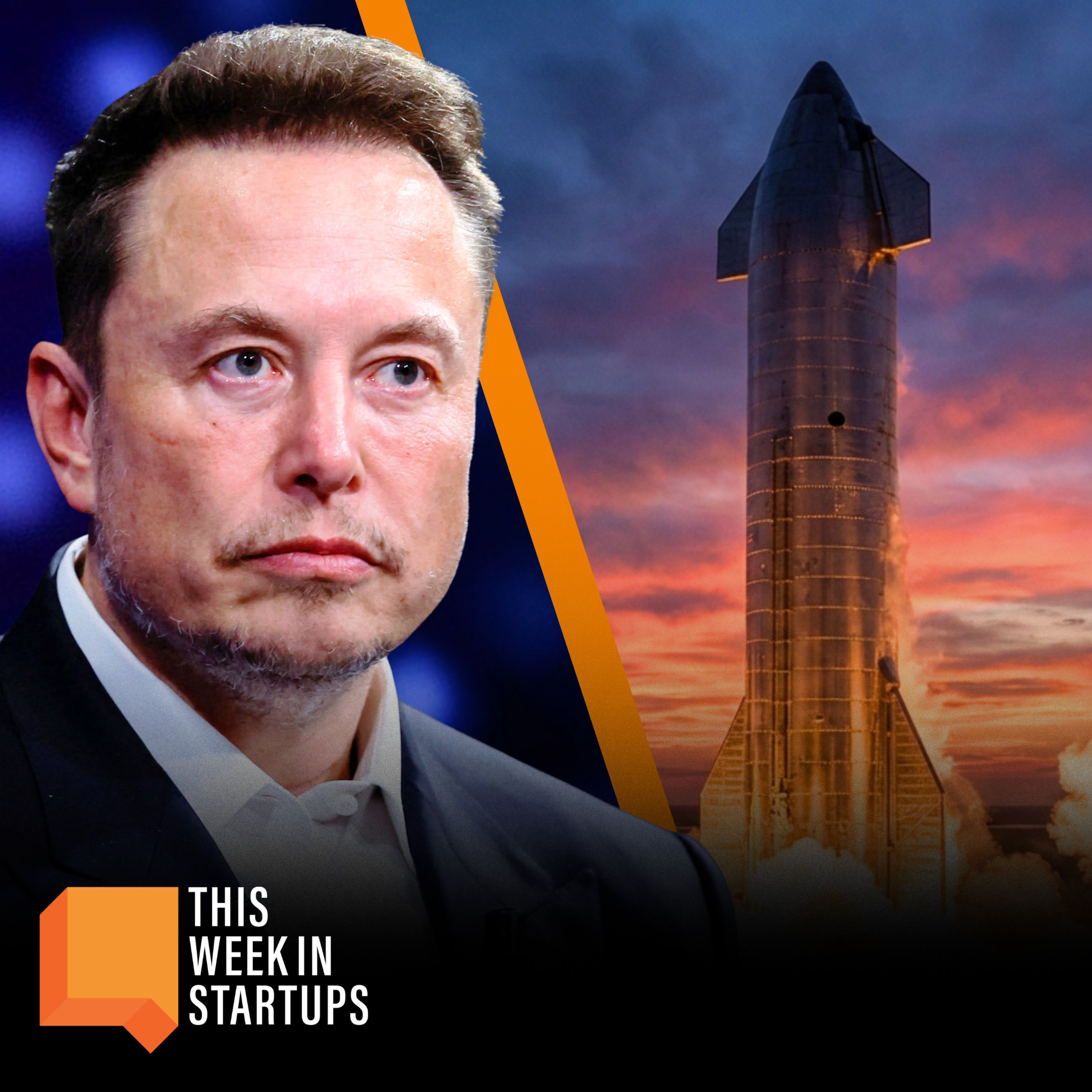
The shift to a moon base isn't just about faster space colonization. It's a strategic move to build massive AI and quantum computing data centers off-planet. This bypasses terrestrial energy regulations and solves the immense cooling requirements for these systems, positioning SpaceX to dominate the AI landscape.

Companies like SpaceX have largely solved the transportation problem. The next major bottleneck and massive economic opportunity is creating sustainable habitats on the Moon and Mars by utilizing local resources (ISRU), shifting the core focus of the space economy.

Mining and manufacturing on the moon is more feasible than asteroid mining. The moon's low gravity and lack of atmosphere allow for a 'mass driver'—an electric rail—to launch finished goods back to Earth at nearly zero shipping cost, creating an economic advantage over terrestrial production.

SpaceX is strategically delaying its Mars ambitions to first establish a permanent, 'self-growing' city on the moon. Elon Musk now views this as a more practical 10-year goal, with the moon serving as an essential staging ground for materials and deeper space exploration, rather than a direct-to-Mars approach.

CEO Tom Mueller argues that while the Moon is important, some near-Earth asteroids are easier targets for resource extraction. The Moon's gravity well requires significant fuel for landing and takeoff, whereas asteroids have almost no gravity, making resource return missions far more efficient from a propulsion standpoint.

Elon Musk has strategically shifted SpaceX's primary focus from colonizing Mars to establishing an industrial base on the Moon. The new vision is to manufacture AI satellites on the lunar surface and launch them into a 'Dyson swarm' using electromagnetic mass drivers, framing the Moon as a critical stepping stone for a space-based economy.

Colonizing Mars is over 100 times more energy-efficient if materials are manufactured on and launched from the Moon. The Moon's low gravity and lack of atmosphere drastically reduce launch costs, positioning it as the logical industrial hub for interplanetary expansion, rather than just a stepping stone.

The company's long-term vision is to enable mega-structures in space, starting with AI data centers to tap into unlimited solar power. Subsequently, it becomes 20 times more energy-efficient to use materials mined from the moon than from Earth to build these structures.