Get your free personalized podcast brief
We scan new podcasts and send you the top 5 insights daily.
The true danger of LLMs in the workplace isn't just sloppy output, but the erosion of deep thinking. The arduous process of writing forces structured, first-principles reasoning. By making it easy to generate plausible text from bullet points, LLMs allow users to bypass this critical thinking process, leading to shallower insights.

Related Insights
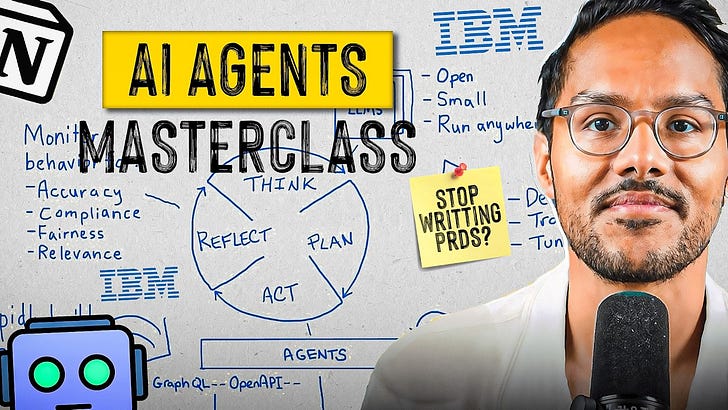
While AI tools once gave creators an edge, they now risk producing democratized, undifferentiated output. IBM's AI VP, who grew to 200k followers, now uses AI less. The new edge is spending more time on unique human thinking and using AI only for initial ideation, not final writing.
Schools ban AI like ChatGPT fearing it's a tool for cheating, but this is profoundly shortsighted. The quality of an AI's output is entirely dependent on the critical thinking behind the user's input. This makes AI the first truly scalable tool for teaching children how to think critically, a skill far more valuable than memorization.

Using AI to generate content without adding human context simply transfers the intellectual effort to the recipient. This creates rework, confusion, and can damage professional relationships, explaining the low ROI seen in many AI initiatives.

A powerful workflow is to explicitly instruct your AI to act as a collaborative thinking partner—asking questions and organizing thoughts—while strictly forbidding it from creating final artifacts. This separates the crucial thinking phase from the generative phase, leading to better outcomes.

True creative mastery emerges from an unpredictable human process. AI can generate options quickly but bypasses this journey, losing the potential for inexplicable, last-minute genius that defines truly great work. It optimizes for speed at the cost of brilliance.

The process of struggling with and solving hard problems is what builds engineering skill. Constantly available AI assistants act like a "slot machine for answers," removing this productive struggle. This encourages "vibe coding" and may prevent engineers from developing deep problem-solving expertise.
Even professionals who use ChatGPT daily are often unaware of its most powerful "reasoning" capabilities, like Deep Research. This pervasive knowledge gap means users stick to basic tasks like writing, missing out on the profound strategic value these advanced features offer for complex problem-solving.

Research highlights "work slop": AI output that appears polished but lacks human context. This forces coworkers to spend significant time fixing it, effectively offloading cognitive labor and damaging perceptions of the sender's capability and trustworthiness.

GSB professors warn that professionals who merely use AI as a black box—passing queries and returning outputs—risk minimizing their own role. To remain valuable, leaders must understand the underlying models and assumptions to properly evaluate AI-generated solutions and maintain control of the decision-making process.

The most significant recent AI advance is models' ability to use chain-of-thought reasoning, not just retrieve data. However, most business users are unaware of this 'deep research' capability and continue using AI as a simple search tool, missing its transformative potential for complex problem-solving.
