Get your free personalized podcast brief
We scan new podcasts and send you the top 5 insights daily.
Using AI to generate content without adding human context simply transfers the intellectual effort to the recipient. This creates rework, confusion, and can damage professional relationships, explaining the low ROI seen in many AI initiatives.

Related Insights
While AI tools once gave creators an edge, they now risk producing democratized, undifferentiated output. IBM's AI VP, who grew to 200k followers, now uses AI less. The new edge is spending more time on unique human thinking and using AI only for initial ideation, not final writing.
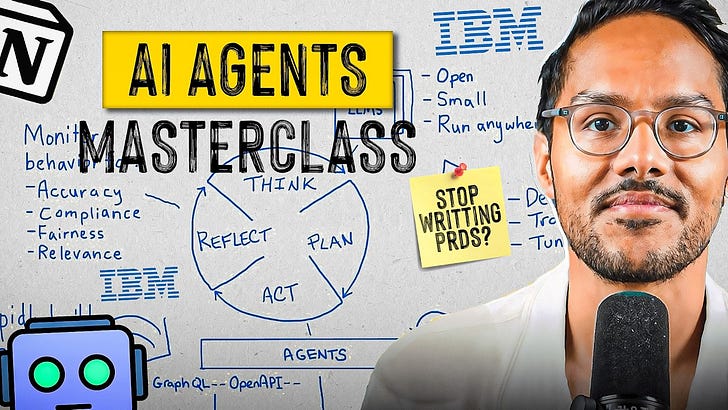
People struggle with AI prompts because the model lacks background on their goals and progress. The solution is 'Context Engineering': creating an environment where the AI continuously accumulates user-specific information, materials, and intent, reducing the need for constant prompt tweaking.

Product managers should leverage AI to get 80% of the way on tasks like competitive analysis, but must apply their own intellect for the final 20%. Fully abdicating responsibility to AI can lead to factual errors and hallucinations that, if used to build a product, result in costly rework and strategic missteps.

Users mistakenly evaluate AI tools based on the quality of the first output. However, since 90% of the work is iterative, the superior tool is the one that handles a high volume of refinement prompts most effectively, not the one with the best initial result.

The true danger of LLMs in the workplace isn't just sloppy output, but the erosion of deep thinking. The arduous process of writing forces structured, first-principles reasoning. By making it easy to generate plausible text from bullet points, LLMs allow users to bypass this critical thinking process, leading to shallower insights.

Research highlights "work slop": AI output that appears polished but lacks human context. This forces coworkers to spend significant time fixing it, effectively offloading cognitive labor and damaging perceptions of the sender's capability and trustworthiness.

GSB professors warn that professionals who merely use AI as a black box—passing queries and returning outputs—risk minimizing their own role. To remain valuable, leaders must understand the underlying models and assumptions to properly evaluate AI-generated solutions and maintain control of the decision-making process.

Advanced AI tools like "deep research" models can produce vast amounts of information, like 30-page reports, in minutes. This creates a new productivity paradox: the AI's output capacity far exceeds a human's finite ability to verify sources, apply critical thought, and transform the raw output into authentic, usable insights.
Don't use AI to generate generic thought leadership, which often just regurgitates existing content. The real power is using AI as a 'steroid' for your own ideas. Architect the core content yourself, then use AI to turbocharge research and data integration to make it 10x better.

The promise of AI shouldn't be a one-click solution that removes the user. Instead, AI should be a collaborative partner that augments human capacity. A successful AI product leaves room for user participation, making them feel like they are co-building the experience and have a stake in the outcome.
